
How to Select the Right Marine Spotlights
Marine spotlights are essential lighting equipment for boats, ships, and offshore units. They provide strong illumination for navigation, search work, docking, and even those emergency moments. But it’s not like normal outdoor lighting, because marine spotlights have to survive really rough sea life, like saltwater corrosion, strong winds, constant vibration, and basically being around moisture for long periods. So selecting the right marine spotlight isn’t a quick thing; you really need to think about how bright it is, how far the beam reaches, how tough it feels over time, power efficiency and also what the installation setup needs.
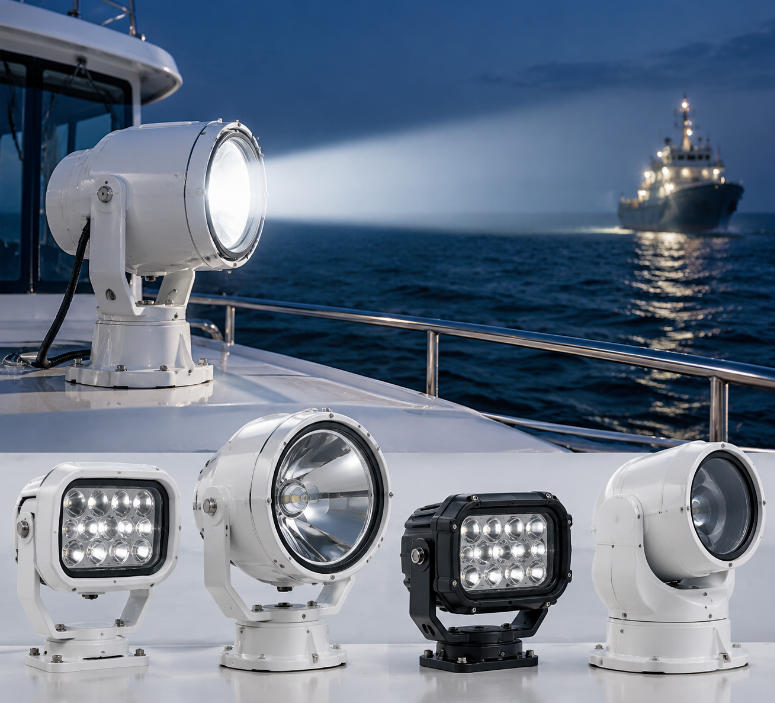
Table of Contents
Why Selecting the Right Marine Spotlight is Important
When you get a suitable spotlight, you get the brightness, beam distance, and coverage you actually need for night sailing, docking, search operations, or offshore checking. A suitable marine spotlights usually come with solid waterproof protection, corrosion resistance, and energy-saving LED technology. This means they can handle harsh conditions without too much fuss, and with less maintenance later. In the end, the right choice helps operators push safety up, improve efficiency, and keep dependable lighting performance across different marine uses.
Key Factors Affecting Marine Spotlight Performance
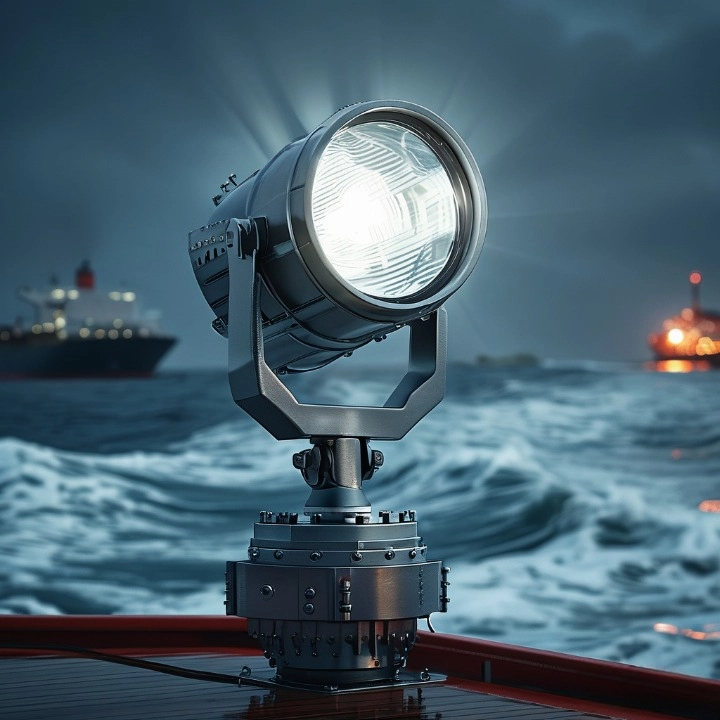
Marine spotlight performance comes from a bunch of areas, like the optical design, environmental resistance, electrical efficiency, and mechanical durability. When people understand these points, they’re more likely to choose fitting equipment, and keep the illumination dependable even when the environment is demanding.
| Key Factor | Description |
| Light Source Technology | The type of light source, especially LED technology, determines brightness, energy efficiency, and service life. |
| Brightness Output | Measured mainly in lumens, brightness indicates the amount of light produced by the spotlight. |
| Beam Angle and Beam Pattern | Determines how widely or narrowly the light is projected. |
| Optical Lens and Reflector Design | The quality and structure of lenses and reflectors control light distribution and focusing efficiency. |
| Color Temperature | Refers to the appearance of light, usually measured in Kelvin (K). |
| Waterproof Protection | The ability of the spotlight housing to prevent water and moisture penetration, usually indicated by an IP rating. |
| Corrosion Resistance | The ability of materials and coatings to resist saltwater corrosion. |
| Housing Material and Construction | Refers to the strength, durability, and heat resistance of the spotlight body. |
| Heat Dissipation Design | The ability to remove heat generated by the light source and electronic components. |
| Power Supply Compatibility | The match between the spotlight’s voltage requirements and the vessel’s electrical system. |
| Power Consumption | The amount of electrical energy required during operation. |
| Vibration and Shock Resistance | The ability to withstand vessel movement, engine vibration, and mechanical impacts. |
| Mounting Stability | The quality and design of mounting brackets and installation systems. |
| Control System Features | Includes remote control, rotation, dimming, and smart adjustment functions. |
| Maintenance Requirements | Includes ease of cleaning, inspection, and component replacement. |
| Operating Environment | Includes factors such as seawater exposure, temperature changes, weather conditions, and operating frequency. |
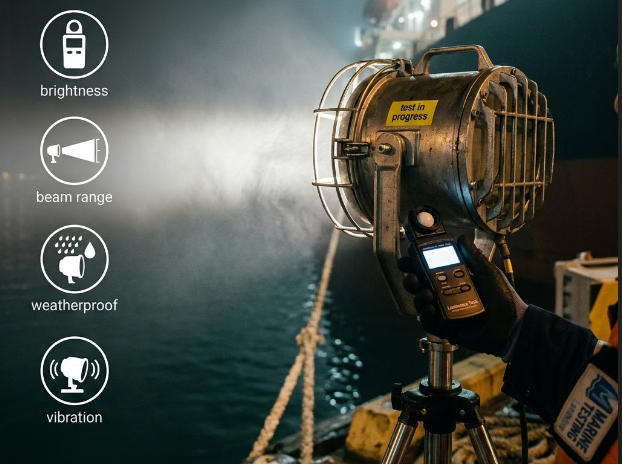
Key Steps for Selecting the Right Marine Spotlights
1. Understanding the Application Requirements
First, you really need to get a grip on the application requirements when selecting a marine spotlight. Like, where it will actually be used and how you plan to use it. Different marine applications need different spotlight capabilities. If the spotlight is meant for navigation, it should send a long-distance beam to spot obstacles, buoys, or other boats, and if it is for docking, then a wider illumination pattern helps with visibility around the vessel.
For commercial vessels and offshore work, marine spotlights are used for things like search and rescue, deck checks, gear upkeep, and emergency situations. In those cases, you usually want very high intensity lighting, with really good beam control. For recreational boats, smaller, energy-efficient spotlights can be a better match for night cruising and general lighting.
So choosing a spotlight based on its intended function makes sure the whole lighting setup delivers the right balance between brightness, coverage, and energy use.
2. Consider Brightness and Light Output
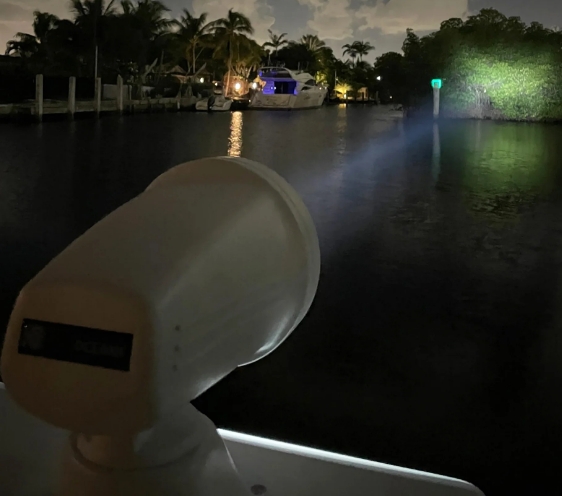
Brightness is one of the most important factors when selecting a marine spotlight. It is usually measured in lumens, which represent the total amount of visible light produced by the fixture. If the lumen output is higher, the illumination often feels stronger, but an overly bright beam can cause glare and actually make details harder to see in certain weather or sea conditions.
For smaller boats and leisure vessels, a medium output spotlight may be enough for everyday night operation, especially when you are staying close to dock areas or within a limited working zone. Bigger commercial vessels, patrol boats, and offshore platforms often need high-output spotlights that can illuminate spaces hundreds of meters away, or more.
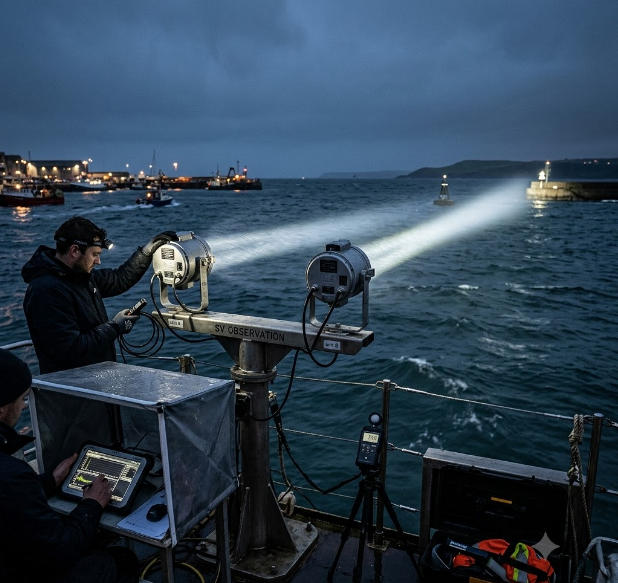
Along with lumens, check the candela rating too. Candela describes the light intensity in a specific direction, and that matters a lot for spotlights meant for long-range visibility. A spotlight with strong candela tends to push a more concentrated beam further, so the distance performance is improved.
3. Choose the Right Beam Angle
The beam angle for a marine spotlight kind of decides how the light is laid out, and it really shows up in visibility, coverage range, plus day to day efficiency while it is in use. To select the right beam angle of spotlights you have to think about what vessel you have, the operating surroundings, and also what the lighting is for. A narrow beam works well when you need long-distance visibility, but a wide beam helps with lighting up nearby workspaces, like decks, ramps, or tasks that are closer in.
| Beam Angle Type | Approximate Beam Range | Characteristics | Suitable Applications |
| Narrow Beam Spotlight | 5°–15° | Produces a highly concentrated light beam with long projection distance. | Navigation, search and rescue, offshore inspection, obstacle detection |
| Medium Beam Spotlight | 15°–30° | Offers a balance between light intensity and coverage area. | Fishing vessels, patrol boats, general marine operations |
| Wide Beam Spotlight | 30°–60° | Spreads light across a larger area with shorter projection distance. | Deck lighting, docking, cargo handling, maintenance work |
| Ultra-Wide Beam Spotlight | 60° or above | Creates broad-area illumination with minimal focusing. | Work platforms, ship decks, onboard activities, marine equipment inspection |
| Adjustable Beam Spotlight | Variable angle | Allows operators to change between focused and wide illumination modes. | Commercial ships, rescue vessels, multi-purpose boats |
Selecting the correct beam angle ensures that a marine spotlight delivers effective illumination without unnecessary glare or wasted energy. By matching the beam pattern with the vessel’s specific operational needs, users can improve safety, visibility, and overall lighting performance in marine environments.

4. Evaluate Waterproof and Corrosion Resistance
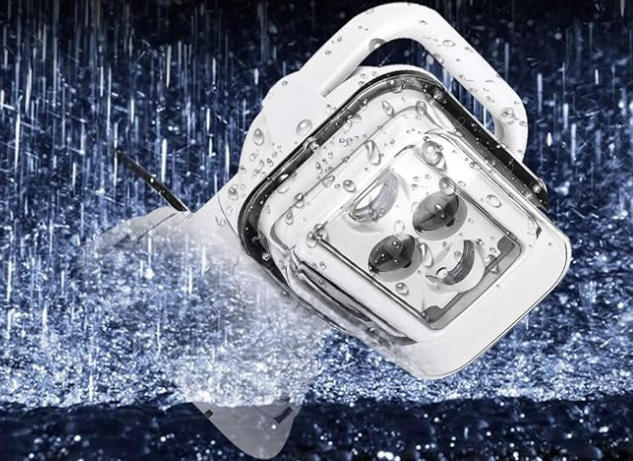
Marine environments can be very demanding, so waterproof performance matters a lot. A good quality marine spotlight should come with a solid waterproof level, and you usually see this in an IP rating, meaning an Ingress Protection rating.
For marine applications, an IP66 or higher rating is often recommended. These levels show firm protection against water jets, dust, and moisture getting inside. When the equipment is set in spots where direct seawater spray happens, like the bow, deck, or offshore platforms, choosing stronger protection gives better reliability in daily use.
Corrosion resistance is also essential. Marine spotlights should be built with marine-grade aluminum alloys, stainless steel, or plastics that resist corrosion well. Protective coatings and anti-corrosive treatments contribute to a longer service life, especially in saltwater settings.
5. Select an Efficient Light Source
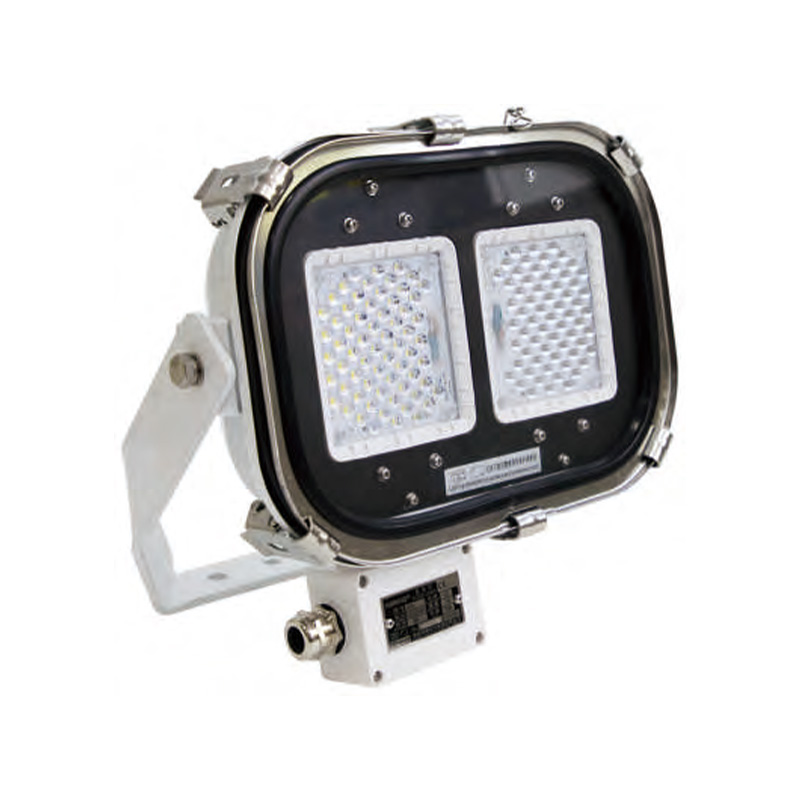
LED marine spotlights are now the preferred lighting choice for many vessels because they deliver high efficiency, long durability, and solid output in difficult marine conditions. Compared with older lighting options, LED spotlights deliver brighter illumination, while lowering energy use and reducing upkeep needs.
| Advantage | Description | Benefits for Marine Applications |
| High Energy Efficiency | LED technology produces more light output while consuming less electrical power compared with halogen or incandescent lights. | Reduces battery load, lowers operating costs, and extends operating time for vessels with limited power capacity. |
| Long Service Life | LED light sources can operate for many thousands of hours with stable performance. | Reduces replacement frequency, minimizes maintenance work, and improves long-term reliability. |
| High Brightness Output | Advanced LED chips provide powerful illumination with compact designs. | Improves visibility during navigation, search operations, docking, and offshore activities. |
| Low Heat Generation | LEDs convert more energy into light rather than heat. | Reduces overheating risks and improves the durability of internal components. |
| Fast Start-Up | LED spotlights reach full brightness immediately after activation. | Provides instant illumination during emergencies and nighttime operations. |
| Excellent Shock and Vibration Resistance | LEDs have solid-state construction without fragile filaments. | Maintains reliable performance on vessels exposed to vibration, waves, and mechanical movement. |
| Compact and Lightweight Design | LED components require less space while delivering high performance. | Allows easier installation on different types of boats and marine equipment. |
| Superior Waterproof Performance | LED marine spot lights can be designed with sealed housings and high IP protection ratings. | Provides reliable operation in rain, seawater spray, and humid marine environments. |
| Corrosion Resistance | Marine LED spot lights often use marine-grade materials and protective coatings. | Extends service life in saltwater environments and reduces damage caused by corrosion. |
| Flexible Lighting Options | LEDs can support different beam angles, color temperatures, and control functions. | Allows customization for navigation, deck lighting, inspection, and search applications. |
| Lower Maintenance Requirements | Durable LED components require fewer replacements and repairs. | Reduces downtime and maintenance expenses for vessel operators. |
| Environmentally Friendly Operation | Lower energy consumption and longer lifespan reduce resource use. | Supports more sustainable marine operations with reduced energy waste. |
| Better Performance in Cold Conditions | LEDs maintain reliable operation in low-temperature environments. | Suitable for offshore platforms, polar regions, and challenging weather conditions. |
| Smart Control Compatibility | Many LED spot lights can integrate with remote controls, sensors, and vessel management systems. | Improves lighting control, safety, and operational convenience. |
Marine LED spotlights provide a combination of powerful illumination, energy savings, durability, and environmental resistance, making them an ideal choice for modern vessels.
6. Check Voltage Compatibility
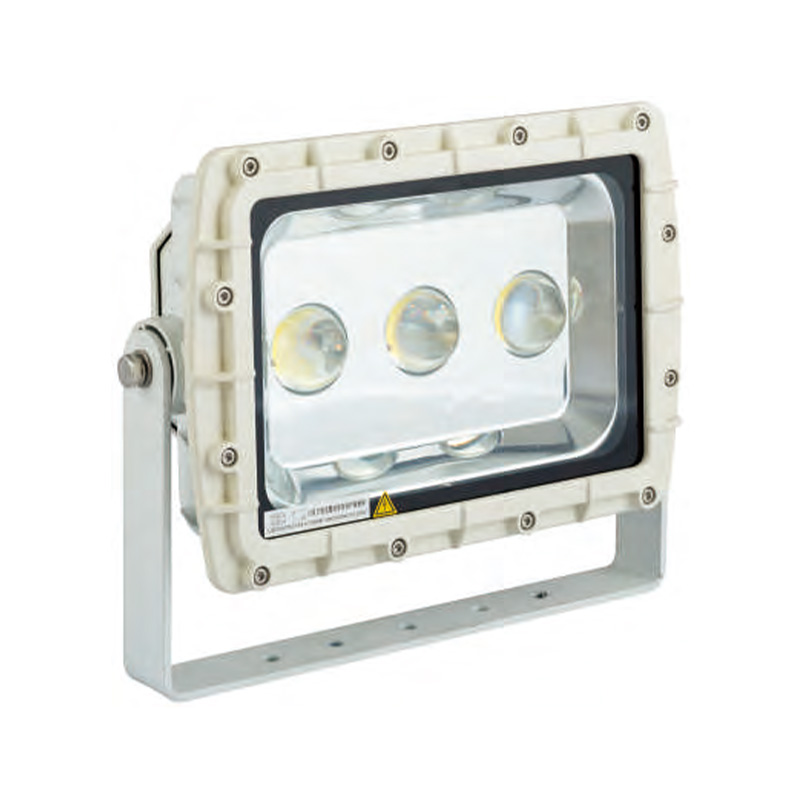
Marine spotlights need to match the electrical setup on the vessel. You’ll commonly see marine power systems as 12V, 24V, or 48V. If you choose a spotlight that does not fit, you might see weak output, also even electrical damage.
Before you purchase, confirm the battery system and power supply specifications onboard. For commercial ships and offshore equipment, it matters a lot to also verify the spotlight follows onboard electrical standards, and the safety requirements.
Some advanced models support a wide voltage range, making them suitable for different types of vessels and easier installation.
7. Consider Mounting Options and Adjustability
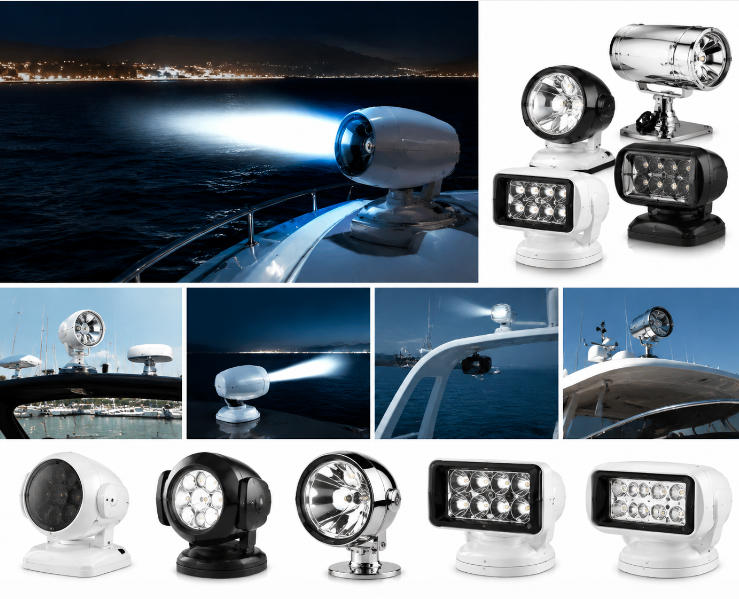
How you install the spotlight influences both the lighting performance and day to day usability. Marine spotlights can be installed in various spots, for example:
- Deck-mounted spotlights: Suitable for general illumination and work areas.
- Roof or cabin-mounted spotlights: Common on yachts and patrol boats.
- Remote-controlled spotlights: Allow operators to adjust the direction from the control station.
- Fixed-position spotlights: Provide reliable lighting for specific areas.
A spotlight that offers both horizontal and vertical adjustment lets the user aim with more precision, exactly where it is needed. Remote-controlled versions are especially useful on larger vessels, manual fine tuning can be difficult, or even risky.
8. Assess Durability and Shock Resistance
Marine vessels are dealing with constant rocking, vibration, and occasional knocks. A dependable marine spotlight should be built to handle all that, without losing performance over time.
Some key durability and protection aspects to look for include :
- Strong housing construction
- Shock-resistant internal components
- Secure mounting brackets
- Heat dissipation systems
- Protection against vibration-related damage
For offshore vessels, and workboats, rugged construction is essential because equipment failure in harsh conditions can hit safety and reduce operational efficiency, quite fast.
9. Look for Additional Smart Features
Modern marine spotlights often come with additional functions that boost comfort and safety. Some models include wireless remote control, automated positioning, dimming modes, and integration with navigation systems.
Those smart features help crews adjust the lighting setup during navigation, emergency readiness, or offshore tasks. For professional marine use, compatibility with vessel management systems can also strengthen day to day control.
10. Balance Quality, Cost and Maintenance
While the price matters, marine spotlights should be looked at by thinking long term value not just the initial buy cost. A cheaper spotlight, with weak waterproofing or less solid materials, can lead to frequent changes and then more upkeep expenses later on, and it adds up faster than you expect.
When you compare products, you might want to think about
- Expected service life
- Warranty support
- Whether replacement parts are easy to get
- How much maintenance it really needs
- The operating environment it will face
Investing in a sturdy, well-made spotlight normally brings better dependability and lower total costs across the equipment’s lifespan.
Summary
Selecting the right marine spotlight requires a comprehensive evaluation of lighting output, resistance to weather and salt, energy efficiency, installation demands and durability. The right spotlight should deliver enough brightness, a suitable beam pattern, dependable waterproof protection, and steady performance while working in difficult marine conditions.
