
The Use of Marine Navigation Lights on Small Vessels
Small vessels require marine navigation lights as vital safety equipment which helps their operators show their current location and movement direction and their working condition to other nearby vessels during times of night and low visibility. The correct design and upkeep of marine navigation lighting systems, which serve recreational boats and fishing vessels and small commercial craft, protect against accidents while helping users meet maritime safety regulations.
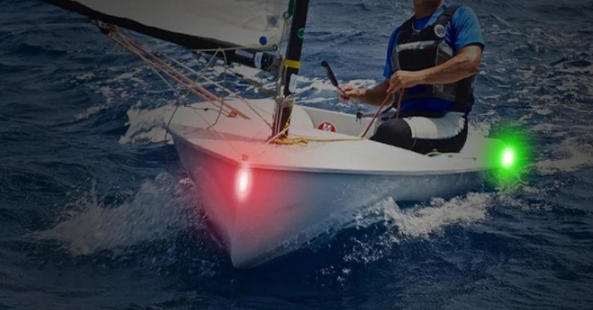
Table of Contents
Understanding Marine Navigation Lights
Vessels use standardized marine navigation lights to display their location and movement through water. The navigation lights use different colors and positions together with specific visibility distances to provide information about their presence to nearby ships. The system is governed internationally by the International Maritime Organization under the rules of COLREGs (International Regulations for Preventing Collisions at Sea). The regulatory requirements for navigation lights on small vessels require the same lights as large ships but simplify their operation for smaller vessels.
Types of Navigation Lights for Small Vessels
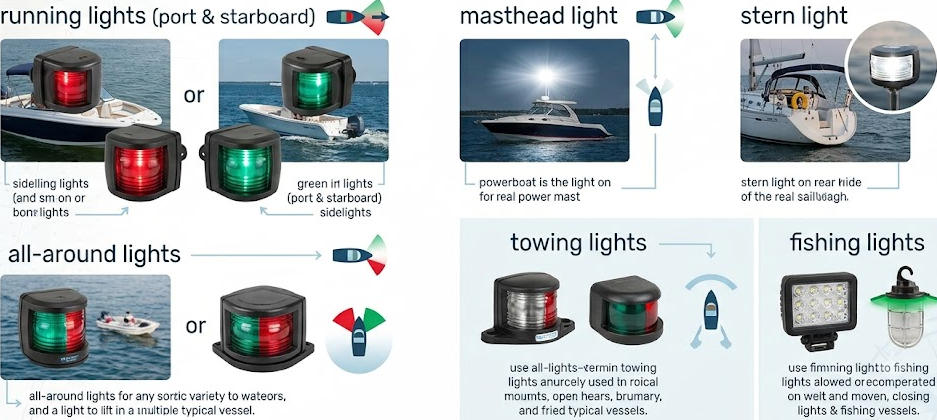
| Navigation Light Type | Color | Mounting Position | Visibility Arc | Function | Typical Use on Small Vessels |
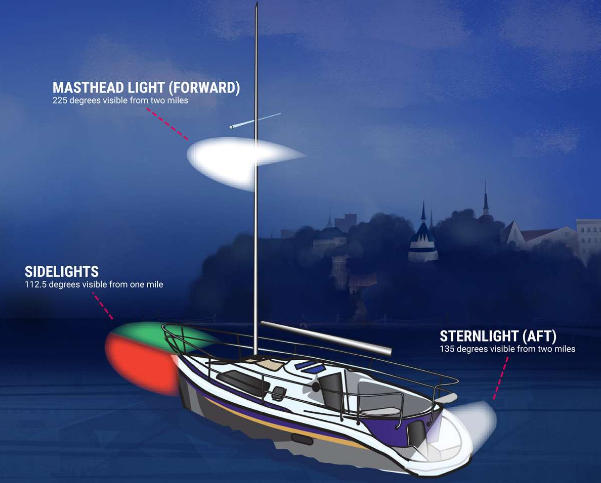
| Sidelights | Red (port), Green (starboard) | Left and right sides of the vessel | 112.5° each side | Indicate vessel direction and orientation | Required for most powered vessels; often combined in one fixture for boats under 12 m |
| Stern Light | White | Rear (stern) of the vessel | 135° | Shows the vessel’s rear position | Used when operating at night; part of standard lighting setup |
| Masthead Light | White | Front centerline, above sidelights | 225° | Indicates forward direction and presence of a powered vessel | Required for power-driven vessels; may be combined with stern light on small boats |
| All-Round White Light | White | Higher point (usually mast or pole) | 360° | Provides full visibility around the vessel | Common for vessels under 12 m; can replace masthead and stern lights |
| Combined Lantern | Red & Green | Bow (front) of the vessel | 112.5° each side | Combines sidelights into one unit | Space-saving solution for small vessels |
| Anchor Light | White | Higher visible point | 360° | Indicates vessel is anchored | Used when vessel is stationary at anchor at night |
| Towing Light | Yellow | Stern (above or near stern light) | 135° | Indicates towing operations | Used when towing another vessel or object |
| Fishing Light | Red/White or Green/White combinations | Various (depending on type) | Varies | Signals fishing activity and gear status | Used on small fishing vessels to indicate operational condition |
Regulatory Requirements of Navigation Lights for Small Vessels
| Requirement Category | Regulation Details | Applicability | Key Notes |
| Governing Rules | Defined by COLREGs under the International Maritime Organization | All vessels operating in international waters | Ensures standardized lighting to prevent collisions |
| Minimum Lighting Configuration | Must include sidelights, stern light, and masthead light (or all-round white light for smaller vessels) | Power-driven vessels | Configuration varies based on vessel size |
| Vessels Under 12 Meters | May use a combined lantern (sidelights) and an all-round white light instead of separate masthead and stern lights | Small recreational and fishing boats | Simplified setup allowed to save space and cost |
| Vessels Under 7 Meters | May display an all-round white light; sidelights required if practicable | Very small boats (e.g., dinghies) | Flexibility due to size and power limitations |
| Visibility Range | Lights must meet minimum visibility distances (typically 1–2 nautical miles depending on light type) | All small vessels | Ensures visibility in low-light conditions |
| Color Specifications | defined colors: red (port), green (starboard), white (stern/masthead), yellow (towing) | All vessels | Colors must comply with maritime standards for recognition |
| Arc of Visibility | Each light must cover a specified horizontal arc (e.g., 112.5°, 135°, 225°, or 360°) | All vessels | Proper positioning is essential for compliance |
| Mounting and Positioning | Lights must be installed to avoid obstruction and ensure correct alignment | All vessels | Improper placement can lead to non-compliance |
| Operational Conditions | Lights must be displayed from sunset to sunrise and during restricted visibility (fog, rain) | All vessels | Mandatory regardless of vessel activity |
| Special Operations Lighting | Additional lights required for activities like fishing, towing, or anchoring | Vessels engaged in special operations | Signals vessel status to others |
| Maintenance and Functionality | Navigation lights must be regularly inspected | All vessels | Non-functional lights are a violation of regulations |
| Inland vs. International Rules | Some regions may adopt modified rules (e.g., inland waterways) based on COLREGs | Varies by location | Operators must check local maritime authority requirements |
Advanced Technologies Integrated in Marine Navigation Lights for Small Vessels
Emerging technologies in navigation lighting are most critical for small vessels, where space, power ingress, and maintenance possibilities are severely limited. Modern marine navigation lights should meet regulatory requirements not only but also all priorities linked with operational safety and overall cost reduction.
1. LED Lighting as the Core Technology
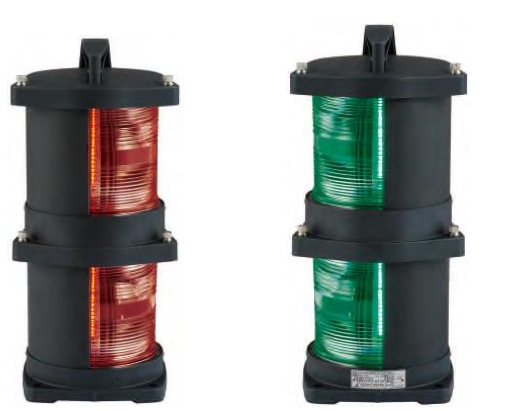
In the marine world, light-emitting diode (LED) lighting stands as the superior alternative in marine navigation. LEDs consume remarkably less power than traditional incandescent or halogen bulbs, which is really crucial for small craft with restricted battery capacity. Owing to their lasting service life, maintenance is almost never required. Moreover, LED navigation lights provide consistent light output; thus, from fog to rain, their response time is quicker, guaranteeing that the navigational signals remain visible and reliable even under severe weather conditions.
2. Optical Lens Design and Precision Light Distribution
Advanced optical engineering is crucial to ensure that navigation lights meet high visibility and arc demands. Plexiglass lenses and reflectors are used in modern navigation lights to perform rigorous light control into customized angles such as 112.5°, 135°, or a full 360°. The optical qualities of these high-grade materials enhance their light throughput capacity and minimize the loss of scattered light and distortion. This guarantee is made to ensure that the position and movement of a small craft can be read accurately by other craft several miles away.
3. Solar Power Integration
Solar-powered navigation lights are increasingly adopted, especially for small boats, buoys, and auxiliary craft. These systems integrate photovoltaic panels, rechargeable batteries, and intelligent charge controllers to provide autonomous operation. By harnessing solar energy, they reduce dependence on onboard electrical systems and offer a sustainable solution for vessels operating in remote areas. Advances in battery technology have further improved energy storage capacity, allowing lights to function reliably throughout the night and during periods of limited sunlight.

4. Smart Control and Monitoring Systems
The integration of smart electronics has introduced a new generation of functionality to maritime luminaries. Today’s systems are able to include automatic light sensors to get switched on and off at dusk/dawn, thus obliterating the need for manual control. In advanced settings, a real-time monitoring system can alert the boat operator of faults and performance issues. Intelligent attributes on the functioning enhance the reliability of working while ensuring according to security rules without needing constant intervention from hum.
5. Waterproofing and Corrosion-Resistant Materials
Because of the exposure of navigation lights to salty-water environments for a prolonged time, even the very presence of humidity and temperatures fluctuating at any time proves to be another factor that is highly damaging in such highly corrosive environments. Conditions that have to be dealt with expeditiously without further ado are navigation systems that are fit for the most widely used corrosion-resisting materials, e.g. marine-grade stainless steel, anodized aluminum, and high-polymer plastics. Techniques to stop water from entering are of utmost importance to the lasting and unremitting operation of navigation lights in rough weather.
6. Compact and Integrated Design Solutions
The spatial confinement on smaller ships has given rise to compact and multifunctional lighting fixtures. Single fixture units, with integrated lanterns featuring multiple light functions, have been widely applied in quest of installation simplification and wiring decomplexification. These combined designs do not simply occupy less space, but they also pump elegance from their presence and regard the overall system weight. The progressive wave of small-scale design and circuitry has ultimately given rise to a remarkable performance in tiny but more efficient packages.
7. Compliance-Driven Engineering and Certification
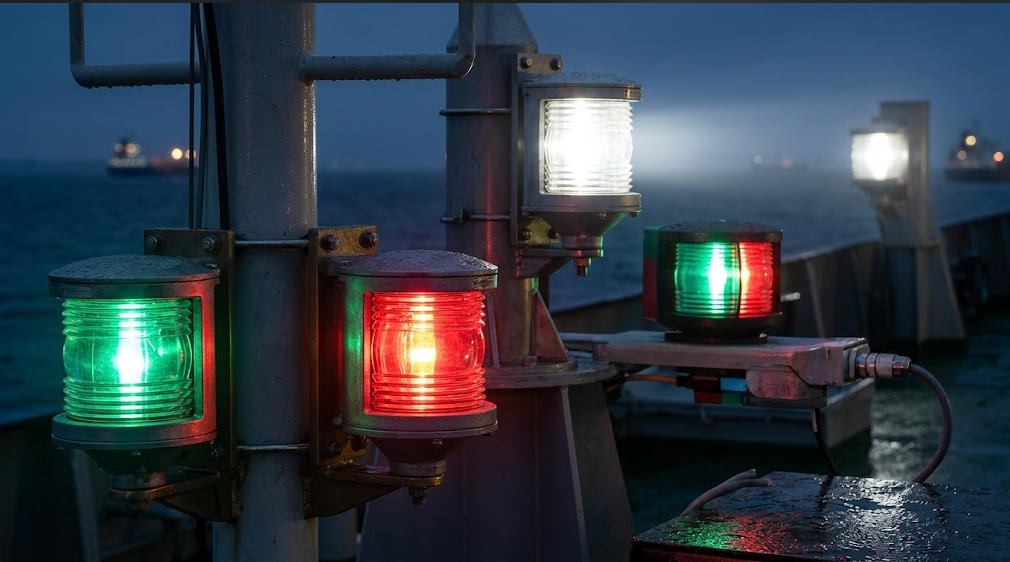
Navigation lights today are designed so as to meet international standards. This does guarantee conformation to regulations governing color, brightness, and visibility range. The documentation required for the manufacturing process includes testing and certification processes, which need implementation in accordance with the International Maritime Organization’s guidelines and in view of appropriate legal and regulatory bodies. The conformance procedure allows small ships to have lesser concerns about using the system in their national waters or on international voyages.
8. Integration with Digital Marine Systems
A great shift has begun in the maritime industry due to multiple digital deployments. Thus, navigation lights are slowly becoming integrated into the vessel systems and controlled by onboard electronics. The most advanced systems can connect to navigation systems for distress information or even an AIS (Automatic Identification System)-among other parts contributing to the integration, which may potentially increase safety and efficiency for an operational environment and help in the development of greater situational awareness.
Best Practices for Installation and Positioning of Marine Navigation Lights in Small Vessels
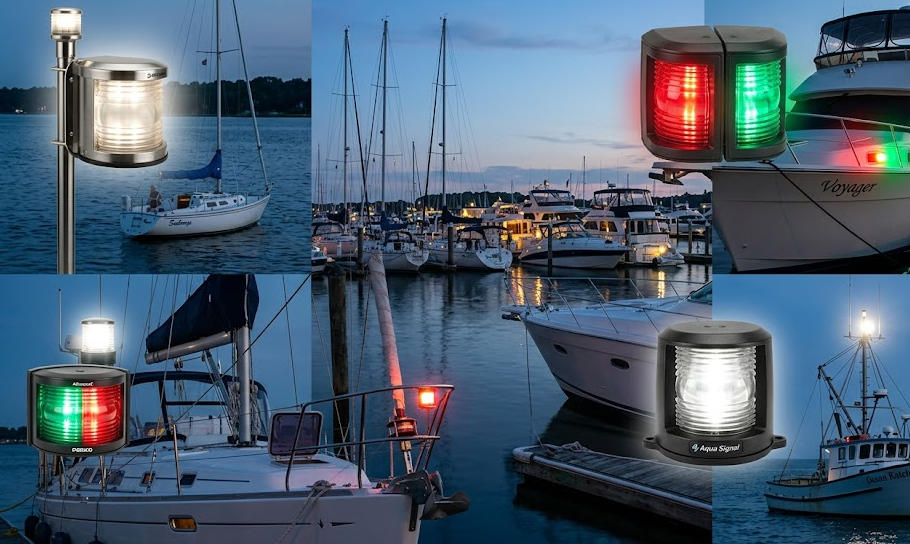
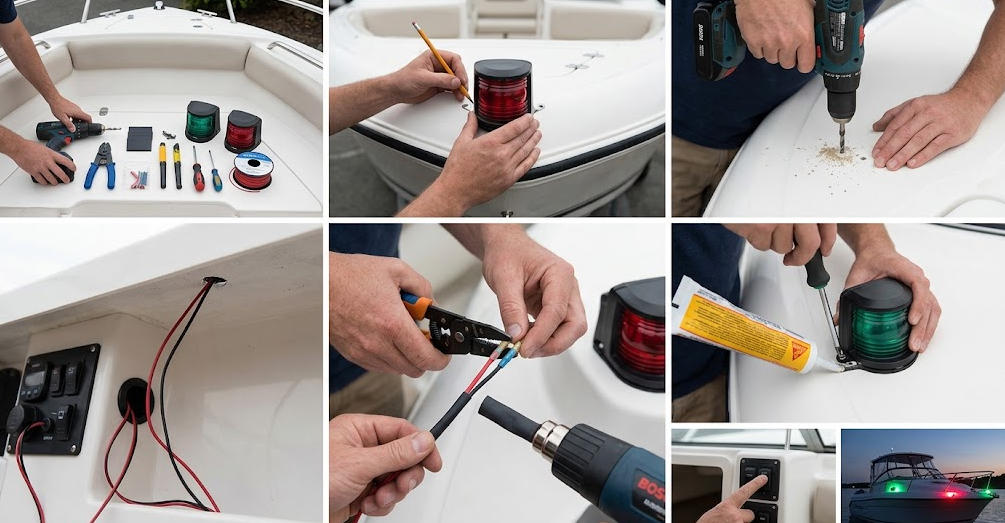
Proper installation and positioning of marine navigation lights are essential for ensuring that small vessels visible and correctly interpreted by others on the water.
| Practice Category | Best Practice | Purpose | Key Considerations |
| Compliance with Regulations | Install lights according to COLREGs defined by the International Maritime Organization | Ensure legal compliance and safety | Verify vessel size-specific requirements before installation |
| Correct Light Placement | Position sidelights on port (left) and starboard (right), stern light at the rear, and masthead/all-round light at the highest practical point | Ensure proper visibility and identification | Avoid incorrect placement that could confuse other vessels |
| Unobstructed Visibility | Mount lights where they are not blocked by structures such as antennas, railings, or cargo | Maintain full visibility arcs | Regularly check for new obstructions after modifications |
| Proper Height Alignment | Install lights at appropriate vertical separation, especially masthead above sidelights | Prevent light overlap and ensure correct signal interpretation | Follow minimum height spacing guidelines |
| Accurate Arc Alignment | Align each light to cover its required horizontal arc (e.g., 112.5°, 135°, 225°, 360°) | Ensure correct directional signaling | Use manufacturer alignment guides during installation |
| Secure Mounting | Use vibration-resistant brackets and marine-grade fasteners | Maintain stability in rough sea conditions | Prevent loosening due to vessel motion |
| Waterproof Electrical Connections | Seal wiring with marine-grade connectors and insulation | Prevent water ingress and electrical failure | Use heat-shrink tubing and corrosion-resistant materials |
| Corrosion Protection | Select corrosion-resistant materials for navigation lights and apply protective coatings | Extend lifespan in harsh marine environments | Inspect regularly for signs of rust or degradation |
| Electrical Load Management | Ensure the vessel’s power system can support the lighting load (especially for non-LED systems) | Avoid power failures | Prefer energy-efficient LED lights for small vessels |
| Routine Testing After Installation | Test all lights under real operating conditions | Confirm proper function and alignment | Conduct checks during nighttime or low visibility |
| Accessibility for Maintenance | Install lights in positions that allow easy access for cleaning and replacement | Simplify maintenance tasks | Avoid overly hard-to-reach mounting points |
Summary
Marine navigation lights are essential safety equipment for small vessels that provide vision and communi-cation in the water. Vessel operators can significantly reduce the likelihood of accidents by knowing the types, regulations, and good navigation lighting practices. With the latest advancements in technology, modern navigation lighting is geared toward becoming more energy-efficient, tough, and smart, thereby making small vessel operations safer and more reliable.
