How to Comply COLREG Regulations for Navigation Lights
Navigation safety at sea is fundamental for maritime operations, and complying with international regulations makes it possible for vessels to move without causing trouble and avoid collisions. The International Regulations for Preventing Collisions at Sea (COLREGs), which were set by the International Maritime Organization (IMO), lay out detailed guidance for navigation and include very specific requirements for navigation lights. So, complying with COLREG regulations for marine navigation lights is kind of essential because it helps prevent collisions and keeps maritime traffic at a more predictable rhythm.
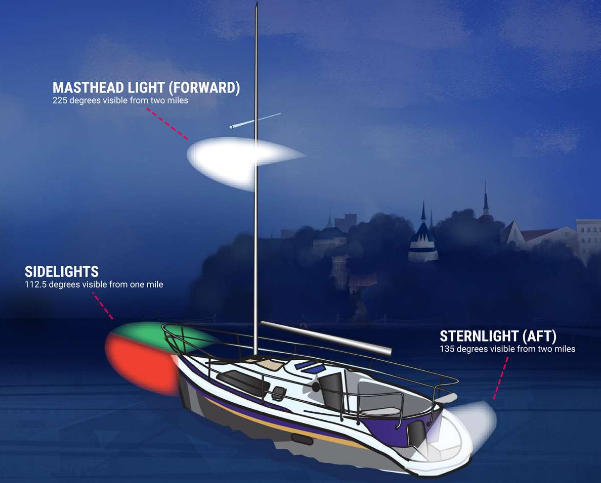
Table of Contents
Why Complying with COLREG Regulations for Navigation Lights is Important
Navigation lights work as visible signals for other vessels, telling them where a ship is, what course it is following, and what’s going on operationally, especially at night or during reduced visibility. When lights are properly installed, and they are really functioning as they should, mariners can figure out the type of vessel, its direction of travel , and whether it is doing some special activity like towing, fishing, or being in restricted maneuver conditions. If a crew fails to comply with COLREG requirements for navigation lights, that can trigger collisions, create legal exposure, and also introduce safety hazards, in a way that is hard to undo later.
Key COLREG Compliance Requirements for Navigation Lights
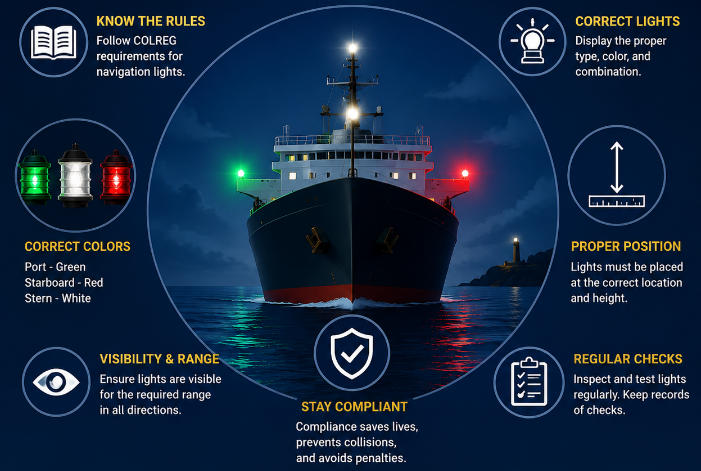
COLREGs Part C, “Lights and Shapes,” outlines specific requirements for navigation lights based on the type, size, and operational status of vessels.
Types of Navigation Lights
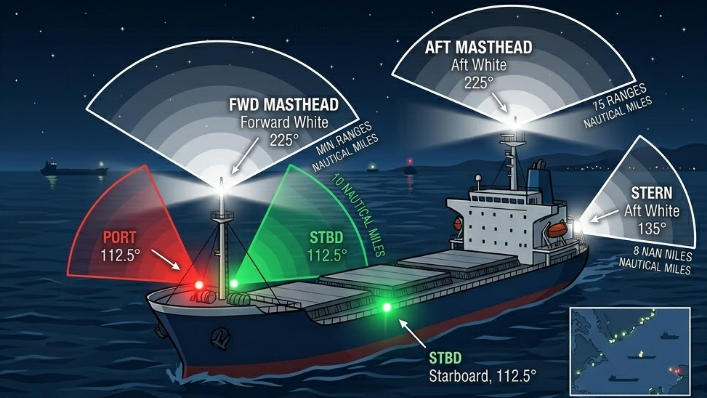
This chart provides the basic types of navigation lights, their color, placement, arc of visibility, and typical use for easy reference in understanding COLREG compliance.
| Type of Light | Position/Placement | Purpose / Visibility Arc | Typical Use |
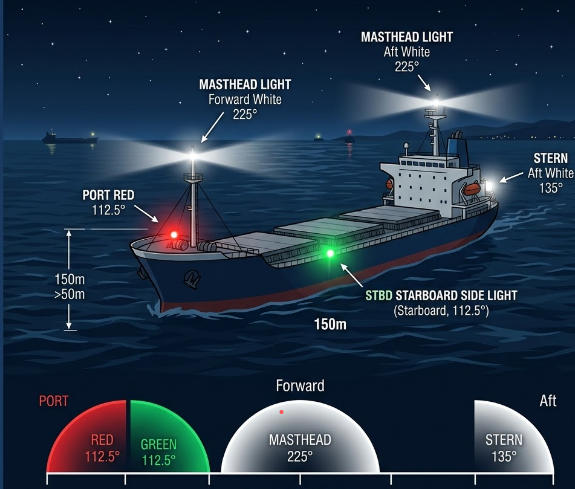
| Masthead Light | Over the fore-and-aft centerline of the vessel | Forward, visible 225° (from ahead to 22.5° abaft the beam) | Power-driven vessels underway |
| Sidelight (Port) | Port side of the vessel | 112.5° (from ahead to 22.5° abaft the beam on port side) | Indicates vessel’s port side to other vessels |
| Sidelight (Starboard) | Starboard side of the vessel | 112.5° (from ahead to 22.5° abaft the beam on starboard side) | Indicates vessel’s starboard side to other vessels |
| Stern Light | At the stern | 135° (from 67.5° on each side of the stern) | Shows rear of the vessel |
| Towing Light | Same as stern light or in vertical line with stern light | Same as stern light | Towing operations |
| All-Round Light | Mast or other suitable point | 360° | Anchored vessels, special operations |
| Fishing Light | Mast or suitable location | 225° forward (red/white combination) | Fishing vessels engaged in fishing operations |
| Restricted Maneuverability | Vertical line, visible from both sides | 360° | Dredging, underwater operations, or other restricted vessels |
Visibility and Range
This chart provides required visibility distances for navigation lights based on vessel size and special operations. It aligns with COLREG Part C regulations for light range.
| Vessel Length | Masthead Light | Sidelights (Port & Starboard) | Stern Light | Towing / Special Lights | Remarks |
| Less than 12 meters | 2 nautical miles | 2 nautical miles | 2 nautical miles | 2 nautical miles | Small vessels, simple configuration |
| 12–50 meters | 3 nautical miles | 3 nautical miles | 3 nautical miles | 3 nautical miles | Standard for medium-sized vessels |
| Over 50 meters | 6 nautical miles | 3–5 nautical miles | 3–5 nautical miles | 3–5 nautical miles | Larger vessels require higher visibility |
| Towing operations | 6 nautical miles | 3–5 nautical miles | 3–5 nautical miles | 3 nautical miles (yellow towing light) | Visibility depends on tow length and type |
| Vessels at anchor | / | / | / | 2 nautical miles (all-round white light) | Single or double lights for vessels over 50 m |
| Vessels restricted in maneuverability | / | / | / | 3 nautical miles (red-white-red vertical) | Used during dredging, diving, or restricted operations |
Operational Readiness
COLREGs require navigation lights to stay operable from sunset to sunrise, and also any time visibility is limited. Regular upkeep is key, like doing testing now and then, swapping a bulb or changing an LED when needed, and checking electrical circuits properly. That way the lights will keep working in a reliable way. These days, LED navigation lights provide better energy efficiency, steadier glow across the board, and a longer service life too, so they end up being a good fit for meeting international standards compliance.
Color and Intensity Compliance
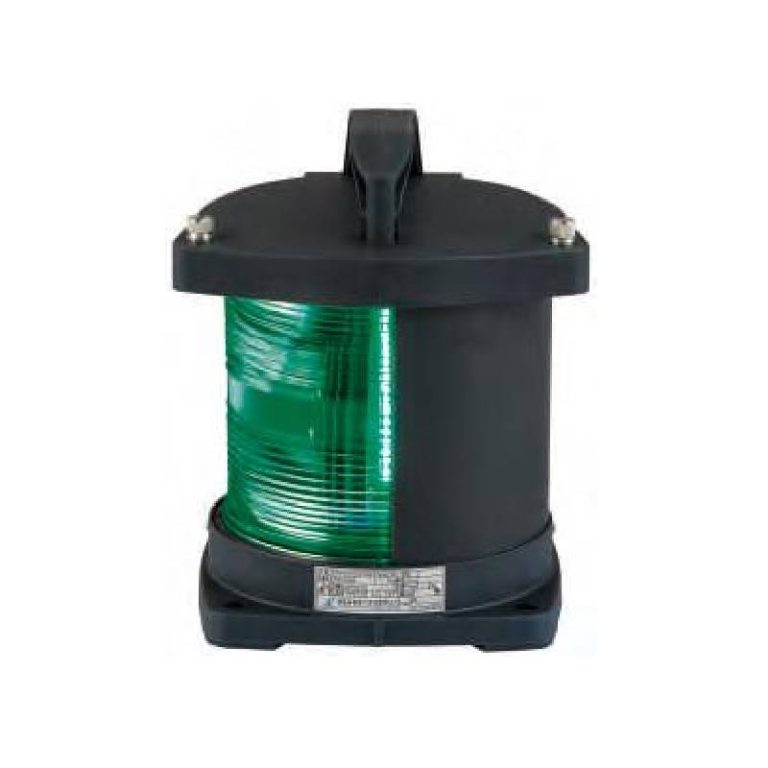
The following chart offers the required color, intensity and purpose of each type of navigation light, making it easy to check compliance with COLREGs.
| Type of Light | Required Color | Required Intensity | Purpose |
| Masthead Light | White | Bright enough to be visible at prescribed nautical miles based on vessel size | Indicates the forward direction of power-driven vessels |
| Sidelight (Port) | Red | Sufficient for visibility from ahead to 22.5° abaft the beam on port side | Identifies the port side to other vessels |
| Sidelight (Starboard) | Green | Sufficient for visibility from ahead to 22.5° abaft the beam on starboard side | Identifies the starboard side to other vessels |
| Stern Light | White | Visible from 67.5° on each side of the stern | Indicates the rear of the vessel |
| Towing Light | Yellow | Matches stern light visibility | Indicates towing operations, usually positioned above or in line with stern light |
| All-Round Light | White / Yellow | Visible 360° | Used for anchored vessels, special operations, or restricted maneuverability |
| Fishing Light | Red over White | Forward visibility 225° (arc from ahead) | Shows fishing vessel engaged in fishing, limited maneuverability |
| Restricted Maneuverability | Red-White-Red | 360° visibility | Signals vessels restricted in ability to maneuver (dredging, diving, towing) |
Special COLREG Compliance Considerations for Navigation Lights
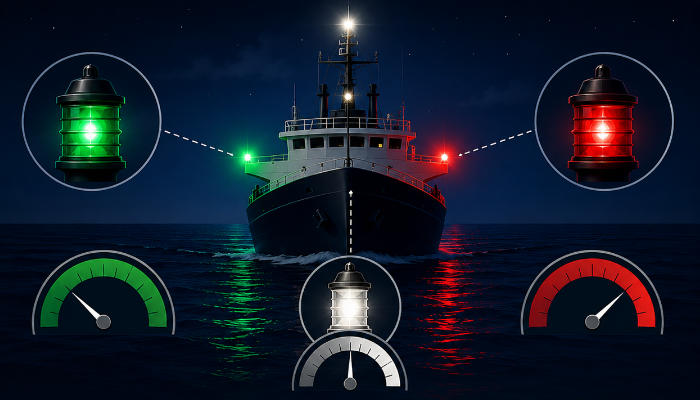
Ensuring compliance with COLREGs goes beyond just fitting the standard navigation lights. Certain working situations, vessel categories, and atmospheric factors call for special lighting layouts, so the vessel’s state is actually communicated clearly and safety stays maintained in sea traffic.
- Vessels at Anchor
A vessel at anchor needs to show an all round white light, it’s meant to let others know it is present. How well that light can be seen is tied to the ship’s size: smaller vessels usually need one light that is visible from two nautical miles, while larger ones may need a pair of lights set in a vertical line, in order to provide sufficient recognition. With that setup other vessels get the message that it is a stationary ship, which helps reduce the risk of collision in busy waters, or when visibility drops.
2. Restricted Maneuverability
Boats that are doing work that makes it harder for them to maneuver, for instance dredging, underwater operations, or towing big items, should carry a set of red and white lights that are stacked up vertically. The usual arrangement is red white red, and it must be seen from every direction. These lights basically tell other mariners that the vessel cannot really swing around fast, so ships around it should give way , or at least navigate with care, and pass at a safer distance.
3. Towing operations
Tugboats need extra lighting to show both the tug and the tow. Most of the time, a yellow towing light is placed above the stern light, or it is aligned in a vertical line with it. The tow may also show a yellow light to mark that it is there, and to help indicate its direction. With these lights, other vessels get a clear signal, including how long the tow is, and where it is going, which matters a lot during night operations or when visibility is restricted.
4. Fishing vessels
Fishing vessels, especially ones that are limited in how they can move, because of nets or other gear, tend to show special lights to show what they’re doing. A very common setup is a red light over a white light, which tells other boats that the vessel is actively fishing and may have limited maneuvering ability. If you recognize these fishing lights in time you can help avoid incidents in places with heavy maritime traffic.
5. Emergency or Distress Situations
In emergency situations, vessels sometimes add extra lights to communicate distress or some special condition. This can mean flashing all round lights, lights with a higher intensity, or other arrangements that are laid out in the COLREGs and in flag state rules. The purpose is pretty direct: these signals grab attention quickly, and they also warn others to take extra care because the vessel may need help.
6. Environmental and Operational Factors
Mariners also have to keep an eye on environmental conditions like fog, heavy rain, or snow. these things sharply reduce visibility so navigation lights can’t be treated as optional or “later” tasks. the navigation lights must stay fully operational in those conditions, so compliance is still met. routine maintenance matters too, including testing, and if needed replacing bulbs or LEDs, because otherwise the lights may fade, stop working properly, or become harder to see across the required distances. installation quality counts as well, making sure nothing blocks the lamps because of superstructures, rigging, or other equipment.
COLREG Compliance Verification for Navigation Lights
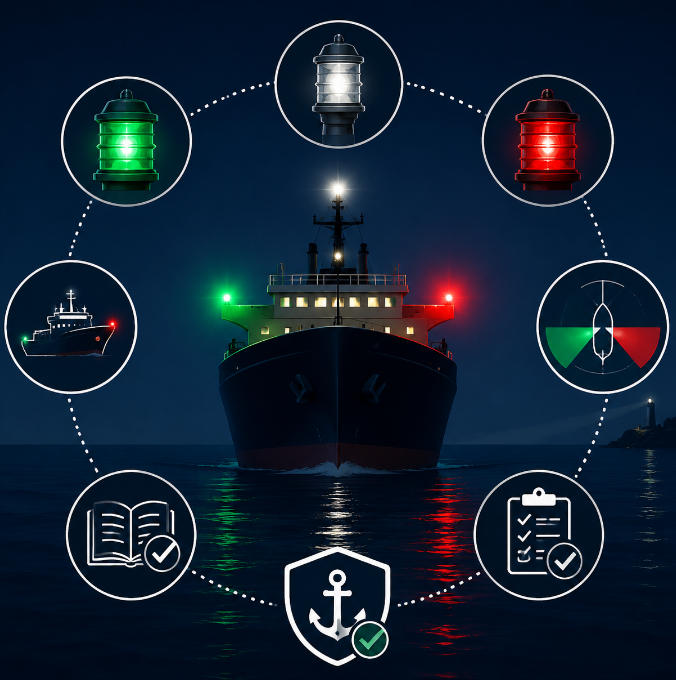
This chart provides a step-by-step overview of how to verify that navigation lights meet COLREG compliance, covering inspection, operational test, maintenance records, etc.
| Verification Aspect | Requirements | Importance |
| Visual Inspection | Check all navigation lights for proper color, placement, and orientation | Ensures lights are correctly installed and meet COLREG standards |
| Operational Test | Turn on all lights from sunset to sunrise or simulate reduced visibility conditions | Confirms that lights function reliably when needed |
| Intensity & Visibility Range | Verify that lights are visible at the required nautical miles based on vessel size | Ensures other vessels can see the lights from a safe distance |
| Placement & Height Verification | Measure height and position of masthead, sidelights, stern light, and special lights | Ensures proper arcs of visibility and compliance with COLREGs |
| Maintenance Records | Keep logs of bulb or replacing LED navigation lighting, circuit checks, and any repairs | Provides proof of ongoing operational readiness |
| Special Situations Check | Verify lights for anchored vessels, restricted maneuverability, towing, and fishing | Confirms that all unique configurations are correct and functional |
| Certification & Standards | Ensure navigation lights meet IMO, IEC, or flag state standards and certifications | Confirms lights meet recognized international standards |
| Inspection by Authorities or Surveys | Conduct regular checks by flag state authorities or classification societies | Provides official verification of COLREG compliance |
Final Thoughts
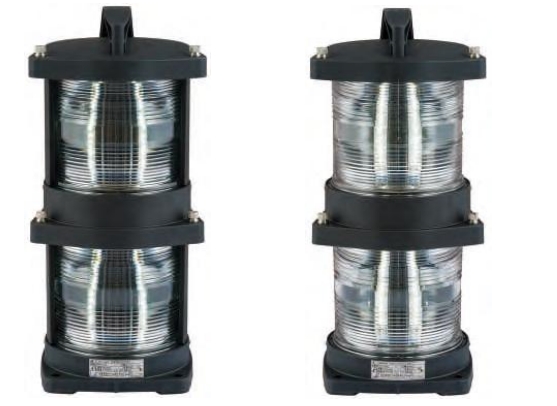
Complying with COLREG regulations for navigation lights is one of the more critical bits of maritime safety. Correct placement, proper color, reliable visibility, and consistent operation all help reduce collisions. They also help protect the crew and cargo, and they support smoother vessel operations. As maritime technology keeps moving forward, shipowners and operators have to keep investing in high-quality, certified navigation lighting systems so they can match COLREG expectations and maintain safe navigation habits at all times.
