
How to Choose Explosion-proof Lights for Hazardous Areas
In industries where flammable gases, combustible dust, or explosive vapors can be present, lighting systems have to keep working with dependable brightness while also preventing ignition. Explosion-proof lights are designed to operate safely in hazardous environments by containing sparks, controlling how much heat is produced, and lowering the chance of an explosion, in a very controlled way.
Selecting the right explosion-proof lights means you really need to look at the hazardous setting first, safety certifications, the actual lighting output, how and where you will install them, and what the long-run operating costs will be. A solid lighting solution does more than just guard people. It can also support better productivity and usually cut down on upkeep, so things stay steadier over time.
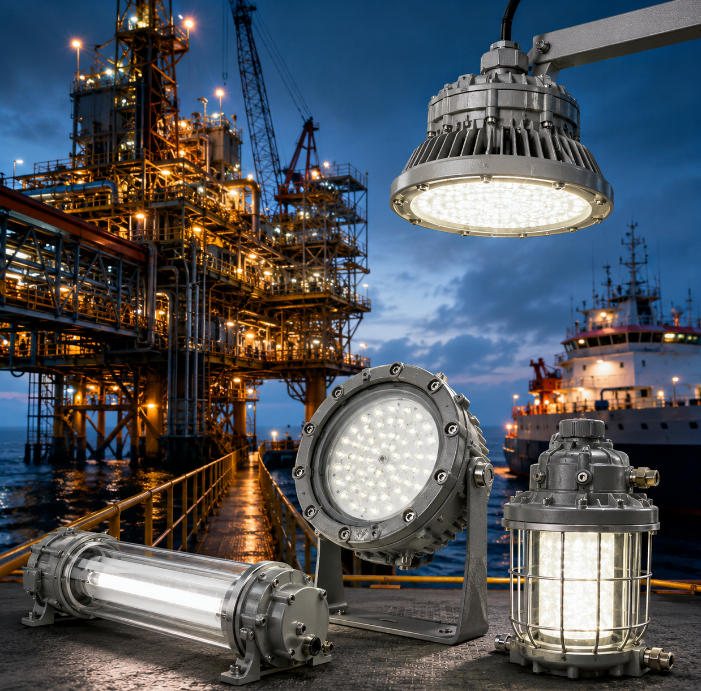
Table of Contents
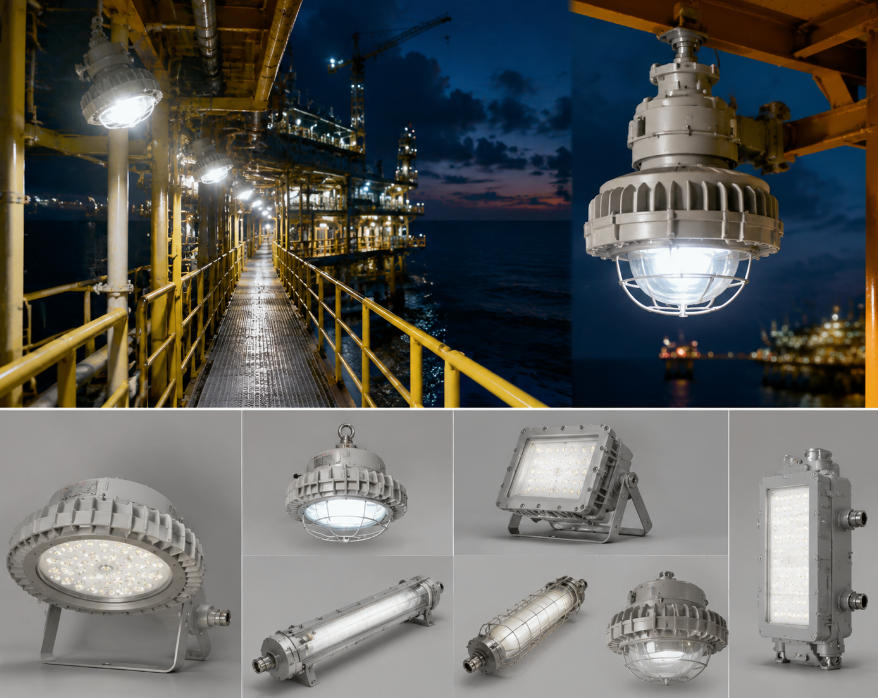
Types of Explosion-proof Lights for Hazardous Areas
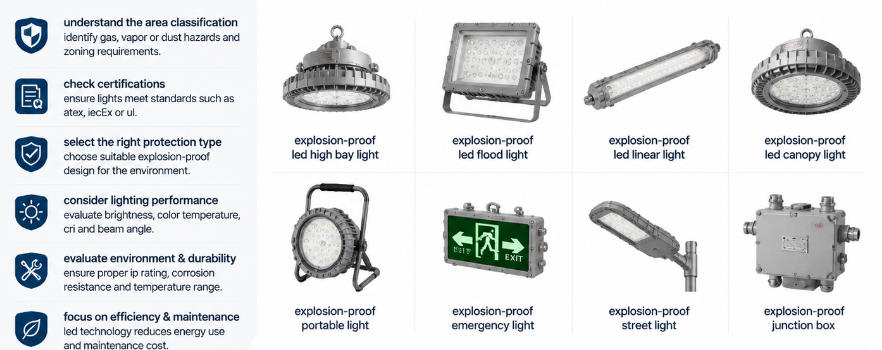
Explosion-proof lights are available in different designs to meet various industrial needs.
| Type of Explosion-proof Light | Main Features | Advantages |
| Explosion-proof LED High Bay Lights | Designed for high-ceiling areas with powerful LED illumination and efficient heat dissipation | Provides high brightness, wide coverage, energy savings, and long service life |
| Explosion-proof LED Flood Lights | Provides broad-area lighting with strong waterproof, dustproof, and impact-resistant designs | Offers wide beam coverage, excellent outdoor performance, and reliable operation in harsh environments |
| Explosion-proof LED Linear Lights | Long, narrow fixture design for continuous and uniform lighting distribution | Reduces dark areas, provides comfortable illumination, and is suitable for long working spaces |
| Explosion-proof LED Tube Lights | Tube-shaped lighting with protective housings and high-efficiency LED technology | Easy installation, low power consumption, and suitable for replacing traditional tube lights |
| Explosion-proof Portable Lights | Compact and movable lighting designed for temporary or emergency use | Flexible positioning, convenient transportation, and improved worker safety |
| Explosion-proof Street Lights | Outdoor lighting fixtures designed for hazardous industrial roads and open areas | Provides reliable outdoor illumination with weather and corrosion resistance |
| Explosion-proof Searchlights | High-intensity directional lighting with long-distance illumination capability | Provides powerful focused light and visibility over long distances |
| Explosion-proof Emergency Lights | Equipped with backup power systems to provide lighting during power failures | Enhances emergency response and supports safe evacuation |
| Explosion-proof Inspection Lights | Small, portable fixtures designed for close-range observation and equipment checks | Provides precise illumination and improves inspection safety |
| Explosion-proof Canopy Lights | Compact ceiling-mounted design for areas requiring downward illumination | Offers efficient area lighting with space-saving installation |
| Explosion-proof Wall-mounted Lights | Fixed lighting mounted on walls or vertical surfaces | Provides stable illumination and saves installation space |
| Explosion-proof Magnetic Lights | Portable lights with magnetic mounting systems for hands-free operation | Easy installation, flexible use, and convenient for temporary lighting needs |
Key Considerations for Choosing the Suitable Explosion-proof Lights for Hazardous Areas
1. Understanding Hazardous Areas and Explosion Risks
Hazardous areas are places where explosive atmospheres could turn up because flammable substances are present, in other words it’s not just random space and its a real risk. In that kind of setting, you need electrical equipment that’s specially engineered, including lighting fixtures, so the chance of ignition is reduced.
You’ll often see hazardous locations at:
- Oil and gas exploration and production facilities
- Petroleum refineries and fuel storage areas
- Chemical processing plants
- Pharmaceutical manufacturing facilities
- Mining operations
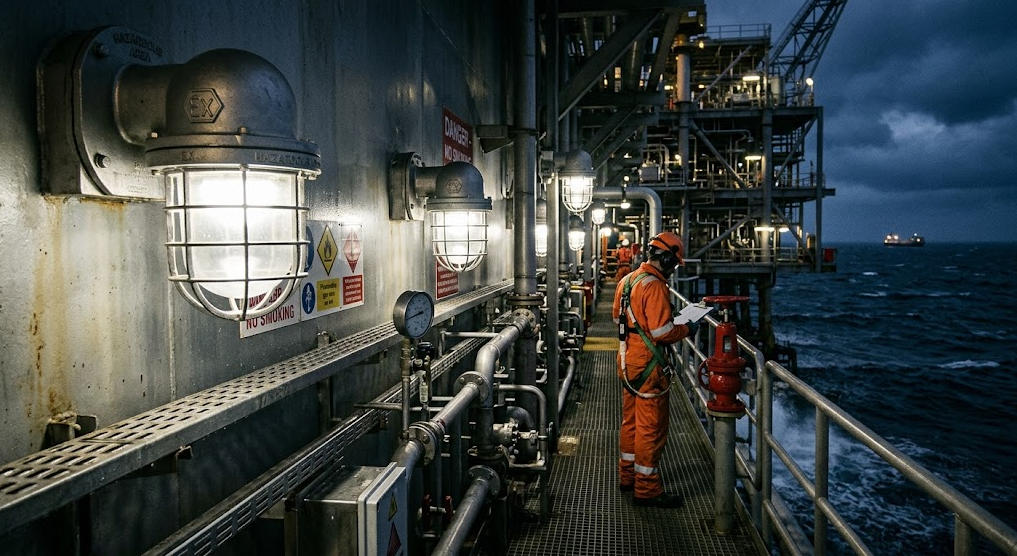
- Offshore platforms and marine installations
- Food processing facilities with combustible dust
Explosive atmospheres can form when gases, vapors, dust, or fibers mix with oxygen, but only when certain conditions line up. Explosion-proof lights are designed to hold internal failures, keep surface temperatures under control, and stop possible ignition sources from reaching the outside environment.
2. Identifying the Hazardous Area Classification
Before you choose explosion-proof lights, you need to get a grip on how the installation area is classified. Every hazardous location has own zoning and classification, so it usually asks for a different degree of protection.
| Hazardous Area Classification | Hazard Source | Area Description | Explosion-proof Light Requirements |
| Gas and Vapor Hazard Areas | Flammable gases, vapors, and liquid chemicals | Locations where explosive gas mixtures may exist due to processing, storage, or handling of flammable materials | Requires lights with suitable gas explosion protection ratings, such as flameproof (Ex d) or intrinsically safe (Ex i) designs |
| Zone 0 / Class I Division 1 (Continuous Gas Risk) | Flammable gases or vapors present continuously or for long periods | Areas where explosive atmospheres exist under normal operating conditions | Requires the highest level of explosion protection with certified equipment designed for continuous hazardous exposure |
| Zone 1 / Class I Division 1 (Frequent Gas Risk) | Flammable gases or vapors likely to occur during normal operation | Areas where hazardous gas atmospheres may appear during production, maintenance, or equipment operation | Requires certified explosion-proof lights with strong enclosure protection and reliable ignition prevention |
| Zone 2 / Class I Division 2 (Occasional Gas Risk) | Flammable gases or vapors present only under abnormal conditions | Areas where hazardous gases are unlikely during normal operation but may occur due to equipment failure or leaks | Requires suitable explosion-proof or increased safety lighting solutions |
| Combustible Dust Hazard Areas | Combustible dust particles suspended in air or accumulated on surfaces | Locations where dust clouds may ignite due to electrical sparks or high temperatures | Requires dust explosion protection (Ex t) lights with dust-tight enclosures and controlled surface temperatures |
| Zone 20 / Class II Division 1 (Continuous Dust Risk) | Combustible dust present continuously or frequently | Areas where explosive dust atmospheres exist under normal operation | Requires high-level dust explosion protection with strict temperature control |
| Zone 21 / Class II Division 1 (Frequent Dust Risk) | Combustible dust likely to occur during normal operation | Areas where dust clouds may form during production processes | Requires certified dust-resistant explosion-proof lighting with strong sealing performance |
| Zone 22 / Class II Division 2 (Occasional Dust Risk) | Combustible dust appears only under abnormal conditions | Areas where dust accumulation or clouds occur occasionally | Requires suitable dust-proof explosion protection and durable construction |
| Marine and Offshore Hazard Areas | Flammable gases, salt spray, humidity, and harsh environmental conditions | Hazardous areas exposed to both explosion risks and marine environments | Requires certified explosion-proof lights with corrosion-resistant materials and strong environmental protection |
3. Selecting the explosion-proof Certifications and Standards
Safety certification really is one of the main considerations when choosing explosion-proof lights. If a product is certified, it has been checked so it can keep running in dangerous environments without causing unsafe conditions.
Usually, you will see explosion-proof lighting certification systems like these:
- ATEX certification: This is very common in European markets, for equipment placed where explosive atmospheres can occur.
- IECEx certification: A globally accepted certification framework for flameproof, dustproof, and related explosion-protected equipment.
- UL certification: Often required in North America for equipment meant for hazardous locations.
When choosing explosion-proof lighting, you should also make sure the certification on the product lines up with the exact hazardous area classification. That means checking the gas group, the dust group, the temperature class, and the protection level, and confirming it is the same as what your site specifies.
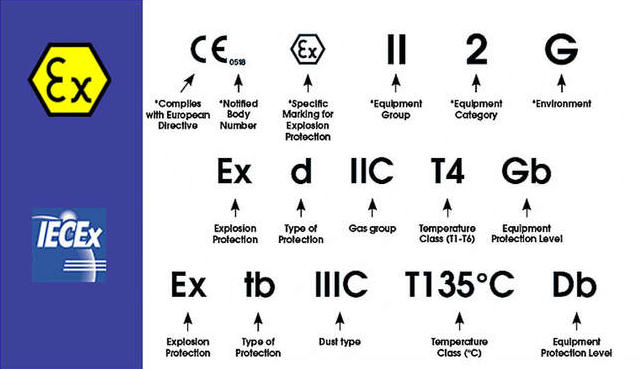
4. Choosing the Appropriate Type of Explosion-proof Protection
Different explosion-proof technologies provide protection in different ways. Choosing the correct protection method depends on the hazardous environment.
| Protection Type | Working Principle | Main Features |
| Flameproof Protection (Ex d) | Uses a strong enclosure that can contain an internal explosion and prevent flames or hot gases from escaping into the surrounding environment | High-strength housing, explosion containment capability, suitable for areas with explosive gases |
| Increased Safety Protection (Ex e) | Prevents ignition risks by improving the safety of electrical components and reducing the possibility of sparks, overheating, or faults | Enhanced insulation, reliable electrical connections, improved component safety |
| Intrinsic Safety Protection (Ex i) | Limits electrical energy and temperature to prevent sparks or heat from igniting explosive materials | Low-energy operation, high safety level, suitable for portable equipment |
| Dust Explosion Protection (Ex t) | Prevents combustible dust from entering the enclosure and controls surface temperature to avoid dust ignition | Dust-tight housing, temperature control, strong sealing performance |
| Pressurized Protection (Ex p) | Uses clean air or protective gas pressure inside the enclosure to prevent hazardous gases or dust from entering | Requires pressure control system, suitable for sensitive electrical equipment |
| Encapsulation Protection (Ex m) | Encapsulates electrical components with insulating materials to isolate ignition sources | Compact design, good moisture resistance, protection against mechanical damage |
| Oil Immersion Protection (Ex o) | Immerses electrical components in protective oil to isolate sparks and hot surfaces from explosive atmospheres | Provides insulation and cooling, reduces ignition risks |
| Powder Filling Protection (Ex q) | Uses quartz powder or other filling materials to separate electrical components and prevent ignition | Prevents flame propagation, provides strong insulation |
| Non-sparking Protection (Ex n) | Designed so that normal operation does not produce sparks or excessive heat that could ignite hazardous substances | Suitable for areas with lower explosion risks, simplified protection design |
| Combination Protection (Multiple Ex Types) | Combines different protection methods to meet complex hazardous environment requirements | Provides enhanced safety performance and wider application range |
5. Evaluating Lighting Performance and Visibility
Safety is the primary purpose of explosion-proof lights, but lighting quality also affects operational efficiency. Poor visibility can increase workplace accidents and reduce productivity.
Important lighting factors include:
| Lighting Factor | Importance |
| Brightness (Lumens) | Determines whether the working area receives sufficient illumination |
| Color Temperature | Affects visual comfort and working efficiency |
| Color Rendering Index (CRI) | Helps workers identify colors and details accurately |
| Beam Angle | Controls how light is distributed across the working area |
| Flicker Performance | Reduces eye fatigue and improves safety |
LED explosion-proof lights are getting more popular because they bring strong brightness, low energy consumption, and a long service life , compared with older lighting methods.
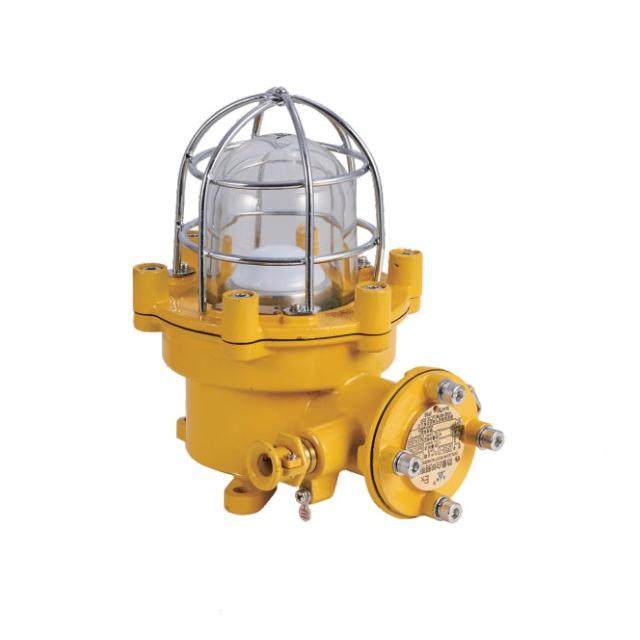
6. Choosing the Appropriate Light Type
When picking the right type of explosion-proof light, it helps to think about where it will be installed and how it will be used. Different hazardous locations need different explosion-proof light designs, so the fixture you choose should really match the plant layout and the day-to-day operating needs.
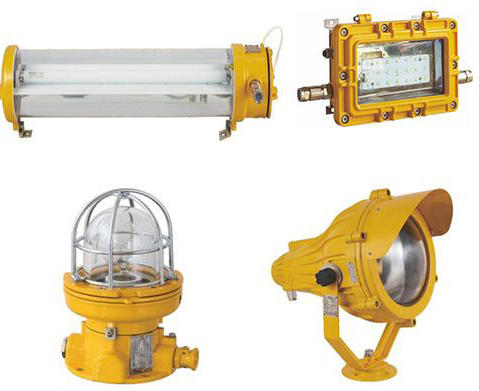
For high-ceiling industrial spaces, explosion-proof LED high bay lights work well, they can deliver powerful lighting while still staying fairly even across the area. Outdoor zones like oil fields, offshore platforms , and storage yards often call for explosion-proof flood lights that can handle tough weather and rough conditions. If the setting includes long paths or steady illumination demands, linear explosion-proof lights are a good fit for tunnels, corridors , and production lines.
A proper selection of the light structure helps improve illumination efficiency, and also ensures workers have enough visibility in each operational zone.
7. Checking Environmental Durability
Hazardous environments usually mean extreme operating conditions, so explosion-proof lights really have to give solid environmental resistance. Temperature swings moisture, dust, chemicals, and even mechanical knocks can mess with how well the lighting keeps working, sometimes slowly over time.
An explosion-proof light that fits well should include dependable sealing, so water and dust don’t get into the housing. In corrosive areas like chemical plants or offshore facilities, you need corrosion-resistant materials to ensure long-term durability. And if the location has vibration or regular mechanical impact, then the light fixture should be built with a sturdy structure, and impact-resistant parts inside.
When you factor in these conditions, you can avoid early breakdowns and the whole lighting system stays more reliable.
8. Paying Attention to Heat Dissipation Capability
Heat management is a critical point in explosion-proof lighting because too much surface warmth can introduce real safety hazards in classified zones. Premium explosion-proof LED lamps are built with a strong heat release system so the operating temperature stays controlled, even under demanding conditions.
Typically, the frame uses an aluminum alloy housing and a cooled layout that is optimized, so thermal energy gets guided away from the LED device. Solid thermal management supports better illumination stability, helps components last longer, and lowers the risk of overheating.
When you pick explosion-proof lights, it is smart to look closely at the heat dissipation arrangement, in particular for places that run for long stretches or have high ambient temperatures.
9. Considering Energy Efficiency and Maintenance Requirements
Industrial facilities often run lighting systems for long periods, so energy efficiency really matters. LED explosion-proof lights use less power than traditional lighting solutions, and they also deliver stronger brightness and an extended service life.
When power draw is lower, operating costs tend to drop too. And with longer service intervals, you can avoid frequent changes and extra upkeep, which becomes even more useful in risky locations where service visits may demand special safety steps and sometimes equipment shutdowns.
So a lighting solution that combines high efficiency with minimal maintenance can bring clear financial gains across the whole operating lifespan.
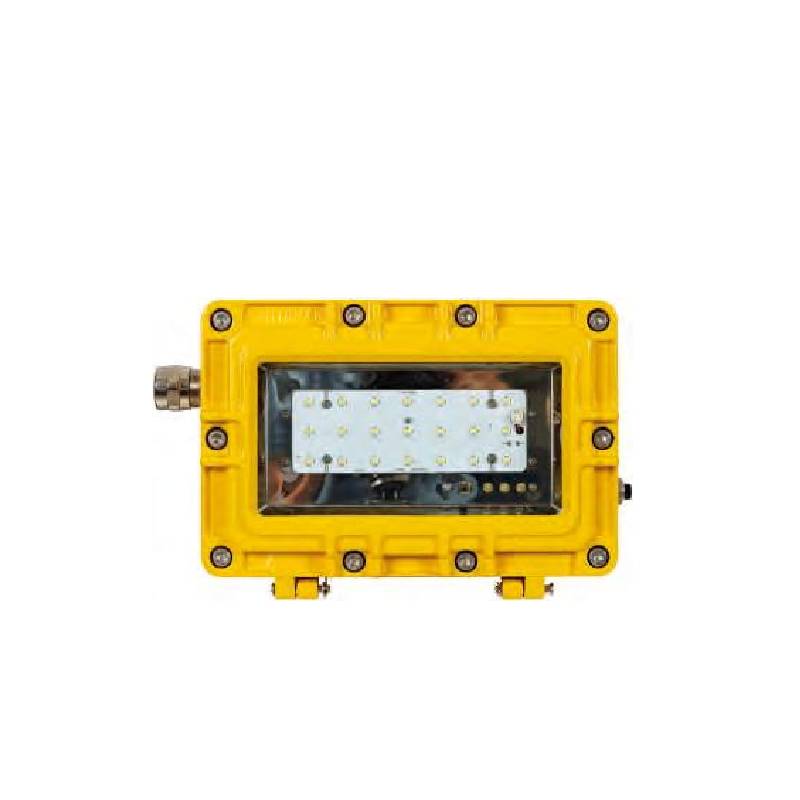
10. Ensuring Easy Installation and Long-term Reliability
Before selecting explosion-proof lights, look at the installation needs. The fixture should match the electrical setup you already have, and it should fit the mounting location you plan to use.
A well-designed explosion-proof light should let a team put it in safely, check it without too much trouble, and keep working properly for years. If the installation is done in the right way, following the manufacturer’s instructions and relevant safety codes, then the protective function of the unit stays dependable instead of fading over time.
Also, picking items from an experienced manufacturer with real technical support can make the installation smoother, and it improves the odds of long-term service reliability.
Choose a Reliable Explosion-proof Light Supplier
A reliable supplier can provide more than just lighting products. They need to help with technical guidance, provide certification papers, support customization if needed, and handle after-sales needs in a practical way.
When you compare suppliers, pay attention to these points:
- Product certifications
- Years of manufacturing experience
- Quality control routines
- Level of customer support
- Whether spare parts are available
Partnering with an experienced manufacturer usually means the lighting systems meets both safety expectations and operational demands.
Yushuo is a trusted manufacturer that focuses on top-notch explosion-proof lighting for dangerous industrial areas. They really care about safety, reliability and the lighting technology side, so their lights are made for demanding work. With careful quality checks, sturdy materials and solid engineering know-how, Yushuo brings out marine lighting products that still match safety requirements while also giving good energy efficiency, long lifespan and steady output when things get rough.
Summary
Selecting the right explosion-proof lights for hazardous areas requires grasping the actual work environment, the safety groupings, what lighting level is needed, and how the equipment behaves. In practice, factors like explosion-proof certification, the protection class or type, LED efficiency, resistance against dust and moisture, heat dissipation, and maintenance needs, all matter in the decision-making process. If you choose correctly certified and thoughtfully engineered explosion-proof lighting solutions, industries can support safer workplaces, raise operational efficiency, and also lower long-term upkeep expenses.
