Explosion-proof Flood Lights vs. Explosion-proof High Bay Lights for Marine Applications
Marine environments need lighting that keeps working when conditions get rough. On offshore rigs, vessels, harbors, and ship repair yards, lights face salt spray, moisture, constant vibration, and fast temperature swings. Some zones also have risky air, with flammable gases or chemical vapors present. When that happens, marine explosion-proof lighting helps keep work safe and still gives workers clear visibility.
Two common choices are explosion-proof flood lights and explosion-proof high bay lights. Both are designed for risky marine areas. However, they have different optical designs, installation methods, and application advantages. The right choice depends on the factors, like working area, mounting height, illumination requirements and environmental conditions.
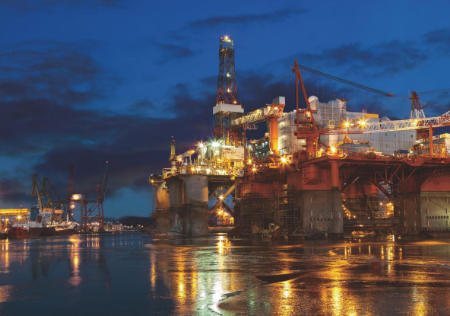
Table of Contents
Understanding Explosion-proof Flood Lights
Explosion-proof flood lights are designed to light up wide open spaces. Their housings are built to resist explosions. This design helps keep internal parts from becoming an ignition source when gases, vapors, or dust are in the area.
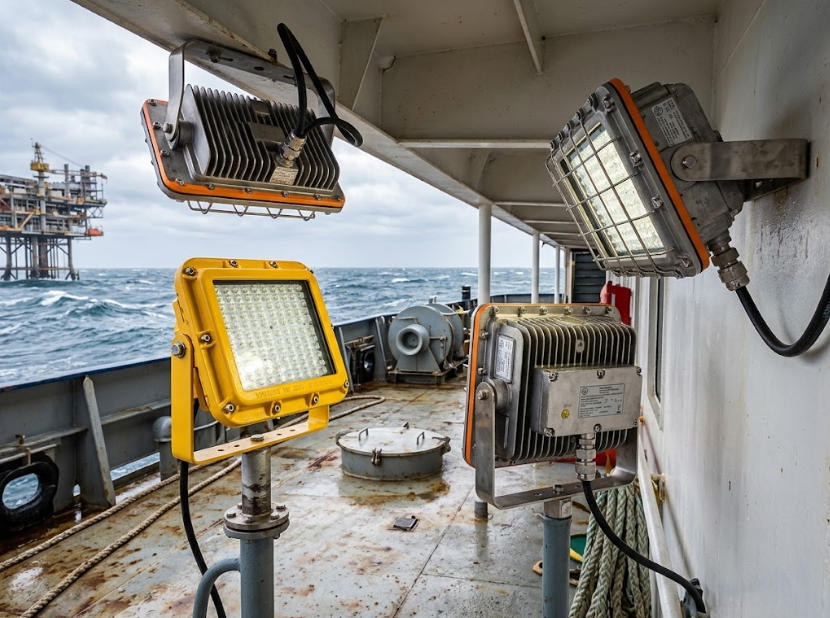
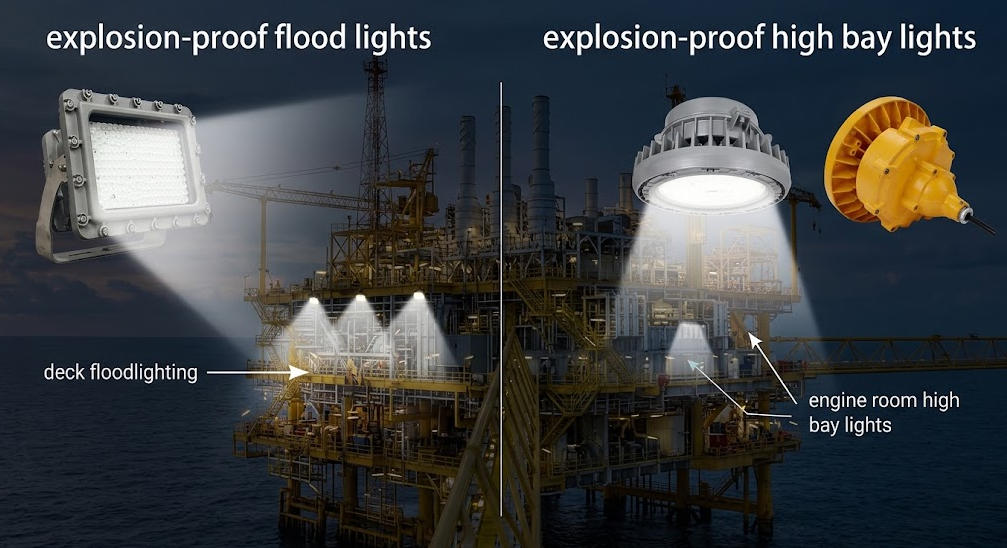
On the water, floodlights are often used outdoors. They work well when a broad view is needed. Many models let the beam be aimed, so workers can target specific task zones. You will see them on offshore decks, in cargo areas, in ports, and around ship repair sites.
A key benefit is wide coverage with strong output. At night, flood lights can make it easier to see near machines, on walkways, at loading zones, and in other outdoor areas. They are also tough enough for bad weather. Rain, wind, and salt spray are common problems, and these lights are built to handle them.
Understanding Explosion-proof High Bay Lights
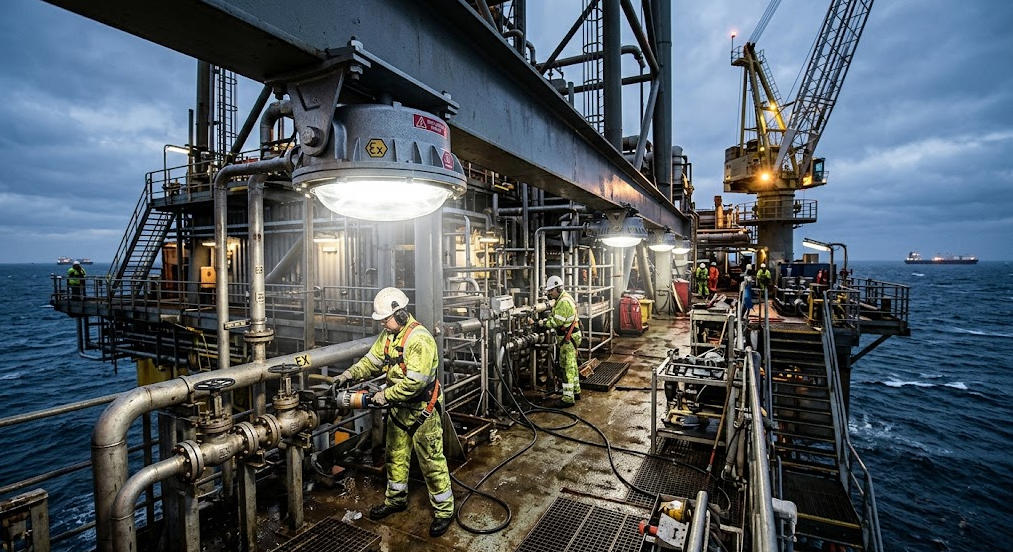
Explosion-proof high bay lights are used when fixtures sit high up. They give a more focused light pattern that shines down. These lights are common in large indoor spaces or semi-enclosed areas where stable lighting matters.
In marine plants, you may find them in engine rooms, shipbuilding workshops, maintenance halls, and offshore production areas. These places often have tall ceilings and equipment spread out in complex ways. High bay lights help by sending light from above. This can cut down shadowy spots and improve what workers can see.
Compared with older industrial lighting setups, high bay fixtures can do more with fewer units. Their LED design also supports a longer life and less power use. Maintenance needs drop as well. That matters in marine settings, where replacing parts can take time and cost more than usual.
Key Differences Between Explosion-proof Flood Lights and Explosion-proof High Bay Lights
Knowing the differences between explosion-proof flood lights and explosion-proof high bay lights helps marine operators pick the right lighting solution for the job.
1. Lighting Designs and Working Principles
Explosion-proof flood lights and high bay lights use different optical designs to achieve their lighting goals.
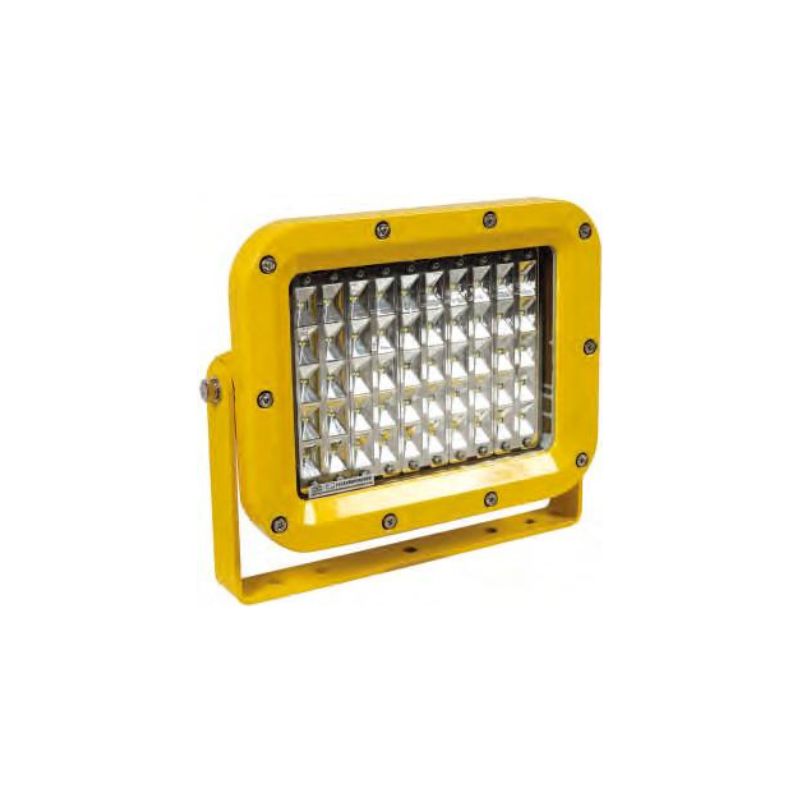
Explosion-proof flood lights spread light across a wide area. Their reflectors and lenses are made to push illumination outward, especially across open outdoor zones. This helps workers see over broad space.
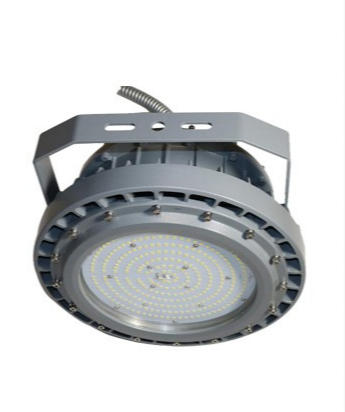
Explosion-proof high bay lights are made for higher mounting. They send light down using special optical parts. The goal is strong and even light on the work surface below. This fits places with tall roofs, such as large indoor sites or semi-enclosed areas.
Both options are built for explosion-proof safety, but the way light is sent out decides the best use.
2. Installation Locations
Where the fixture will be placed is a key difference.
Explosion-proof flood lights are often used in open marine areas. Offshore decks, port zones, loading areas, and outdoor storage sites commonly use flood lights. They can light wide zones from more than one direction.
Explosion-proof high bay lights are usually used inside or in semi-enclosed spaces. Engine rooms, shipbuilding shops, maintenance halls, and offshore production areas often need high bay lighting. These fixtures can be installed higher, yet still keep enough brightness for work zones.
The physical structure of the facility usually determines which lighting solution is more suitable.
3. Light Coverage and Beam Angle
Explosion-proof flood lights give a wide beam angle. They cover large areas side to side. That is why they work well outdoors, where people must see across equipment, paths, and active zones.
Explosion-proof high bay lights use a tighter light pattern. The focused light drops down and cuts down on wasted brightness. It also supports steadier illumination where work happens under the fixture.
For instance, a cargo terminal may want flood lights to cover a wide loading space. An engine room may need high bay lights to keep lighting even around machinery.
4. Mounting Height
Mounting height directly affects lighting performance and fixture selection.
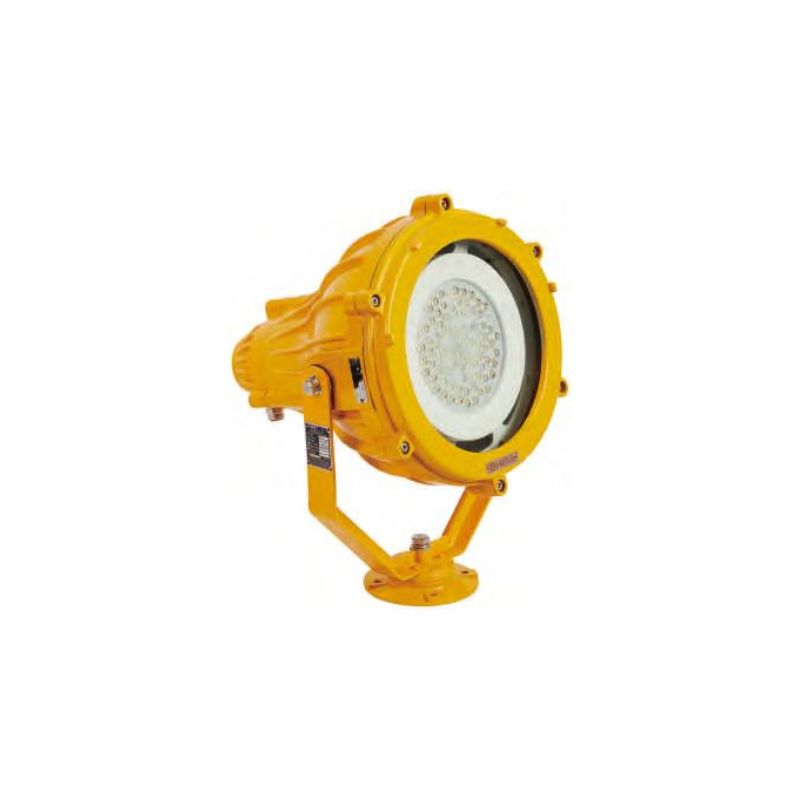
Explosion-proof flood lights are usually mounted at low or mid levels. Common spots include walls, poles, cranes, and other metal supports. Many models include adjustable brackets. This lets the user aim the beam at the area that needs light.
Explosion-proof high bay lights are built for taller setups. They are typically placed several meters above the floor. This height helps them shine down and cover the work area with less wasted light.
Picking the wrong type for a given height can cause problems. You may see patchy illumination. Visibility can drop. You might also end up using more power than needed.
5. Applications in Marine Industries
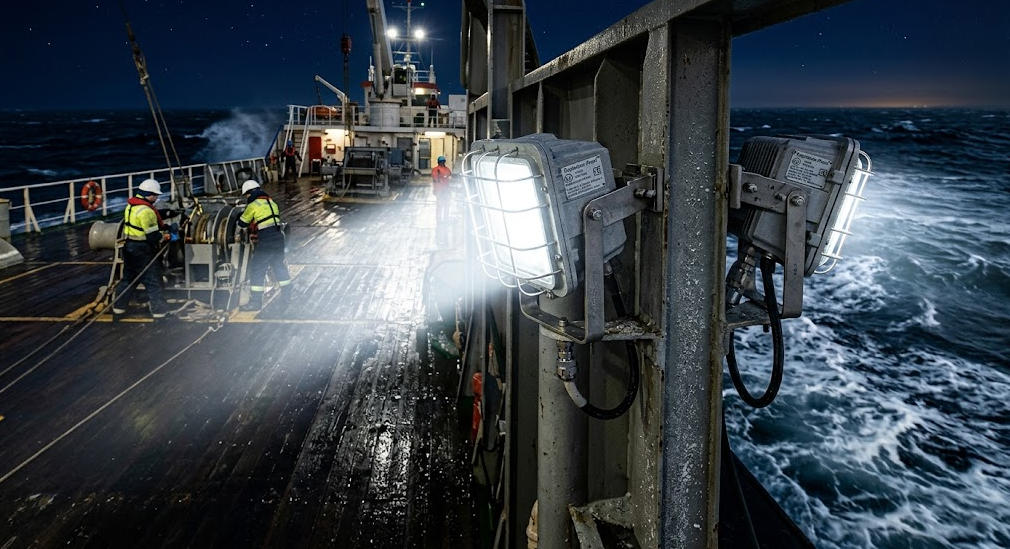
Explosion-proof flood lights are used often in outdoor marine work. They fit cases where you need light over a larger space. You may see them on offshore platforms, in ports, at docks, in shipyards, and around cargo handling zones.
In those settings, flood lights help workers during night tasks. They also support moving equipment in open areas. Better visibility can make daily work safer.
Explosion-proof high bay lights show up more in industrial marine facilities. These are places that need steady and even light in defined work zones. They are used in engine rooms, workshops, warehouses, and in spaces that hold offshore equipment.
Work in these areas often involves machines and pipes. There are also inspection points that need clear sight. High bay lights provide strong overhead illumination. This supports upkeep, repair, and ongoing production.
6. Energy Efficiency and Maintenance
Both flood lights and high bay lights are increasingly using LED parts. LED designs can last longer. They also tend to use less energy. In many cases, they cut down on how often maintenance is needed.
Even so, upkeep can vary by where the unit is placed. Flood lights used outdoors may need extra shielding from corrosion. They also face weather and saltwater exposure. High bay units at higher levels can be harder to reach. That can mean more planning for service access.
Using sturdy fixtures with the right protection level can help limit downtime. It can also support better long-term performance.
Comparison Summary Table
| Comparison Aspect | Explosion-proof Flood Lights | Explosion-proof High Bay Lights |
| Lighting Purpose | Provides wide-area illumination for large open spaces | Provides powerful overhead lighting for high-ceiling areas |
| Light Distribution | Spreads light across a broad area with adjustable direction | Focuses light downward for efficient and uniform illumination |
| Beam Pattern | Wide beam with extensive coverage | Controlled beam designed for long-distance lighting |
| Primary Application Areas | Offshore decks, ports, docks, cargo areas, shipyards | Engine rooms, workshops, warehouses, offshore facilities |
| Installation Environment | Mainly outdoor and exposed marine locations | Mainly indoor or semi-enclosed industrial spaces |
| Mounting Height | Low to medium installation heights | Medium to high installation heights |
| Coverage Capability | Covers large horizontal areas | Covers large vertical spaces from elevated positions |
| Lighting Direction | Adjustable directional lighting toward specific zones | Mainly downward lighting from ceilings or high structures |
| Best Use Scenario | Outdoor operations requiring broad visibility | Industrial operations requiring consistent workspace lighting |
| Optical Design | Uses wide-angle lenses and reflectors for area lighting | Uses optimized optics for concentrated downward illumination |
| Weather Resistance | Designed to withstand rain, wind, salt spray, and harsh outdoor conditions | Designed for stable operation in protected or controlled environments |
| Installation Flexibility | Can be mounted on walls, poles, cranes, and structures | Usually installed on ceilings, beams, or high mounting points |
| Lighting Uniformity | Provides strong coverage but may require multiple fixtures for even brightness | Provides balanced and uniform illumination across the working floor |
| Energy Efficiency | Efficient for illuminating large outdoor areas | Efficient for high-bay industrial lighting applications |
| Maintenance Considerations | Easier maintenance when installed at accessible heights | Maintenance practices may require lifting equipment due to high installation locations |
| Marine Application Examples | Ship decks, loading zones, offshore platforms, port yards | Engine rooms, maintenance workshops, storage facilities |
How to Choose the Right Explosion-proof Lighting Solution
Selecting between explosion-proof flood lights and explosion-proof high bay lights requires careful evaluation of the application environment.
Installation Location
First, look at where the light will be installed. Outdoor spaces that face marine weather often need flood lights. These should have strong beam coverage and strong environmental resistance. Indoor areas with high ceilings usually do better with high bay lights made for vertical lighting.
Mounting Height
Next, consider mounting height. Flood lights are a better fit when the goal is to spread light across a wide area. High bay lights work best when the fixture sits several meters above the working surface.
Hazardous Area Requirements
Ships and port sites that handle oil, gas, fuel storage, or chemical work need lighting that follows the right explosion-safe rules. Pick fixtures that guard against sparks and heat sources. At the same time, they should keep working in day-to-day use.
Environmental Durability
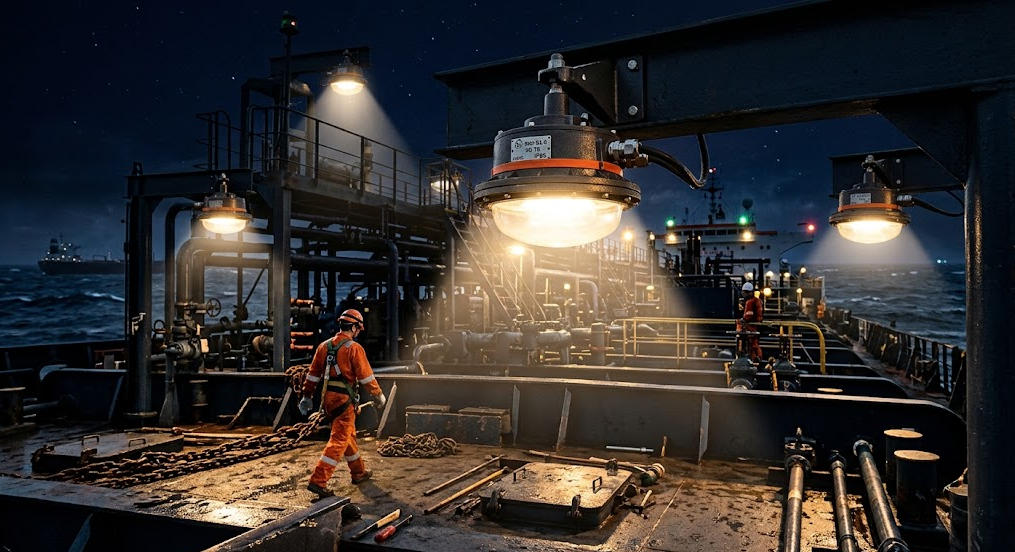
Marine lights must deal with salt air and rust. They also face rain, spray, grit, vibration, and shifts in heat. When the fixtures are well made, they wear better and can lower the number of repairs and shutdowns in rough conditions.
Summary
Explosion-proof flood lights and explosion-proof high bay lights both serve marine areas. They don’t do the same job. Flood lights provide wide-area illumination for open outdoor zones like decks, port edges, and loading areas. High bay lights deliver efficient overhead lighting for higher ceilings, such as engine rooms and workshops.
Operators should match the light to the site. By considering the installation location, mounting height, hazardous zones, and required light level, marine operators can select the most suitable explosion-proof lights. Choosing the right lighting fixture supports safer work, better sightlines, and steady service in harsh marine settings.
