
Battery-powered vs. Wired Marine Navigation Lights: How to Make a Choice
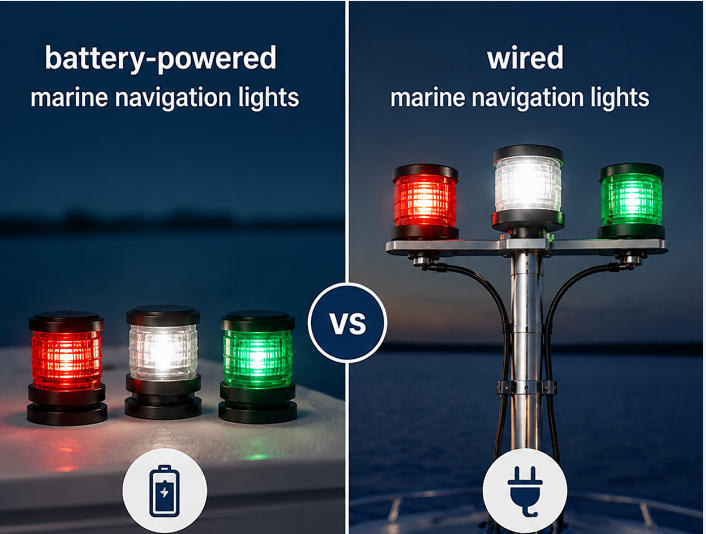
Navigation lights are one of the most important safety equipment for marine vessel. Boat owners and operators usually choose between two main types: battery-powered navigation lights and wired marine navigation lights. Each choice has its own good points and limitations, depending on the vessel type, daily operational requirements, installation, routine maintenance, etc.
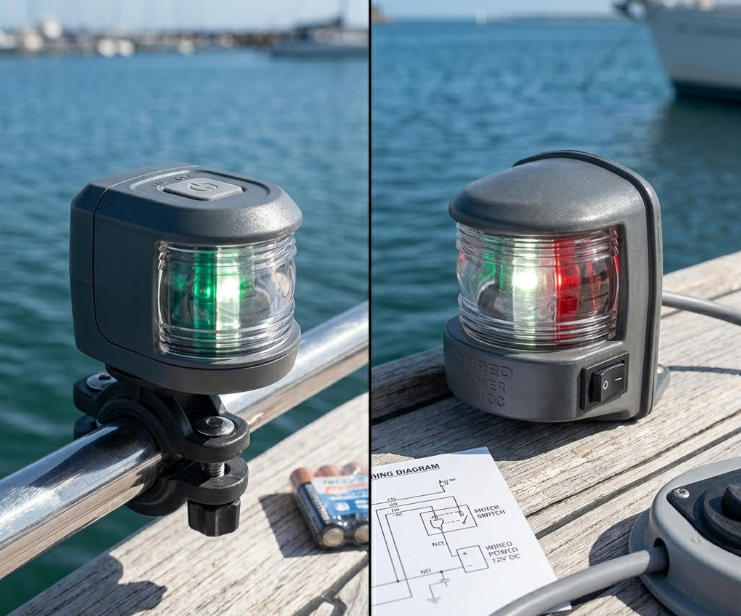
Table of Contents
Understanding Marine Navigation Lights
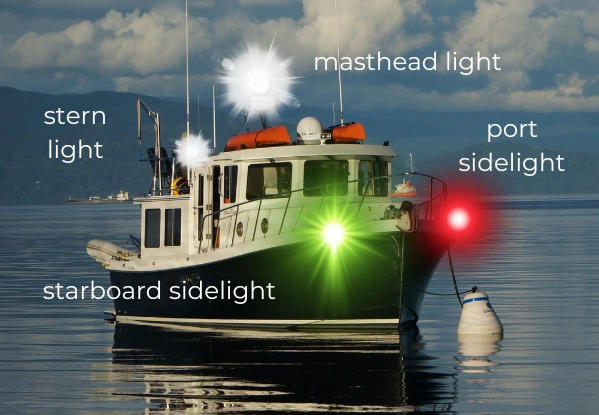
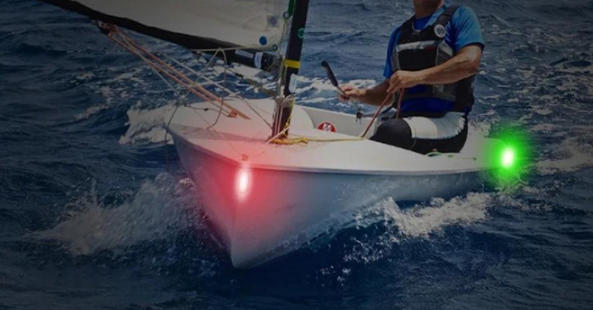
Marine navigation lights are designed to tell other vessels where you are, which way you are going, and whether the vessel is operating normally. These lights often come as red and green sidelights, a white masthead light, a stern light, and additional all-round lights. Following international rules and local maritime regulations means the lamps must stay dependable and visible for the required distances and lighting conditions, which is not a small detail.
Understanding Battery-powered Navigation Lights
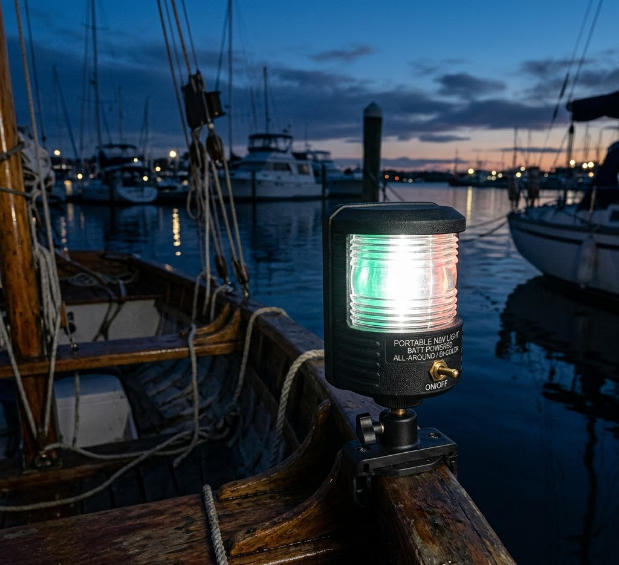
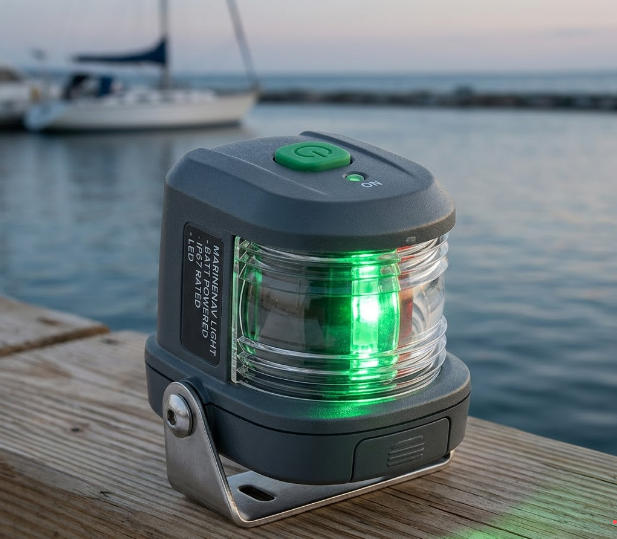
Battery-powered navigation lights are self-contained lighting units that run on internal batteries, either disposable or rechargeable. They do their job independently, so there is no need for onboard power, which is why they are built for visibility and to support marine navigation rules. This matters especially for small boats, kayaks, canoes, dinghies, and inflatable watercraft that might not have electrical systems onboard. Because they are lightweight and easy to carry around, they work well for leisure boating and also for emergency situations.
Advantages
- Easy Installation: Battery-powered lights, do not need wiring, so setup is fast and pretty straightforward. Usually they can be attached with clamps, suction cups, magnetic bases, or basic brackets, which removes the need for professional help entirely.
- Portability and Flexibility: You can shift these lights between vessels, or move them again whenever the situation calls for it, giving a flexibility you will not easily get elsewhere. This helps operators who manage multiple small boats or seasonal watercraft.
- Lower Upfront Cost: For boats that do not already have electrical systems in place, battery powered lights cut the initial spending. There is no requirement for wiring, switches, or circuit protection devices.
- Ideal for Emergency Backup: Battery-powered navigation lights work well as a backup when the main lighting system fails, so navigation safety stays active without interruptions.
- Suitable for Small Craft: Boats like kayaks, paddleboards, and inflatables often can’t carry wired systems. Battery powered lamps let these vessels satisfy navigation needs without having to build a complex electrical arrangement or wiring at all.
Limitations
- Battery Dependence: These navigation lights need frequent battery swapping, or recharging. If the batteries run out in a sudden moment, navigational safety can get compromised faster than expected.
- Decreasing Brightness Over Time: As the battery energy falls the light output may weaken, which can lower visibility during urgent situations, especially in older models that use disposable cells.
- Limited Integration: Unlike wired setups, battery lights are not easy to link with boat control dashboards or automated alerting systems.
- Not Ideal for Long Voyages: For longer trips, using battery operated lights as the only option can be risky, because battery life is capped and the upkeep can become annoying during extended use.
Understanding Wired Navigation Lights
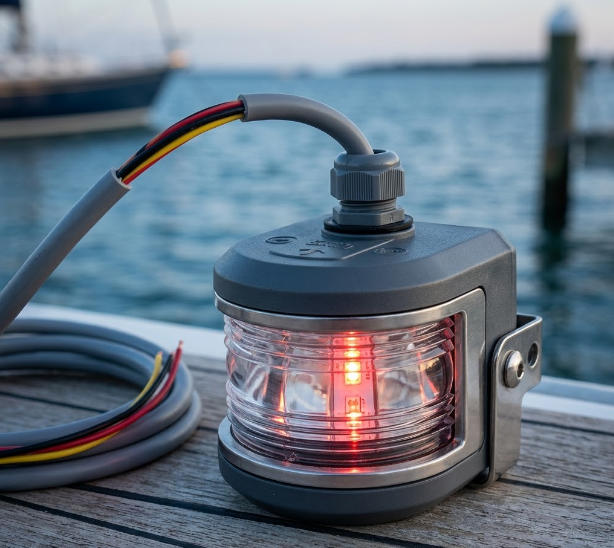
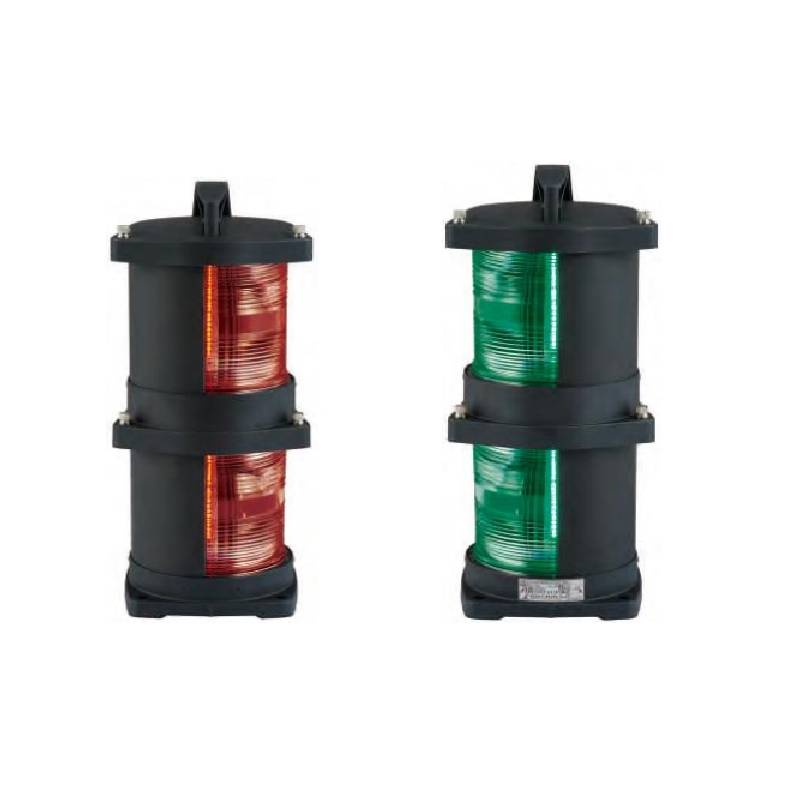
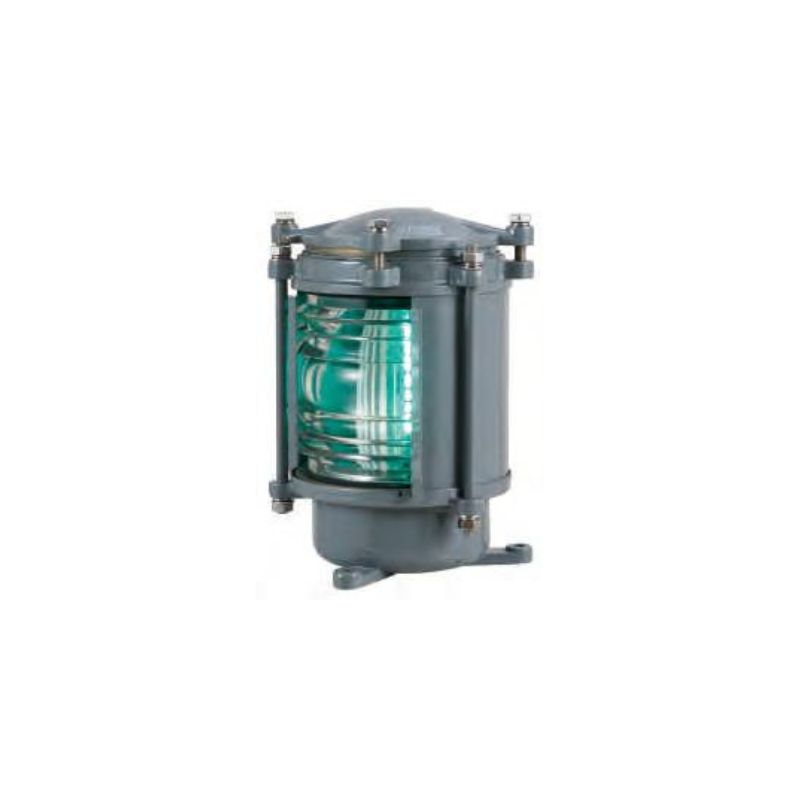
Wired navigation lights are permanently installed lighting systems that are hooked into a vessel’s electrical network. They pull power from the boat’s onboard batteries, generators, or charging systems, and usually are managed through switches sitting at the helm or navigation console. Wired navigation lights are often seen on bigger recreational boats, fishing vessels, yachts, workboats, and commercial ships, where dependable steady illumination is crucial for safe navigation.
These systems generally include sidelights, stern lights, masthead lights, and all-round lights, they work together to show a vessel’s location, course, and operating condition in line with maritime rules.
Advantages
- Reliable Continuous Operation: One of the main advantages of wired navigation lights is that they can keep a steady glow for quite a long while. Since they draw power from the vessel’s electrical system, the person in charge typically does not have to think about swapping batteries or recharging them right before every trip.
- Higher Brightness and Visibility: Wired navigation lights tend to deliver higher brightness, with clearer visibility. Many models back up more powerful lighting technologies, including high-performance LED navigation lights. This creates better sightlines across longer distances, making it easier for boats and ships to satisfy the applicable rules, and it supports safer travel when visibility is low.
- Centralized Control: With wired systems, all navigation lights can be managed from one place, usually at the helm station. In other words, operators can turn multiple lights on or off with a single switch, which improves convenience as well as day to day operational efficiency.
- Better Integration with Vessel Systems: Modern wired navigation lights usually integrate better with the broader vessel systems. This helps the installation feel more coherent and gives operators more predictable behavior across equipment. Modern wired navigation lights can get plugged into onboard monitoring systems, alarms and vessel automation tech, so operators can watch light status, flag faults, and keep better control over the whole setup. It feels more steady when everything shares the same line.
- Lower Long-Term Operating Costs: Even if the installation fees are more, wired navigation lights usually cost less in day to day operation since they do not need regular battery changes. New LED marine navigation lighting fixtures can also deliver many thousands of hours of service life while using comparatively low energy.
- Suitable for Large and Commercial Vessels: Larger vessels often need several navigation lights, positioned at different spots. A wired arrangement is a sensible and reliable way to feed those lights and coordinate them around the vessel.
Limitations
- More Complex Installation: Installing wired navigation lights usually means dealing with electrical routing, switches, plug parts, and circuit protection components, and it can take a solid amount of work. If you are retrofitting a boat that was never intended for wired lighting, the whole process becomes slower and the expense can climb fast.
- Higher Initial Investment: The overall cost of marine-rated wiring, fixtures, installer labor, plus the electrical hardware often makes wired systems pricier than battery-powered options.
- Dependence on the Vessel Electrical System: When the vessel has an electrical problem, battery issues, or a charging system malfunction, the navigation lights may end up impaired. Because of this, keeping the electrical system in good shape is critical.
- Potential Corrosion and Wiring Issues: A marine environment throws saltwater, humidity, vibration, and temperature changes at the equipment. Over time, corrosion can build up, connections may loosen, or wiring can get worn or damaged, which in turn can cause the lights to fail unless everything is inspected regularly.
- Reduced Portability: Compared to battery-powered navigation lights, wired navigation lights are permanently mounted, and they can’t be moved between vessels too easily, or repositioned for quick, temporary applications.
The Comparison of Battery-Powered and Wired Marine Navigation Lights
| Comparison Factor | Battery-Powered Navigation Lights | Wired Navigation Lights |
| Power Source | Operate using disposable or rechargeable batteries. | Powered by the vessel’s onboard electrical system. |
| Installation | Simple and quick; no wiring required. | Requires wiring, switches, and electrical connections |
| Maintenance Requirements | Requires regular battery replacement or recharging. | Requires periodic inspection of wiring, connections, and fixtures. |
| Initial Cost | Generally lower due to minimal installation requirements. | Higher because of equipment and installation costs. |
| Operating Duration | Limited by battery capacity. | Can operate continuously as long as the vessel’s electrical system functions properly. |
| Brightness and Visibility | Adequate for small vessels and short-range visibility. | Typically offers higher brightness and longer visibility range. |
| Reliability on Long Voyages | Less suitable due to battery limitations. | Highly reliable for extended marine operations. |
| System Integration | Limited or no integration with onboard systems. | Can be integrated with control panels, alarms, and monitoring systems. |
| Suitability for Large Vessels | Generally not preferred for primary navigation lighting. | Ideal for yachts, fishing vessels, commercial ships, and offshore vessels. |
| Dependence on Vessel Electrical System | Independent of the vessel’s electrical infrastructure. | Fully dependent on the vessel’s electrical system. |
| Regulatory Compliance | Suitable when meeting required visibility standards. | Commonly designed to meet regulatory standards for larger vessels. |
Factors to Consider When Choosing Between Battery-Powered and Wired Marine Navigation Lights
1. Vessel Size and Type
Vessel size and its type kinda matters a lot, when you are deciding on a navigation light system that fits. Small boats, like kayaks, canoes, dinghies, and inflatable craft often use battery powered lights since they are easy to carry, and generally simpler to install. Bigger recreational vessels, commercial boats, and offshore craft usually need wired navigation lights for continuous , dependable use. When the lighting system matches the vessel, you get better visibility and also smoother regulatory compliance.

2. Duration and Frequency of Use
Duration and how often you plan to use the lights also affects the choice. For short trips, or outings that happen now and then, battery powered navigation lights may be enough. But when you are planning long distance voyages, or you expect to run overnight, wired navigation lights are the better pick. They keep shining as long as the vessel’s electrical system is working, which helps remove the worry of battery depletion during those critical times.
3. Regulatory Compliance
Marine navigation lights have to follow international and local rules, the ones about colour, where they sit, and the visible distance. Wired setups are usually engineered to comply for bigger vessels, while battery powered lights tend to fit better for smaller boats. Still, boat owners need to double check their selected lights really meet the maritime standards, otherwise penalties can show up and safety can be at risk.
4. Environmental Conditions
The sea environment can be tough, it puts navigation lights through saltwater exposure, moisture, constant vibration, UV radiation, and extreme weather. Wired navigation lights, especially marine rated systems, are built to handle these factors for long stretches. Battery powered lights are more easy to move, but they can be more exposed to damage, so careful handling becomes important in order to keep stable performance.
5. Maintenance Requirements
Battery-powered navigation lights need regular monitoring, including battery replacement or recharging. This upkeep looks easy but it has to be done consistently, otherwise performance drops. Wired navigation lights, on the other hand, call for periodic checks of wiring, the connections, and the fixtures so you can reduce the chance of electrical problems. Selecting the setup that matches how you prefer to maintain equipment can improve dependable operation and lower operational risks.
6. Brightness and Visibility Needs
The brightness and visibility of navigation lights are crucial for safe travel, especially where there are many vessels, fog, or other low visibility conditions. Wired lights typically let you use higher output LEDs and they usually stay stronger over longer distances. Battery powered lights can work well for smaller craft, though the brightness may be less and the effective range can be shorter.

7. Portability and Flexibility
One of the main advantages of battery-powered navigation lights is portability. They can be moved around fairly easy between vessels, or temporarily installed when needed, for example during short operations. Wired lights, by comparison, are usually permanently installed and not meant to be carried or relocated, which makes it less flexible but it does keep a steady, dependable performance.
8. Integration with Vessel Systems
Wired navigation lights can often be connected with onboard control panels, monitoring systems and alarms, so that everything is handled from one central place. This setup helps operators respond quickly if something fails, because faults can trigger an alert. Battery-powered lights usually do not provide the same level of systems integration, and the capabilities are more limited.
9. Cost Considerations
Battery-powered navigation lights usually cost less at first because they’re simple, and they do not need wiring. A wired setup asks for more up front money, mainly for fixtures, installation work, and the electrical infrastructure behind it. Still, wired navigation lights tend to come with reduced day to day costs because there is no need for frequent battery replacements.
10. Emergency preparedness
Many vessel operators carry battery-powered navigation lights as an emergency fallback, in case the main wired system fails. Figuring out whether you should keep backup lights next to the main system is a key consideration when choosing which navigation lights to install.
Summary
| Aspect | Better Choice |
| Ease of Installation | Battery-Powered Navigation Lights |
| Portability | Battery-Powered Navigation Lights |
| Long-Term Reliability | Wired Navigation Lights |
| Brightness and Visibility | Wired Navigation Lights |
| Long-Distance Voyages | Wired Navigation Lights |
| Emergency Backup Use | Battery-Powered Navigation Lights |
| Integration with Vessel Systems | Wired Navigation Lights |
| Small Craft Applications | Battery-Powered Navigation Lights |
| Commercial and Offshore Operations | Wired Navigation Lights |
- Battery-powered navigation lights offer portability, simplicity, and affordability, making them ideal for small boats and emergency backup applications.
- Wired navigation lights provide superior reliability, brightness, and integration capabilities, making them the preferred choice for larger recreational and commercial vessels.
Final Thoughts
Choosing between battery-powered and wired marine navigation lights comes down to several key factors, like the size of the vessel, how harsh the conditions are during operation, what the budget really allows, and also the ongoing maintenance expectations. If boat owners take the time to weigh all those elements together, they can land on a navigation lighting system that improves safety, meets the relevant rules and regulations, and keeps working steadily out on the water, even when usage gets demanding.
