Navigation Lights in Improving Marine Traffic Management
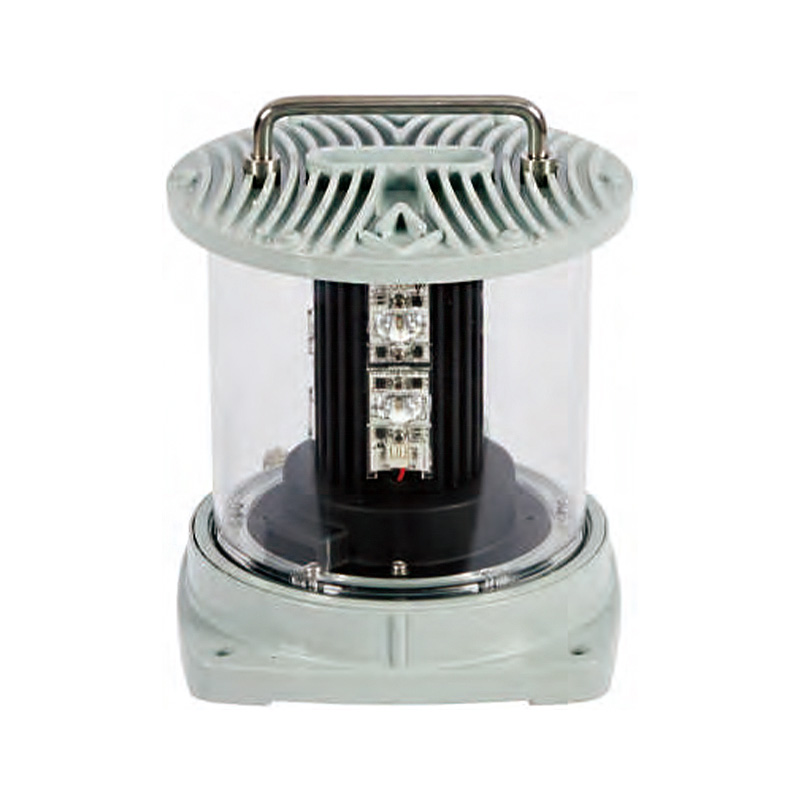
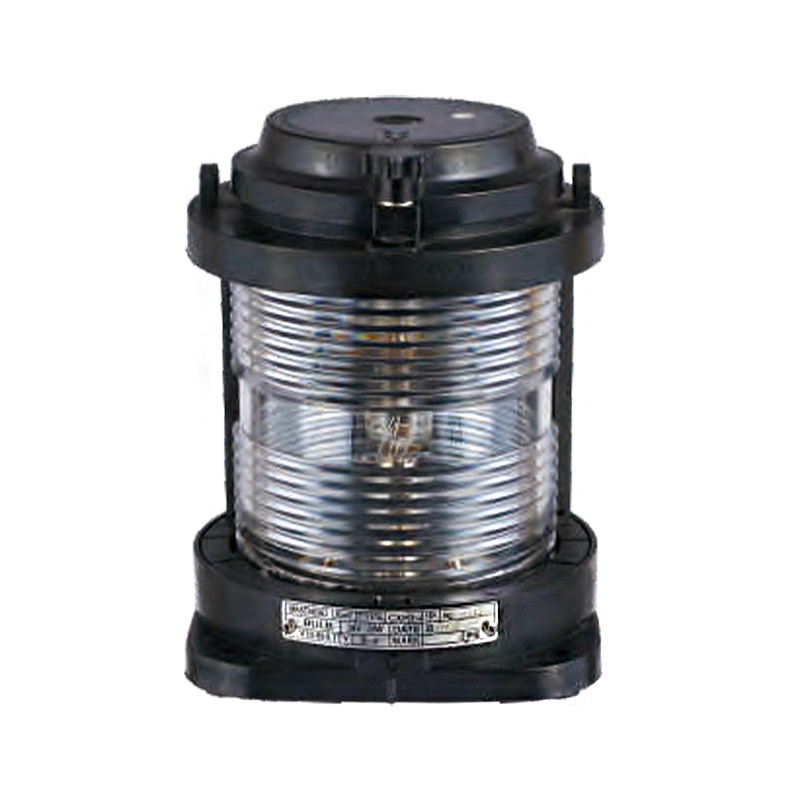
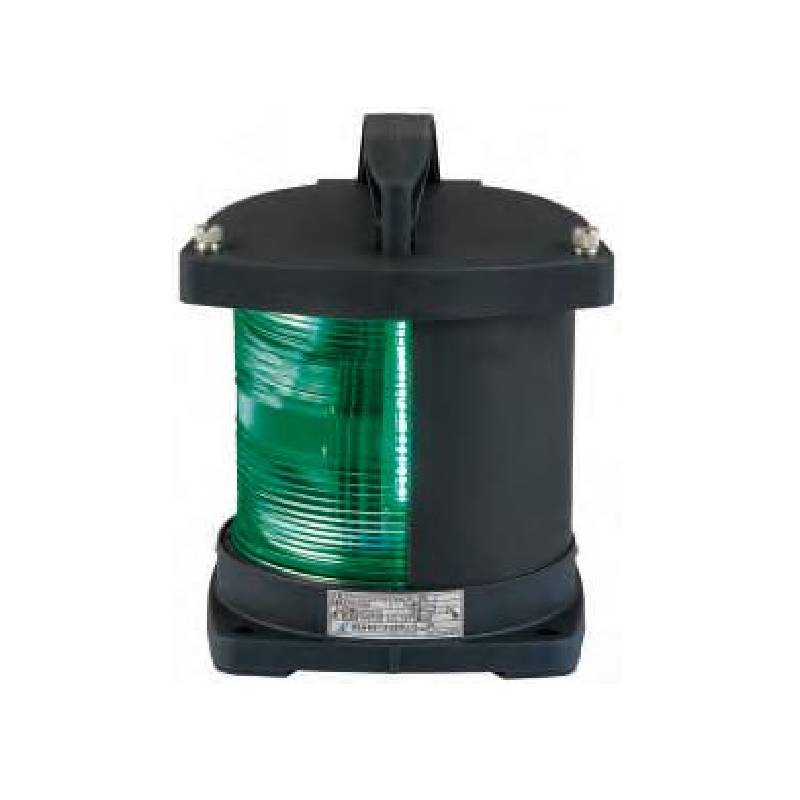
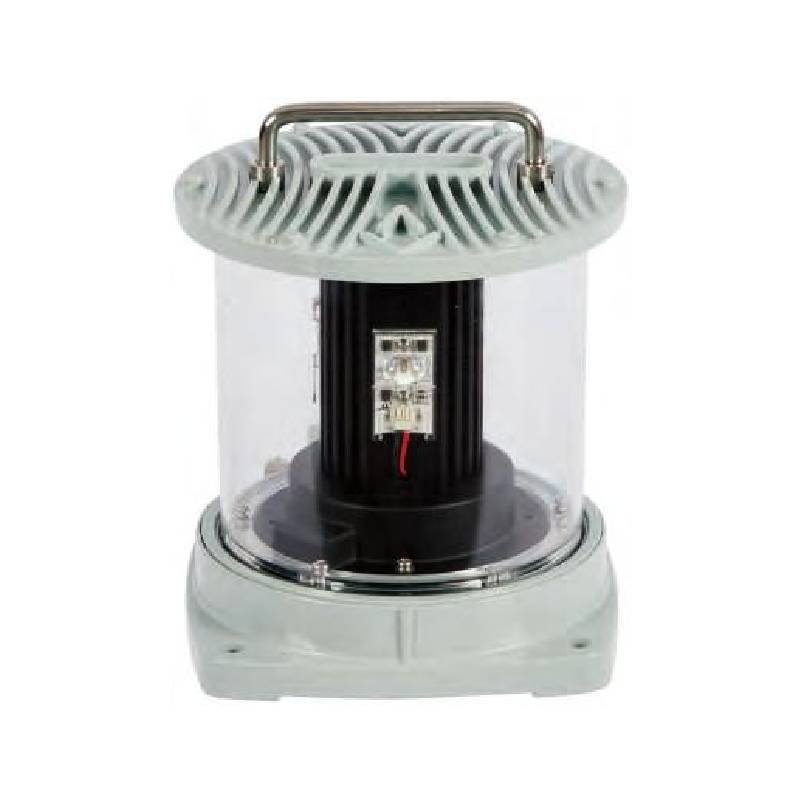
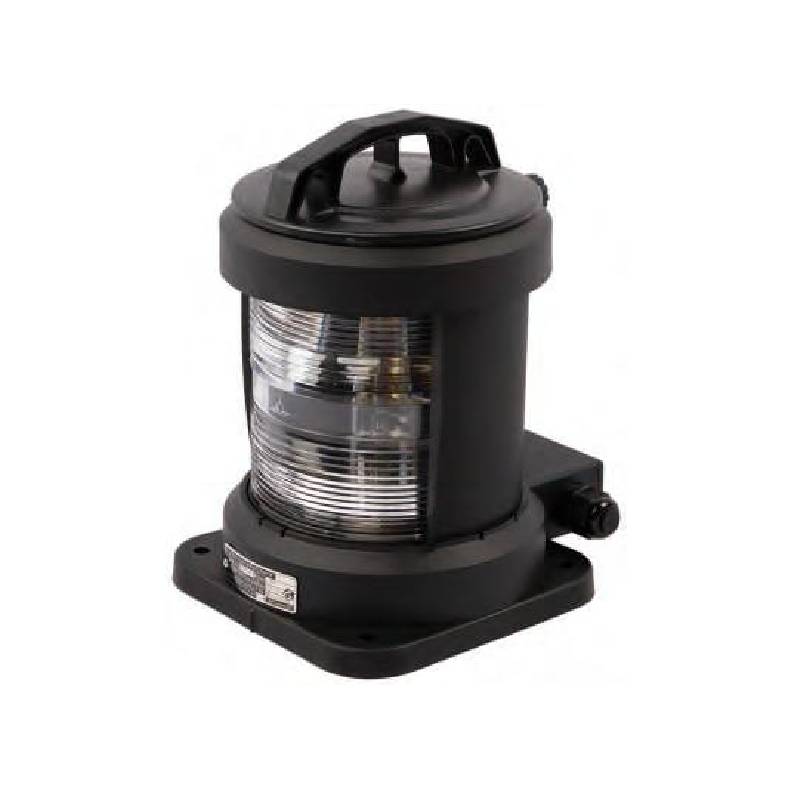
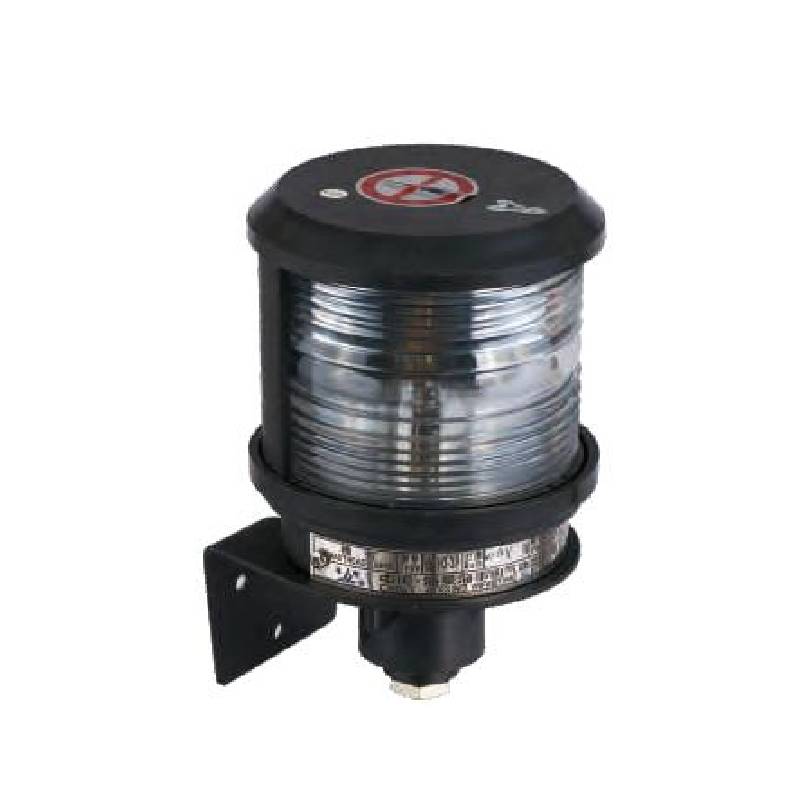
Navigation lights ordain as one of the most basic yet effective safety and orderly systems that help ensure peace at sea. In an environment where visibility can be narrow and craft of numerous sizes cross-sea ways, navigation lights become a necessity for improving marine traffic management. This improves compliance at awareness, collision resistance, and awareness for the ship-faring community, consisting of vessel position, direction, sense of operational condition, and other essential for such compliance and awareness to it, respectively.
Table of Contents
The Role of Navigation Lights in Marine Traffic Management
Much rests on an appointed ship’s ability to discern and interpret the movement of other vessels when operating at night or under other limited conditions, such as fog, rain, or heavy seas. Marine navigation lights present a standardized visual language that permits interaction between ships in darkness without verbal communication.
Vessels coming into compliance with the regulations of the International Maritime Organization or the COLREGs must display certain light configurations according to size, type, and activity. These standardized systems ensure signal definitions are maintained consistently worldwide, and fixed knowledge of these signals forms this coordination.
Types of Navigation Lights and Their Functions in Marine Traffic Management
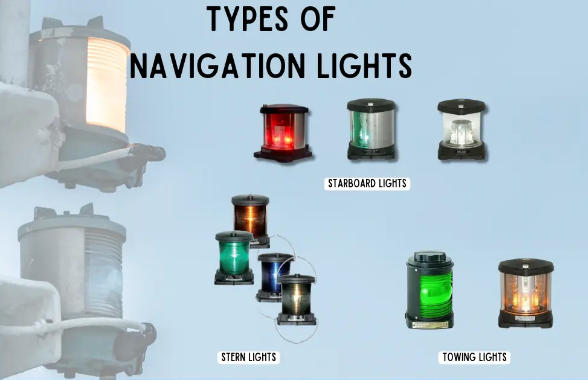
This chart summarizes the key navigation lights defined under the COLREGs, helping mariners quickly interpret vessel status and movement for safer marine traffic management.
| Type of Navigation Light | Color | Position on Vessel | Visibility Range / Arc | Primary Function |
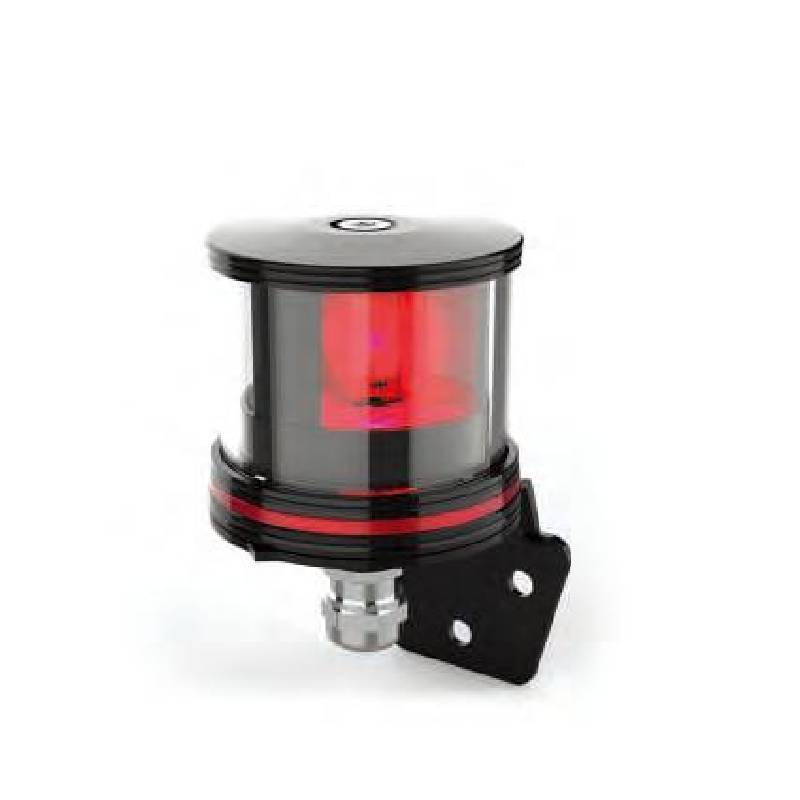
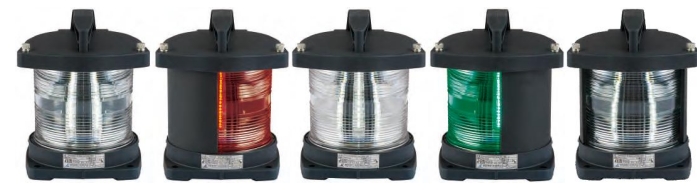
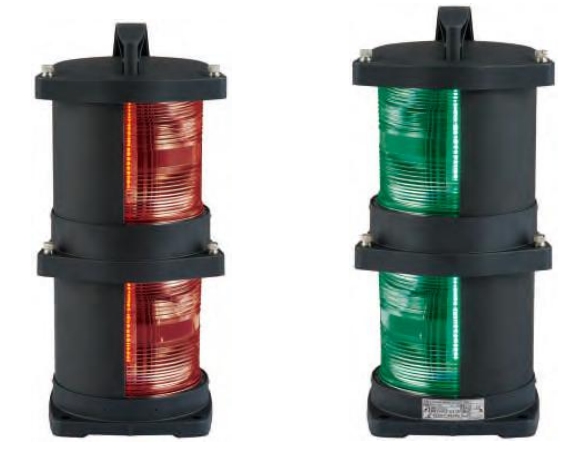
| Sidelight (Port) | Red | Left (port) side | 112.5° (from ahead to 22.5° abaft the beam) | Indicates the left side of the vessel and helps determine direction in crossing situations |
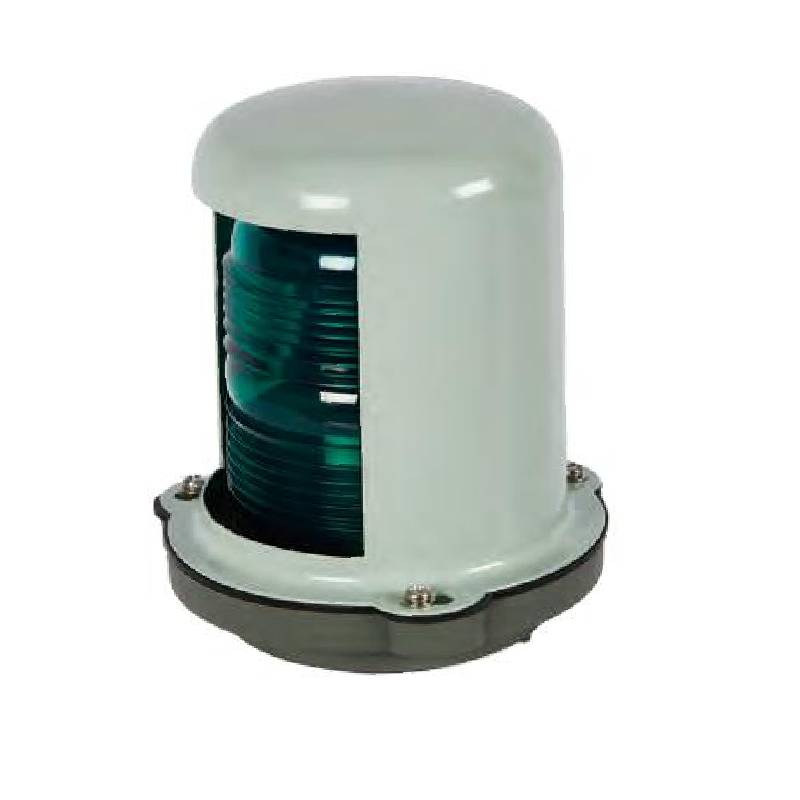
| Sidelight (Starboard) | Green | Right (starboard) side | 112.5° (from ahead to 22.5° abaft the beam) | Indicates the right side of the vessel and assists in identifying vessel heading |
| Masthead Light | White | Centerline, above the hull | 225° (from ahead to 22.5° abaft the beam on both sides) | Shows the vessel is underway; also indicates vessel size and propulsion status |
| Stern Light | White | Rear (stern) of the vessel | 135° (centered on the stern) | Indicates the vessel’s position from behind and confirms its direction of travel |
| All-Round Light | White, Red, Green, or Yellow (depending on use) | Visible from all directions | 360° | Used to signal special conditions such as anchoring, towing, or restricted maneuverability |
| Towing Light | Yellow | Stern, above stern light | 135° | Indicates a vessel engaged in towing operations |
| Anchor Light | White | Highest point of the vessel | 360° | Shows that a vessel is at anchor and not underway |
| Fishing Light | Red and White (combined) | Typically mast or elevated position | 360° (in specific configurations) | Identifies vessels engaged in fishing activities |
| Restricted Maneuverability Light | Red, White, Red (vertical) | Prominent vertical line | 360° | Indicates a vessel with limited ability to maneuver, such as dredging or surveying |
| Pilot Light | White over Red | Masthead area | 360° | Identifies a vessel engaged in pilotage duties |
Key Contributions Provided by Navigation Lights for Improving Marine Traffic Management
1. Enhancing Vessel Visibility in Low-Light and Adverse Conditions
One of the most essential tasks for the navigation lights today lies in enhancing vessel visibility either through the night or under an ambient environment like fog, rain, or heavy seas. In the aforesaid scenarios, the human eye is the supreme detection device while navigation lights ensure that vessels are detectable from a secure distance. This visibility gives room for operators to detect nearby traffic from afar and thus initiate preventive actions for avoiding probable closeness or accidental encounters.
Navigation lights are capable of giving visual affirmation to the presence of the vessel, they are unlike the radar or satellite-based operating systems. It is particularly important to acknowledge units rapidly at congested coastal areas, or the narrow channel conditions demand recognition for maneuvering vessel motion.
2. Standardizing Communication Between Vessels
Navigation lights create a universal visual language that allows vessels from different countries and operating backgrounds to communicate effectively without verbal interaction.
This chart highlights how navigation lights standardize communication between vessels, ensuring clarity, consistency, and safety in global marine traffic management.
| Communication Aspect | Navigation Light Feature | Standardization Basis | Information Conveyed | Impact on Marine Traffic Management |
| Vessel Direction Identification | Red (port) and green (starboard) sidelights | COLREGs | Indicates the direction of travel and orientation of the vessel | Helps determine crossing, overtaking, and head-on situations |
| Vessel Movement Status | Masthead light (white) | COLREGs | Shows that a vessel is underway and its forward movement | Enables early recognition of moving vessels to avoid conflicts |
| Vessel Position Awareness | Stern light (white) | COLREGs | Indicates the rear of the vessel and confirms its heading | Assists in safe overtaking and maintaining distance |
| Operational Condition Signaling | All-round lights (white, red, green, yellow) | COLREGs | Communicates conditions such as anchoring, towing, or distress | Prevents misinterpretation of vessel activities |
| Special Vessel Identification | Unique light combinations (e.g., red-white-red, white over red) | COLREGs | Identifies vessels restricted in maneuverability, fishing, or pilotage | Enhances awareness of operational limitations |
| Visibility Consistency | Prescribed light intensity and arc of visibility | International Maritime Organization standards | Ensures lights are visible at required distances and angles | Provides reliable detection in various environmental conditions |
| Global Interpretation | Uniform color codes and positioning | International Maritime Organization regulations | Creates a universal visual language understood worldwide | Enables seamless coordination in international waters |
| Redundancy in Communication | Continuous visual signaling independent of electronics | COLREGs | Provides backup to electronic systems like AIS | Improves safety in case of system failure |
3. Supporting Collision Avoidance and Decision-Making
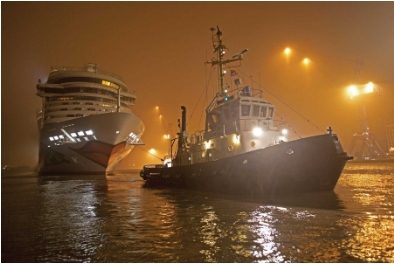
Knowing what the lights are and how they help a night navigator serves as an entry priority after discerning what lights constitute navigation; A direct bearing on colliding is projected instantly by giving the navigation lights certain signals and movements. One would see how the various lights are situated and interpreted. For instance, is an approaching vessel, a crossing vessel, an overtaking vessel, or one anchored with no way on while the mariner continues his appraisal.
The protocol on lights puts the operator in the recommended position to act upon the rule of the road in a multilateral way. And in many cases of close circumstance, the small activation of the lights is the first step leading mariners to see an average risk ahead, thus acting proactively and not reactively. Therefore, navigation lights promote correct decision-making by generating sudden proactive responses rather than later reactive ones.
4. Improving Situational Awareness in High-Traffic Areas
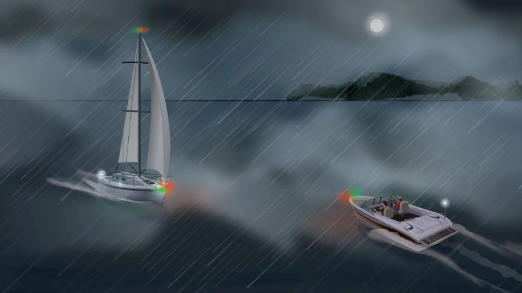
With extensive marine traffic such as near ports, the navigational requirements of the maritime zone, especially around the straits or offshore operation areas, imply an indispensable need for situational awareness to be developed and maintained. Navigation lights are key elements which constantly and in real time present mariners with visions of vessels, the proximity of which helps mariners to build a genuine perception of their surroundings.
The use of different light patterns cannot be set aside at this point. Mariners will quickly classify among different types of vessels in close vicinity, for example, whether sailing types are cargo, fishing, or vessels restricted in maneuver. This developed report offers a salutary voyage and ensures optimal traffic coordination, heading off any miscommunication.
5. Complementing Modern Navigation Technologies
With various forms of technological aids available for the management of marine traffic today, some still rely heavily on navigation manual rigging. The scrutiny of AIS tracks, for example, brings about insightful and increasingly detailed knowledge on ship location, course, and speed.
Nevertheless, malfunctions do occur in any systems, even electronic systems. Signal loss and equipment malfunction remain peculiar problems in standalone operations and around busy port areas. The visual confirmation of navigation lights is necessary to complement any possible lack of data received from the AIS due to such occurrences. Therefore, these navigation lights make a useful backup system to render the entire traffic management system resilient, which essentially maintains the safety aspect intact when things go wrong in terms of technology.
6. Facilitating Regulatory Compliance and Operational Discipline
Navigation lights are a crucial component of maritime regulation compliance. Setting goals within a consistent framework of COLREGs will ensure the guaranteed participation of the ship in a predictable fashion.
Strict regulation that demands appropriate lighting configurations clamp down on disciplined operational practice, one that demand regular attention to equipment undergoes a rigorous inspection. This ensures the lights are not only in operational order but also fosters a maritime culture centered on safety. Compliance with these regulations helps mitigate the risk and maintain the integrity of marine traffic systems.
7. Supporting Specialized Marine Operations
Between the lights, these lights are also used for another simultaneous identification of vessels engaged in specialized operations, like towage, dredging, fishing, or piloting. Each of those special activities involves a lighting configuration destined to indicate the unique operational constraints to the other vessels.
By setting the aforementioned fastidiously, the lights aid in minimizing mutual interference, helping everyone within the periphery adapt accordingly. This is much important in highly intense operational environments with more than one activity active simultaneously.
8. Enabling Future Integration with Smart and Autonomous Systems
As the maritime industry elevator moves towards increased automation and digitization, navigation lights are evolving to support new technologies. Today’s more advanced lighting systems are so much more intelligent, energy-efficient LED navigation lights with better durability and enhanced brightness control.
In the future, the possibility exists for navigation light integration with smart sensors and autonomous navigation systems to have adaptive lighting capabilities such as that induced by changes in environmental conditions and traffic density. These would afford further enhancements to their role in marine traffic management, serving traditional vessels as well as the new autonomous platforms.
Challenges and Future Solutions in Navigation Lights for Improving Marine Traffic Management
This chart provides how current challenges in navigation lighting systems are being addressed through technological and regulatory solutions, ensuring their continued effectiveness in improving marine traffic management.
| Challenge Area | Key Challenge | Impact on Marine Traffic Management | Future Solution | Practical Benefit |
| Visibility Limitations | Reduced clarity in fog, heavy rain, and low-contrast environments | Increased risk of delayed detection and collision | Adaptive LED navigation lighting with automatic intensity adjustment | Enhanced visibility and faster vessel recognition |
| Coastal Light Interference | Background lighting from ports and cities masking navigation lights | Difficulty distinguishing vessel signals | Advanced color differentiation and anti-glare optical designs | Improved signal clarity in high-light environments |
| Equipment Durability | Corrosion, vibration, and harsh marine conditions causing failures | Inconsistent or misleading light signals | Use of ruggedized materials and sealed LED systems | Greater reliability and reduced failure rates |
| Maintenance Challenges | Frequent inspections and replacements required for traditional systems | Higher operational costs and risk of unnoticed faults | Smart self-diagnostic lighting systems with remote monitoring | Predictive maintenance and reduced downtime |
| Traffic Congestion | Overlapping light signals in busy shipping lanes | Confusion in interpreting multiple vessel movements | Integration with traffic-aware systems and intelligent light modulation | Clearer differentiation between vessels |
| Limited Integration with Digital Systems | Weak linkage with systems like Automatic Identification System | Fragmented situational awareness | Fully integrated navigation platforms combining visual and digital data | Unified and accurate navigation information |
| Human Interpretation Errors | Misreading complex light configurations | Incorrect navigational decisions | Enhanced training programs and AR-assisted navigation tools | Improved interpretation accuracy and safer responses |
| Autonomous Vessel Adaptation | Lack of tailored standards for unmanned ships | Communication gaps with traditional vessels | Updated regulations by International Maritime Organization for autonomous navigation lighting | Seamless coexistence of manned and autonomous vessels |
| Energy Efficiency | High energy consumption of older lighting technologies | Increased fuel and operational costs | Adoption of solar-powered and LED marine navigation lights | Sustainable and cost-effective operations |
| Environmental Extremes | Ice buildup, saltwater exposure, and extreme temperatures | Reduced performance and shorter lifespan | Advanced coatings and climate-resistant designs | Consistent performance in harsh conditions |
Final Thoughts
Navigation lights, the backbone of marine safety and traffic management, serve the purpose of giving valid visual communication and guide vessels in ports with a heavy concentration of traffic. Today, beside new technologies and strict adherence to regulatory provisions, navigation lights are enhancing the carrying out of tasks in order to prevent untoward accidents and ensure a smooth flow and safety of voyage in the ever-increasing commercial network.