
How to Choose the Right Navigation Lights for Your Vessels
Navigation lights are essential safety equipment for every vessel, from small recreational boats to really large commercial ships. A suitable navigation lighting system helps other vessels recognize where you are, the direction of travel, and even what you’re doing operationally, especially during nighttime navigation, when visibility drops, or in emergency cases. Selecting the right navigation lights takes a bit of focused thinking: vessel type, where you operate, the regulatory requirements, light output, physical ruggedness, and energy efficiency. A properly designed navigation lighting system does more than improve safety at sea and can also reduce collision risk as well as compliance with international marine regulations.
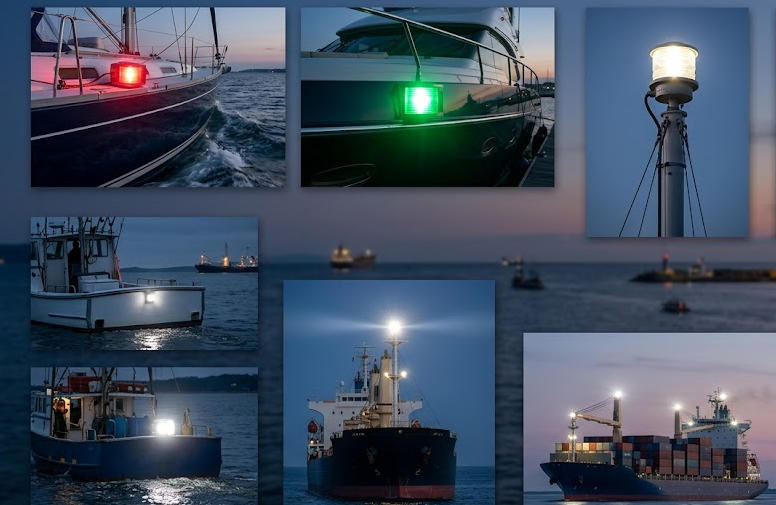
Table of Contents
Understanding the Purpose of Navigation Lights
Navigation lights basically exist to pass key signals between vessels. They let an operator figure out whether another vessel is coming nearer, heading away, crossing in front, or performing some specific operation. And unlike regular deck lighting, navigation lights are engineered to deliver controlled visibility at defined viewing angles and set distances.
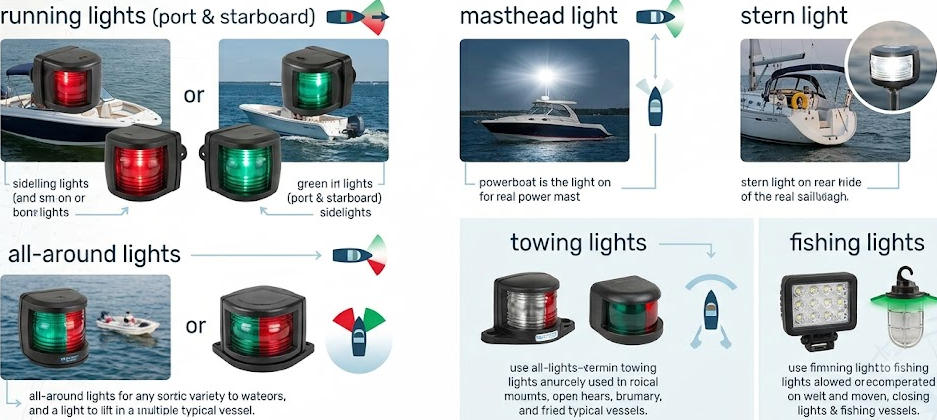
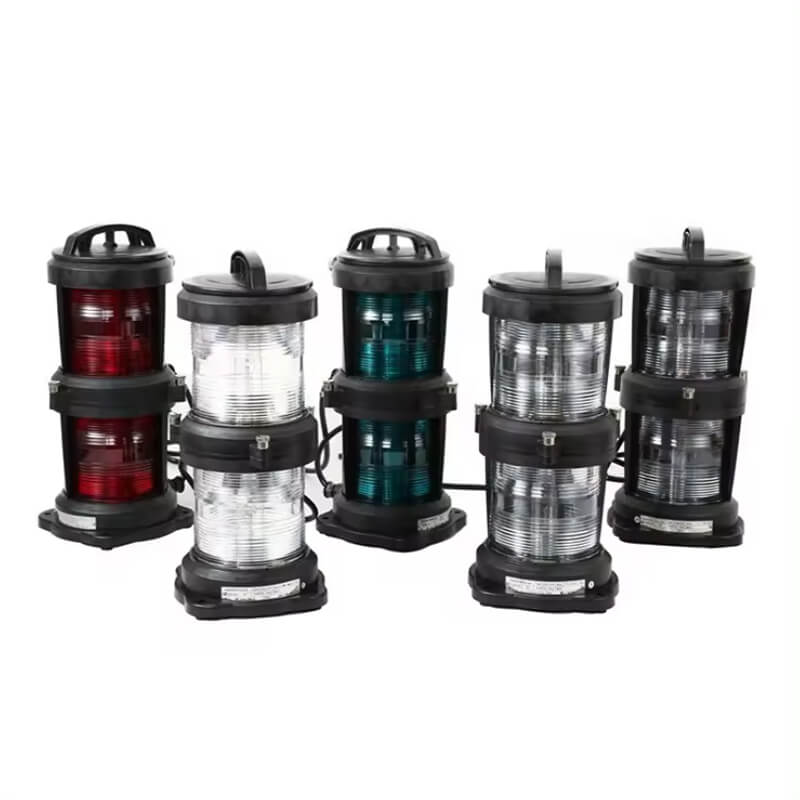
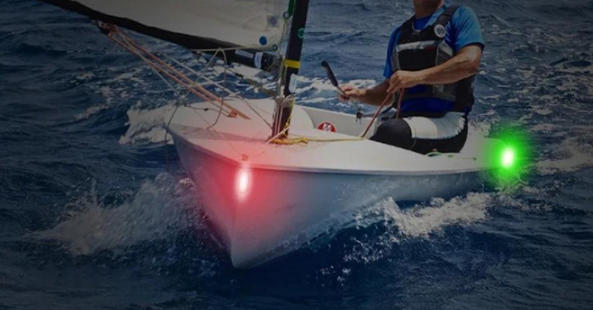
Most navigation light systems include red, green, white, and sometimes yellow lights. Each color, plus where it’s positioned, comes with a specific meaning. Red lights usually point to the port side of a vessel, while green lights show the starboard side. White lights are typically used for masthead lights, stern lights, and for all-around visibility. In some situations, special yellow lights may appear for vessels that are towing, or engaged in particular tasks.
Since navigation lights play such a big role in preventing mishaps, they need steady performance even when conditions get rough: rain, fog, waves, vibration, and saltwater exposure, all of which can be brutal.
Understanding Different Types of Navigation Lights
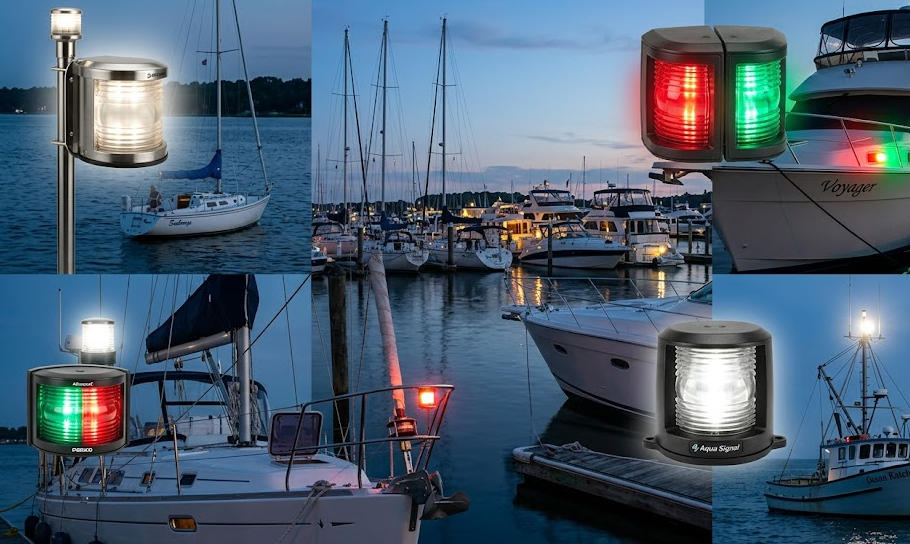
| Navigation Light Type | Function | Color | Where It Is Installed | Importance for Vessel Safety |
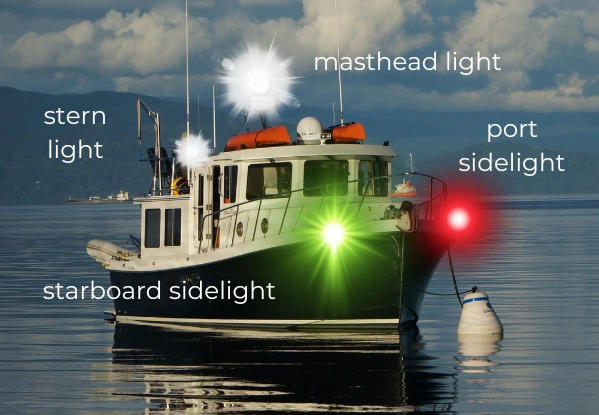
| Port Sidelight | Indicates the port (left) side of a vessel | Red | On the left side of the vessel | Helps other vessels identify the vessel’s direction and determine passing arrangements |
| Starboard Sidelight | Indicates the starboard (right) side of a vessel | Green | On the right side of the vessel | Allows approaching vessels to recognize the vessel’s heading direction |
| Masthead Light | Shows a power-driven vessel’s forward direction | White | On the centerline above the vessel’s hull structure | Provides long-distance visibility and identifies powered vessels at night |
| Stern Light | Indicates the rear of a vessel | White | At the stern (rear) of the vessel | Helps following vessels understand the vessel’s movement and orientation |
| All-Round Light | Provides visibility across 360 degrees | White, Red, Green, or Yellow depending on application | Installed where full visibility is required | Allows vessels to be identified from any direction, especially when anchored or performing special operations |
| Anchor Light | Indicates a vessel is stationary at anchor | White | Usually placed at the highest practical point of the vessel | Warns nearby vessels of an anchored vessel to prevent collisions |
| Towing Light | Identifies a vessel engaged in towing operations | Yellow | Near the stern above or near the stern light | Alerts other vessels that special maneuvering conditions exist |
| Fishing Vessel Light | Shows fishing operations and restricted maneuverability | Red, White, Green, or combinations | Installed according to fishing operation requirements | Communicates fishing status and helps other vessels avoid interference |
| Restricted Maneuverability Light | Indicates limited ability to maneuver due to work or equipment operations | Red-White-Red | On vessels such as dredgers and offshore work vessels | Warns other vessels to keep clear and navigate carefully |
| Pilot Light | Identifies a vessel engaged in pilotage service | White and Red | Usually displayed where visible above the vessel | Helps other ships recognize pilot boats operating in ports and waterways |
| Special Operation Light | Provides information about specific marine activities | Depends on operation | Installed according to vessel function | Supports safe navigation for specialized vessels such as research, construction, and rescue vessels |
| LED Navigation Light | Modern lighting solution replacing traditional bulbs | Red, Green, White, Yellow | Used throughout vessel navigation systems | Offers low energy consumption, high reliability, long lifespan, and strong resistance to marine conditions |
| Explosion-proof Navigation Light | Provides safe lighting in hazardous areas | Usually Red, Green, or White | Used on tankers, offshore platforms, and hazardous cargo vessels | Reduces ignition risks and provides reliable operation in dangerous environments |
Key Steps of Choosing the Right Navigation Lights for Your Vessels
Selecting the right navigation lights requires careful consideration of vessel type, operating environment, regulatory requirements, light performance, etc.
1. Vessel Type and Size
The first step when selecting navigation lights is knowing your vessel’s classification and dimensions. Different vessels have different lighting requirements, based on their length, purpose and where you usually run, like open water or sheltered areas.
| Vessel Type | Typical Size Range | Navigation Light Requirements | Recommended Features |
| Small Recreational Boats | Usually less than 12 meters | Require basic port, starboard, stern, and all-round visibility for safe operation in coastal and inland waters | Compact LED navigation lights, low power consumption, easy installation, corrosion-resistant housing |
| Yachts and Leisure Boats | Approximately 6–24 meters | Need reliable lighting for nighttime cruising, docking, and offshore recreational activities | Stylish compact designs, high-efficiency LEDs, waterproof construction, long service life |
| Fishing Vessels | Small boats to large commercial fishing ships | Require dependable navigation signals during long working hours and operations in changing weather conditions | High-intensity LED lights, vibration resistance, saltwater corrosion protection, continuous operation capability |
| Workboats and Service Vessels | Generally 10–50 meters | Need durable lighting systems for towing, maintenance, offshore support, and harbor operations | Heavy-duty marine lights, shock resistance, strong visibility, low maintenance requirements |
| Tugboats | Approximately 20–50 meters | Require specialized navigation lights to indicate towing activities and restricted maneuverability | Powerful all-round lights, high visibility range, rugged design, compliance with marine regulations |
| Passenger Vessels and Ferries | Approximately 20 meters and above | Need highly reliable navigation lights for frequent operations and passenger safety | Certified marine lights, long-range visibility, failure monitoring options, energy-efficient LEDs |
| Cargo Ships and Container Ships | Usually over 50 meters | Require high-performance navigation lighting for international voyages and busy shipping routes | Long-range LED navigation lights, robust housings, automatic monitoring systems, high reliability |
| Tankers and Chemical Ships | Large commercial vessels | Require navigation lights suitable for hazardous environments and strict safety requirements | Explosion-resistant options where required, durable materials, certified marine performance |
| Offshore Support Vessels | Various sizes, often 20–100 meters | Need reliable lighting for offshore operations, platform support, and harsh sea conditions | Weather-resistant construction, anti-corrosion protection, high brightness, smart monitoring capability |
| Large Ocean-Going Vessels | Usually over 100 meters | Require powerful navigation systems for global maritime operations and extreme environments | High-performance LED systems, long lifespan, international certification, advanced control functions |
2. Choose Navigation Lights Based on Regulatory Requirements
Meeting marine regulations of navigation lights is a main factor. International vessels often align with rules from the International Maritime Organization, and the Convention on the International Regulations for Preventing Collisions at Sea (COLREGs). When you comply, the navigation signals stay clear, dependable, and they’re recognized across the world, so safety improves during all operating conditions.
| Regulatory Requirement | Description | Importance |
| Light Color Requirements | Navigation lights must display specific colors, including red, green, white, and yellow, depending on vessel type and operation | Accurate colors help other vessels identify a vessel’s direction, position, and operational status |
| Visibility Range | Lights must provide sufficient visibility distance according to vessel size and classification | Ensures vessels can be detected early enough for safe navigation and collision avoidance |
| Light Intensity | Navigation lights must produce the required luminous intensity within specified limits | Prevents lights from being too weak to identify or too bright to create confusion and glare |
| Horizontal Visibility Angles | Lights must cover specific horizontal sectors, such as port, starboard, stern, or all-round visibility | Allows other vessels to accurately determine the direction and movement of a vessel |
| Vertical Visibility Requirements | Navigation lights must maintain visibility across required vertical angles under different sea conditions | Ensures reliable performance when vessels pitch and roll due to waves |
| Installation Position Requirements | Lights must be installed at approved locations and heights based on vessel design and regulations | Prevents incorrect signals caused by blocked or improperly positioned lights |
| Certification and Approval | Navigation lights should be tested and approved by recognized marine authorities or classification organizations | Provides assurance that the lighting system meets safety and performance standards |
| Waterproof and Environmental Protection | Lights should withstand exposure to seawater, humidity, UV radiation, and extreme temperatures | Ensures reliable operation in harsh marine environments and reduces failures |
| Electrical Safety Requirements | Navigation lights must meet marine electrical safety standards and provide stable operation | Prevents electrical failures that could compromise vessel safety |
| Failure Monitoring Requirements | Some commercial vessels require systems that can detect navigation light failures | Allows crews to identify and repair problems quickly during operation |
| Special Operation Requirements | Vessels involved in towing, fishing, dredging, or restricted maneuvering may require additional navigation lights | Ensures other vessels understand special activities and maintain safe distances |
| National and Local Regulations | Some regions may have additional requirements beyond international standards | Ensures compliance with local maritime authorities and avoids regulatory penalties |
3. LED Technology for Modern Marine Navigation Lighting
LED marine navigation lights are now a preferred option for a lot of modern boats, basically because they’re efficient and reliable. When you compare them with older halogen or incandescent setups, LED systems look better in a few ways, not just one.
First, LED lights use far less electrical power, which helps lessen the battery load and, in turn, can support lower fuel consumption on the vessel. They also give off less heat and usually last much longer, so the time between maintenance tasks stretches out, along with replacement spending.
Another big benefit is their strong resistance to vibration and shock. In marine conditions, equipment is always getting rocked or jarred, and LED navigation lights are built using solid-state parts that tolerate this better than earlier lighting tech.
Also, many advanced LED navigation lights include monitoring features that feel almost proactive, like failure alarms plus remote status monitoring. That makes them a good fit for commercial fleets and offshore work where uptime matters.
4. Evaluate Light Visibility and Performance
Visibility is one of the most important factors when selecting navigation lights. A suitable navigation light must provide clear identification at the required distance without causing excessive glare.
The required visibility range depends on vessel size and operational category. Smaller boats may need shorter-range lights, while larger commercial vessels require powerful systems capable of being recognized from several nautical miles away.
High-quality navigation lights should maintain stable brightness and accurate color output throughout their service life. Poor-quality lights may experience reduced brightness, inconsistent color, or premature failure, creating serious safety risks.
5. Considering Durability in Harsh Marine Conditions
Marine environments are among the most demanding settings for electrical equipment. Navigation lights are constantly facing seawater, humidity, wind, UV exposure, and rapid temperature changes.
The right navigation lights should be put together using corrosion-resistant materials, solid protective casings, and dependable sealing systems. A water-tight and dust-proof style is helpful, because it blocks damage caused by water entry, and it also supports long term work.
For offshore ships and vessels that operate in extreme settings, extra durability elements matter a lot, including impact resistance, anti-corrosion coatings, and vibration-resistant structures. When these are selected well, the unit lasts longer even in harsh conditions.
A durable navigation light can reduce servicing needs, and it boosts operational safety by lowering the odds of surprise malfunctions.
6. Installation and Positioning Considerations
Even the best navigation lights cannot perform well if they are installed in the wrong way. Correct placement makes sure the light stays observable from the needed angles, and that it is not blocked by other onboard equipment or nearby structures.
During installation, vessel operators should think about where masts, antennas, exhaust systems, and other parts are placed, because they may mess with visibility. Also, the height and the direction of each light need to match the applicable regulations, exactly and without ignoring local limits.
Another major thing is easy access for checking and service. A well-designed setup lets the crew quickly look over, fix, or switch out lighting parts when it becomes needed.
7. Energy Efficiency and Maintenance Considerations
Energy consumption and maintenance requirements are important factors, especially when vessels stay in service for long stretches without access to repair facilities nearby.
Marine LED navigation lights help lower the amount of upkeep, mainly because their lifespan is longer, and there are fewer pieces that tend to wear out and need replacement. For commercial vessels, this kind of reduced maintenance can cut down downtime, and improve operational efficiency in real terms.
Modern systems may also get integrated with vessel monitoring systems, so crews can spot lighting failures more quickly. This becomes especially valuable on big vessels, where checking every single navigation light manually can be a hassle.
8. Choosing a Reliable Navigation Light Supplier
Selecting a trustworthy supplier is a key step to ensure the navigation light quality and performance. A reliable manufacturer should offer products that are made for marine use, and also provide technical paperwork plus testing details that make sense.
When you evaluate suppliers, you should look at product certification, manufacturing quality, durability testing, after-sales service and technical assistance.
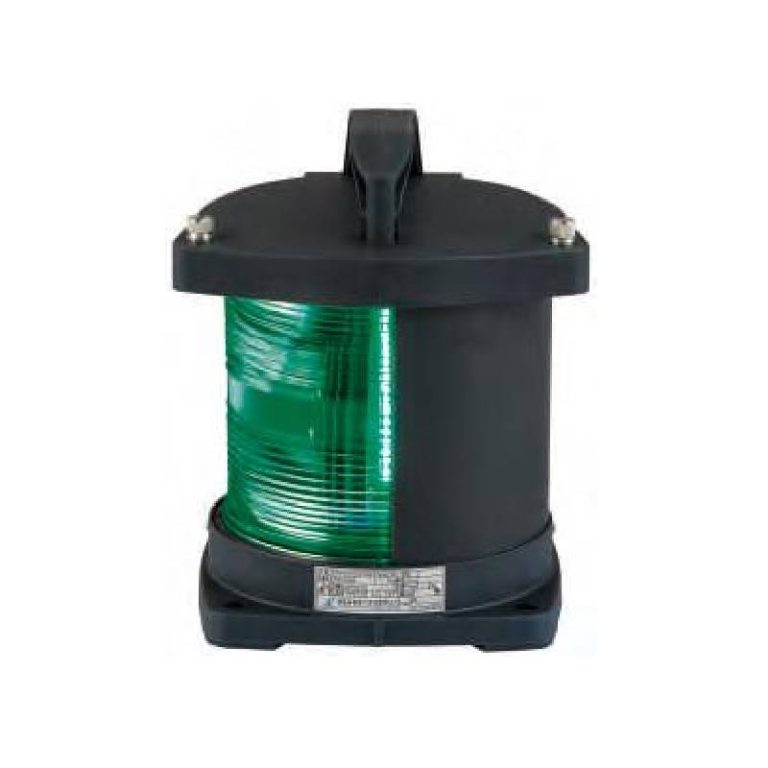
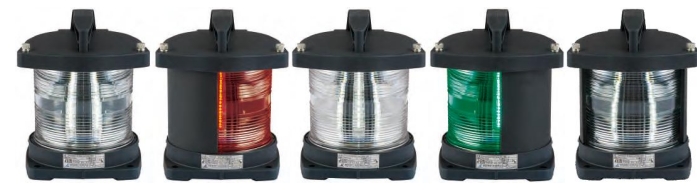
Yushuo is a trusted navigation light supplier, providing high-quality marine lighting solutions, to make vessel safety more reliable and visibility better. They use advanced LED technology together with a tough build, and they also align with marine standards. Because of that the navigation lights from Yushuo keep steady performance, even in rough sea conditions. The lineup is used across many kinds of vessels, including commercial ships, fishing boats, yachts, and offshore working boats.
Final Words
Choosing a proper navigation lighting system improves safety, supports efficient vessel operations and ensures compliance with maritime rules. When vessel operators invest in well-made, durable and energy-efficient products , they can enhance visibility of the navigation lights greatly.
