
9 Key Types of Explosion-proof Lights for Marine Operations
Explosion-proof lights are used in marine and offshore settings where flammable gases, vapors, or other burnable materials can be present. Tankers, LNG carriers, chemical ships, offshore platforms, drilling rigs, and other marine sites may have classified hazardous zones. Those zones need lighting designed for safe use.
Marine lighting also has to handle rough surroundings. Salt spray and heavy moisture are common. Units also face vibration, corrosion risk, and swings in temperature. Because of this, different types of marine explosion-proof lights are available to meet the specific requirements of different applications.
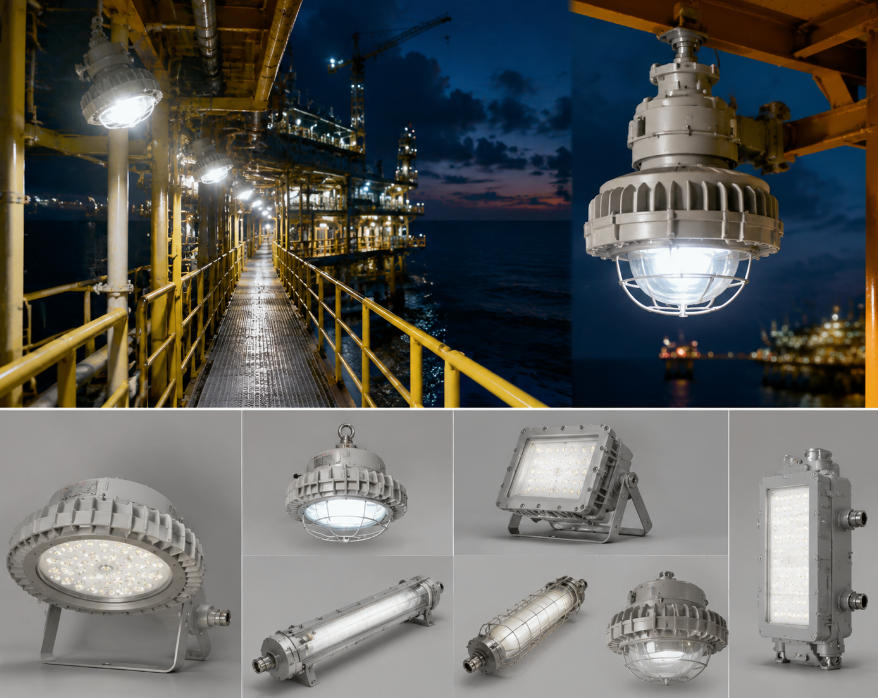
Table of Contents
Common Types of Explosion-proof Lights
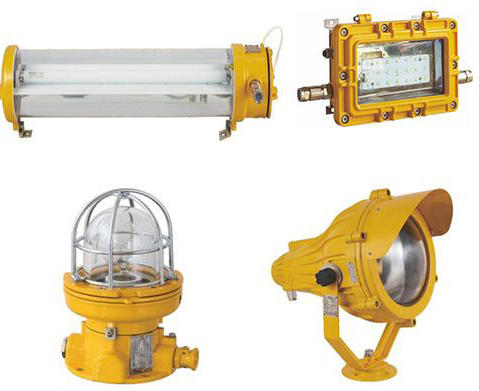
1. Explosion-proof LED Lights
Explosion-proof LED lights are a common choice for general light. They mix LED components with a protective body made for risky areas. Compared with older light sources, these units often use less power and last longer. They also tend to need less upkeep over time.
You can find them in machinery spaces, workshops, processing zones, corridors, storage areas, and other places that need steady lighting. Their tough build helps guard inside parts from moisture and dust. They also help during vibration and other sea-related conditions.
2. Explosion-proof Floodlights
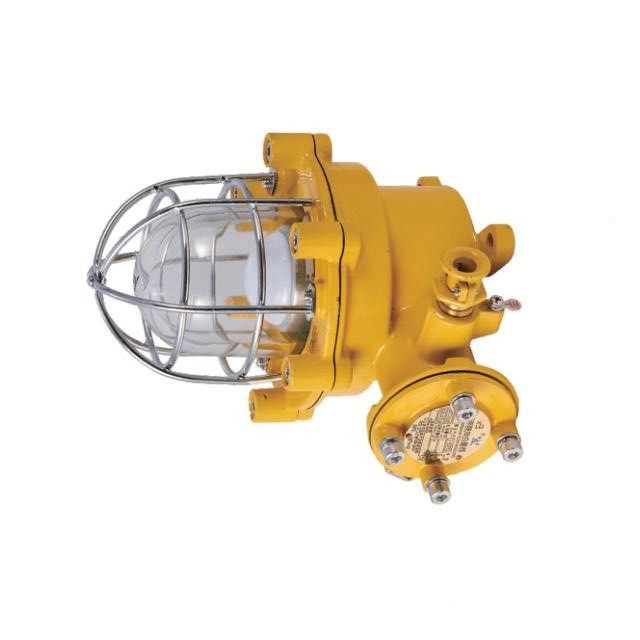
Explosion-proof floodlights are built to spread light over a wide space. They work well for outdoor tasks on ships and offshore sites. Workers often need clear views on decks, near loading zones, in cargo handling areas, and around key equipment.
On tankers and offshore platforms, these floodlights can light storage tanks, pipelines, loading gear, and work decks. The broader beam pattern means you may cover a larger area with fewer fixtures.
3. Explosion-proof Searchlights
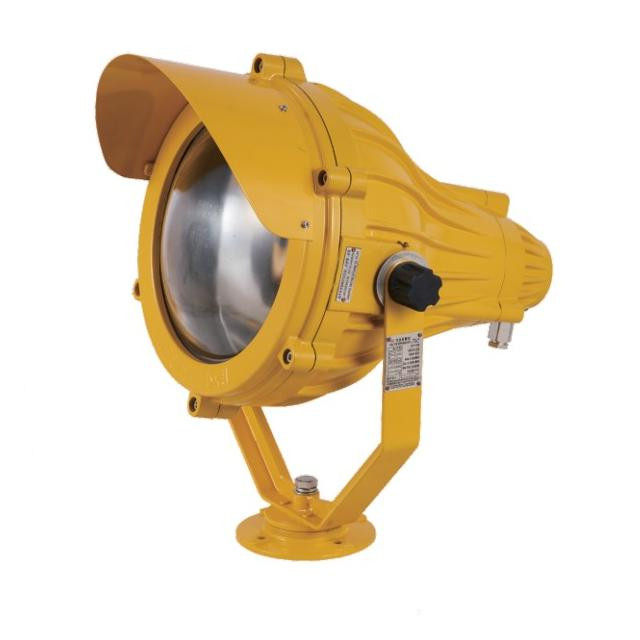
Explosion-proof searchlights make a tight beam for longer reach. They suit marine checks, night work, emergency actions, and lighting distant tools or work sites.
Some models are made to stay in place. Others allow angle changes. They can help with deck equipment checks and offshore structure inspections. They are also used to watch areas near a vessel.
4. Explosion-proof Bulkhead Lights
Explosion-proof bulkhead lights are smaller fixtures made for wall or ceiling mounting. Their rugged build fits spots where the unit may see shaking, wet air, knocks, or corrosive exposure.
These lights often go into passageways, stairwells, equipment rooms, access areas, and platforms. They also fit other tight spaces. Because they are compact, they work when ceiling or wall space is limited.
5. Explosion-proof High Bay Lights
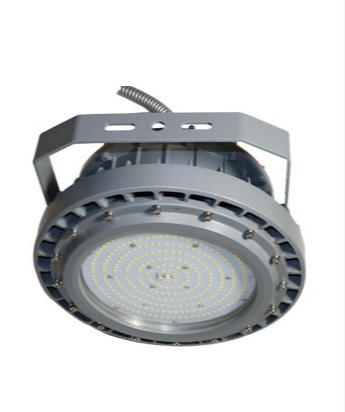
Explosion-safe high bay fixtures are made for big rooms and tall ceilings. The optics are set up to push light down toward the working zone, even when the unit sits high.
You will see them in big workshops, offshore processing zones, cargo areas, maintenance buildings, and other marine industrial sites. LED high bay lights can help in jobs that run for many hours, mainly because they use less power and last longer.
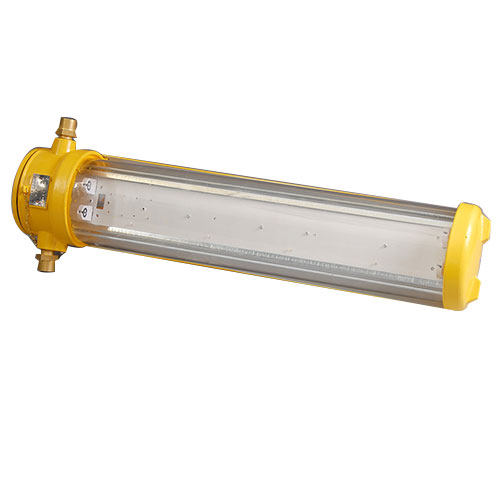
6. Explosion-proof Tube Lights
Explosion-proof tube lights use a straight, line-like layout. This style gives steadier light across a work stretch. They fit long corridors, passageways, machinery areas, workshops, and other long spaces.
LED tube-style versions can deliver good output while cutting the number of bulb swaps and upkeep tasks. For ships and sea work, you need protection from wet air, salt mist, vibration, and corrosion.
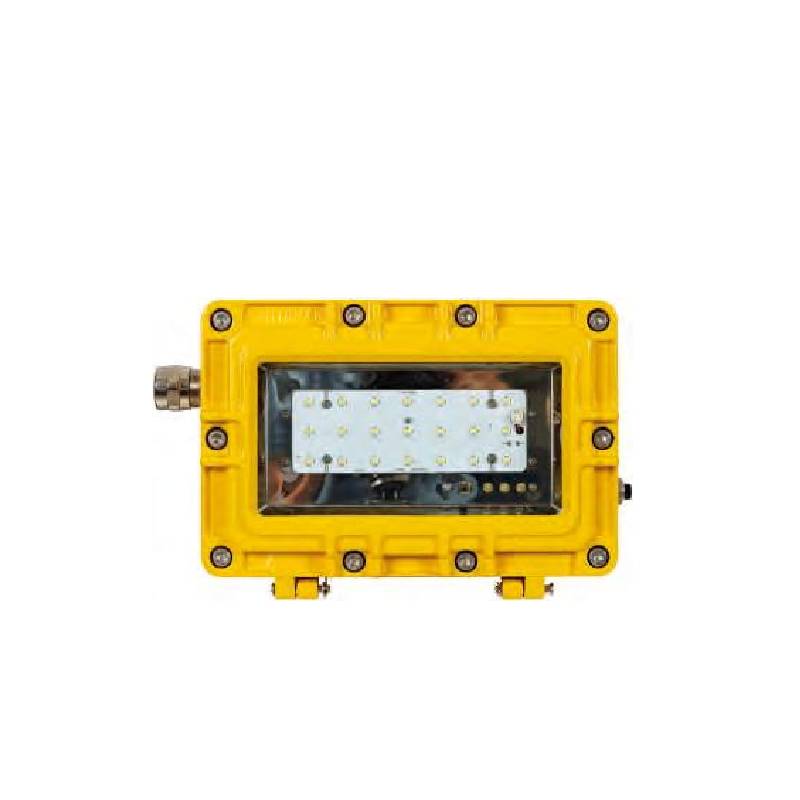
7. Explosion-proof Emergency Lights
Explosion-proof emergency lights keep lighting going if the main supply stops. This matters a lot on vessels and offshore sites, since outages can happen during equipment faults, fires, harsh weather, or other urgent events.
You can mount these lights on escape routes, near emergency gear, in risky job areas, and in any spot where people still need to see. A battery pack lets the lights keep working when normal power is gone.
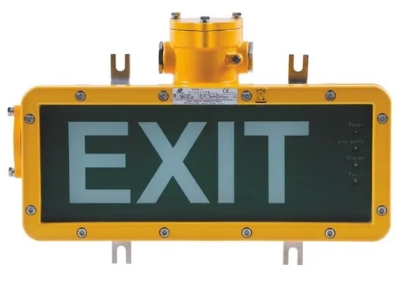
8. Explosion-proof Exit Lights
Explosion-proof exit lights mark emergency exits and evacuation paths in hazardous marine areas. They help people find the route to safety when the usual lights fail or when visibility drops.
These units can go near emergency doors, stairs, walkways, and other assigned evacuation points. When clear signs are paired with safe housing for hazardous areas, they fit vessels and offshore operations where evacuation safety is a top concern.
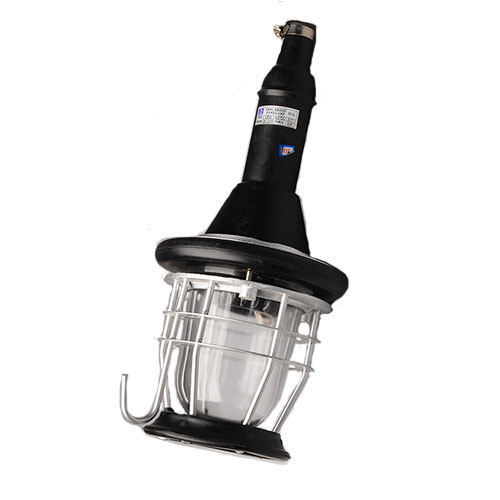
9. Explosion-proof Portable Lights
Explosion-proof portable lights offer light you can place where you need it. They are used for maintenance, checks, repairs, and emergency work. Since they are not fixed in place, they can be moved to a specific task area for extra brightness.
Marine maintenance teams may use portable explosion-safe lights during pump checks, valve work, pipeline inspections, tank inspections, machinery reviews, and electrical checks. Because they move easily, they are handy in tight spaces or areas that are hard to reach.
Comparison Chart of Explosion-proof Lights for Marine Operations
| Type | Main Function | Typical Marine Applications |
| Explosion-proof LED light | General industrial illumination | Machinery spaces, work areas, offshore facilities |
| Explosion-proof floodlight | Wide-area illumination | Decks, loading areas, cargo zones |
| Explosion-proof searchlight | Long-distance focused lighting | Inspection, deck operations, emergency response |
| Explosion-proof bulkhead light | Compact area lighting | Passageways, stairways, equipment rooms |
| Explosion-proof high bay | High-ceiling illumination | Workshops, processing areas, large spaces |
| Explosion-proof tube light | Linear and uniform lighting | Corridors, machinery spaces, workshops |
| Explosion-proof emergency light | Backup illumination | Escape routes and hazardous areas |
| Explosion-proof exit light | Emergency route indication | Exits, stairways, passageways |
| Explosion-proof portable light | Mobile lighting | Maintenance, inspection, repair |
Key Factors to Consider for Selecting the Right Explosion-proof Marine Lights
Choosing explosion-proof lighting for marine operations requires consideration of both hazardous-area requirements and marine environmental conditions.
| Key Factor | What to Consider | Why It Important |
| Hazardous Area Classification | Identify the zone or hazardous-area classification where the light will be installed. | Ensures the fixture provides suitable protection against ignition hazards. |
| Explosion Protection Type | Consider the required protection method and equipment design for the specific hazardous atmosphere. | Helps prevent sparks, flames, or excessive temperatures from becoming an ignition source. |
| Marine Certification | Check applicable marine classification and approval requirements. | Supports compliance with vessel and offshore installation requirements. |
| Light Source | Choose between LED and other suitable light sources. | LED technology can provide high efficiency, long service life, and lower maintenance. |
| Lighting Performance | Evaluate brightness, beam angle, light distribution, and required illumination level. | Provides adequate visibility for working, navigation, inspection, and maintenance. |
| Corrosion Resistance | Consider salt spray, seawater, humidity, and corrosive atmospheres. | Helps extend fixture service life in harsh marine environments. |
| Ingress Protection | Check protection against water, dust, and moisture according to the installation conditions. | Reduces the risk of internal damage and electrical failures. |
| Operating Temperature | Consider the minimum and maximum ambient temperatures at the installation site. | Ensures reliable operation under changing marine and offshore conditions. |
| Vibration and Shock Resistance | Evaluate exposure to engine vibration, vessel movement, impact, and mechanical shock. | Improves reliability and reduces the risk of fixture damage. |
| Installation Location | Determine whether the light will be installed on decks, corridors, machinery spaces, tanks, workshops, or offshore structures. | Helps determine the most suitable lighting type and mounting method. |
| Emergency Lighting Requirements | Determine whether backup lighting or illuminated exit signs are required. | Helps maintain visibility during power failures and emergencies. |
| Maintenance Requirements | Consider service life, accessibility, replacement frequency, and maintenance procedures. | Reduces downtime and maintenance costs. |
| Energy Efficiency | Compare power consumption and operating efficiency. | Helps reduce energy use, particularly for lights operating continuously. |
| Mounting Method | Consider ceiling, wall, pole, bracket, or portable installation. | Ensures secure installation and appropriate light distribution. |
| Service Life | Evaluate expected operating hours and component durability. | Longer service life can reduce replacement and maintenance requirements. |
| Application Requirements | Match the light type to the task, such as floodlighting, searchlights, general lighting, or emergency lighting. | Ensures the lighting system meets the actual operational needs of the vessel or offshore facility. |
Summary
Explosion-proof lighting in marine environments, comes in different types. Options include LED units, floodlights, searchlights, bulkhead lights, high bay fixtures, and more. Each choice supports a different job, from general lighting and deck light coverage to emergency escape support and maintenance inspection needs.
Explosion-proof marine lighting systems need to provide dependable light. It also must meet the rules for hazardous areas. The system must handle the environment, installation steps, and required certification for the job.
If you choose the right fixture type for each location, you can see better. That helps with daily work. It can also lower risk and support safer conditions on ships and offshore sites.
