Marine Searchlights: Standards and Regulation Compliance
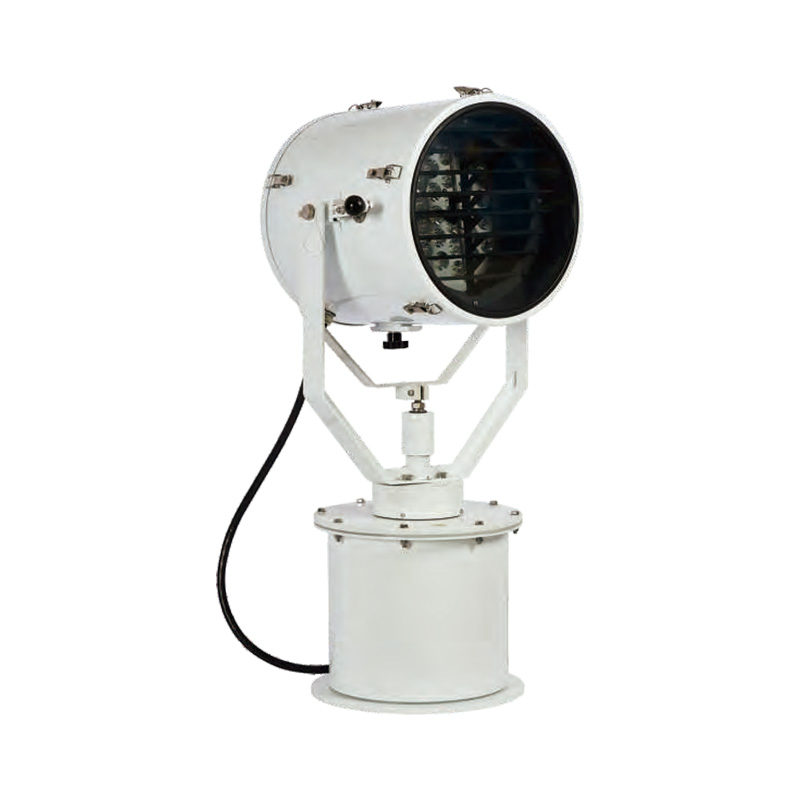
Marine searchlights are widely applied for making sure safety, navigation and efficiency at sea. Their performance, reliability and durability are essential, not only when everything is normal for day-to-day maritime operations but also when it turns into an emergency. But if you want those traits to be real, marine searchlights need to follow established standards and rules. That compliance is what keeps things safe, legal, and efficient over time, and it helps keep the equipment working longer.
Table of Contents
Why the Compliance of Standards in Marine Searchlights is Important
Standards basically give you a yardstick for quality, performance and safety in marine searchlights. They cover the sort of critical things you can’t ignore in a marine setup, like brightness intensity, energy use, waterproofing, corrosion resistance, and the structural soundness too. When a searchlight meets known standards, it should hold up better against rough conditions, meaning saltwater exposure, vibration, sudden temperature changes, and heavy weather.
Some key reasons people stick to the standards are:
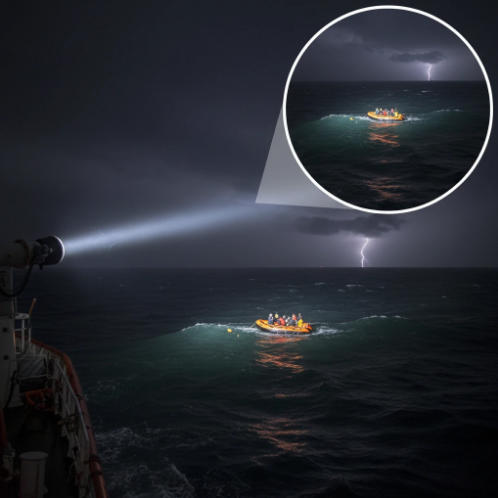
- Safety Assurance: good lighting is vital for navigation, avoiding collisions, and search and rescue. With standardized performance, visibility is more consistent even when conditions are not friendly.
- Durability and Reliability: the marine environment is rough by default, and standards push manufacturers toward designs that can resist rust, handle mechanical impacts, and survive extreme temperatures.
- Operational Compatibility: compliance also helps make sure the unit works well alongside other navigational and signaling systems onboard, without that annoying integration headaches.
Key Standards Governing Marine Searchlights
Several standards and certifications apply to marine searchlights, emphasizing different aspects of design and performance.
| Standard | Purpose | Key Requirements | Impact on Marine Searchlights |
| IMO (International Maritime Organization) | Maritime safety and operational reliability | Minimum illumination levels for navigation and emergency situations | Ensures searchlights provide adequate and reliable lighting for safe vessel operation |
| IEC 60598 (International Electrotechnical Commission) | Electrical safety and environmental durability | Electrical insulation, mechanical strength, ingress protection, corrosion resistance | Guarantees searchlights operate safely under harsh maritime conditions |
| IP Rating (Ingress Protection) | Resistance to water and dust | IP ratings, such as IP66, IP67 for searchlights, indicating full protection from dust and strong water jets | Confirms searchlights remain functional in rain, sea spray, and harsh weather |
| SOLAS (Safety of Life at Sea) | International maritime safety | Compliance with SOLAS lighting requirements for navigation and emergency use | Ensures searchlights meet minimum safety standards critical for vessel operation |
| Class Society Certification (DNV, Lloyd’s Register, ABS, Bureau Veritas) | Verification of safety, durability, and compliance | Rigorous testing for operational performance, environmental resistance, and reliability | Provides assurance for inspection approvals and international recognition |
| CE Marking | European safety and environmental compliance | Conforms to EU safety, health, and environmental directives | Confirms searchlights meet European regulatory requirements |
| RoHS Compliance | Restriction of hazardous substances | Ensures absence of lead, mercury, cadmium, and other harmful materials | Supports environmental safety and sustainable manufacturing practices |
| ISO 9001 (Quality Management System) | Manufacturing consistency and reliability | Implementation of systematic quality management processes | Guarantees consistent performance and dependable manufacturing quality |
Key Areas of Regulatory Compliance in Marine Searchlights
Compliance not only guarantees operational safety but also helps make sure that legal conformity with international maritime regulations. Getting the key parts of regulatory compliance clear matters for anyone involved in the production, installation and use of marine searchlights.
1. Electrical Safety
Electrical safety is the first point of regulatory compliance for marine searchlights. These devices work in places where moisture, salt, and vibration happen regularly, this makes the chance of short circuits higher. It also raises risks of electric shocks and fire hazards. Regulatory requirements push manufacturers to build searchlights with suitable insulation, proper grounding, and protective circuit design. That reduces risk for both crew and vessel , and it helps avoid annoying operational failures. Meeting electrical safety rules is usually confirmed through testing and certification handled by accredited agencies.
2. Ingress Protection
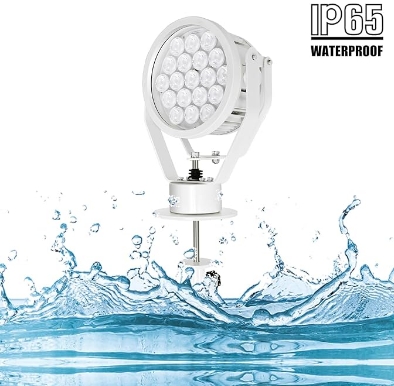
Marine searchlights they get hit all the time by rain, seawater spray, and that dust in the air too. Because of that, ingress protection, usually written as IP ratings , is one of the compliance points people watch very closely, so the searchlight can still work even with these environmental things going on. A compliant unit needs to keep water from sneaking inside, and also stop dust from messing with the internal parts. When those benchmarks are met, the light output stays reliable , you avoid early equipment failure and you also help extend the operational lifespan longer than you would otherwise expect.
3. Environmental Considerations
Modern regulations increasingly require marine searchlights to meet environmental standards, and that means more attention to things like hazardous matter restrictions ,such as lead or mercury, and also keeping to energy efficiency guidance. When manufacturers do this properly they help lower the environmental footprint, while still making sure the searchlights are safe for everyday use aboard vessels. And in practice, environmentally compliant searchlights often show better service life, plus steadier performance in tough maritime conditions.
4 . Performance Verification
Regulatory compliance also pushes performance verification a lot. The searchlights need to satisfy minimum conditions for luminous intensity, beam reach, and day to day operational reliability. Those points matter because the searchlight should actually illuminate hazards, other vessels, or people in the water, especially during emergency events. In most cases performance verification includes a controlled lab testing setup and real world simulation runs, to confirm that the searchlights meet regulatory expectations before they enter service.
5. Certification and Type Approval
Finally, certification and type approval are, critical components of meeting regulatory compliance requirements. Accredited agencies test marine searchlights against international standards and then issue certificates that confirm the adherence of the unit to safety, performance, and environmental regulations, which matters in practice. Type approval also works as an official recognition step for these searchlights, so they’re accepted for marine applications. This gives shipowners, operators ,and maritime authorities a clear assurance that the equipment meets established criteria.
Trends in regulatory compliance of Marine Searchlights
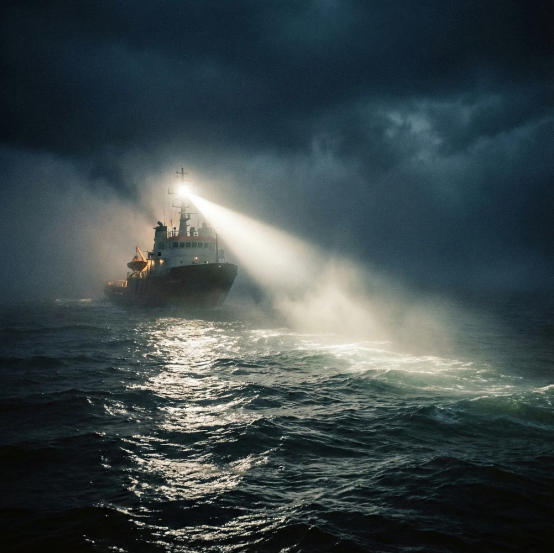
As technology moves forward, and regulatory frameworks become more detailed, manufacturers and operators need to stay aware of emerging compliance trends.
1. Shift Toward Energy-Efficient Lighting
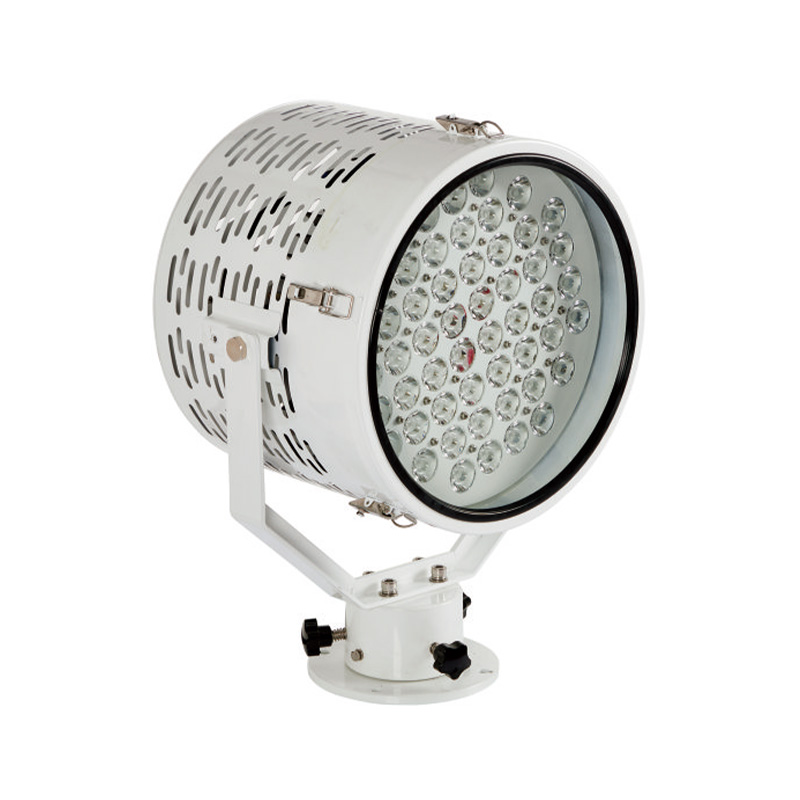
One of the most prominent trends in marine searchlight compliance is that people are moving toward energy-efficient lighting technologies. Traditional searchlights with halogen and xenon lamps are being replaced step by step by LED searchlights, they give better illumination while consuming less power. Regulatory frameworks are increasingly encouraging or requiring energy efficiency, mainly to reduce environmental impact and operational costs. Compliance now often means verifying that the lighting system meets energy consumption limits, while at the same time keeping enough brightness and beam reach for secure navigation.
2. Enhanced Environmental Regulations
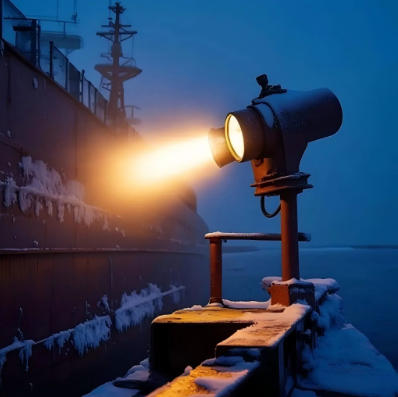
Environmental considerations are becoming pretty central to regulatory compliance when it comes to marine equipment. Marine searchlights are affected by rules that limit the use of hazardous materials, like heavy metals, or parts that are non recyclable, and they also nudge designs toward more environmentally friendly ideas. Manufacturers really have to pick corrosion-resistant and more sustainable materials, while operators maybe will need to carry out proper disposal steps or recycling procedures for the older units. These environmental pressures show up as part of the wider maritime commitment to sustainability and ecological responsibility.
3. Integration of Advanced Safety Features
Modern regulatory frameworks emphasize not only performance but also safety features that safeguard crew and vessels. Compliance now includes requirements for solid electrical insulation, surge protection, and automatic shutdown mechanisms, if a malfunction shows up. Additionally, searchlights are being crafted to endure severe environmental conditions, including strong winds, saltwater exposure and vibration, which helps maintain reliability during critical operations. The move toward blending safety and resilience into the overall design has become a major part of meeting regulatory adherence.
4. Digitalization and Smart Diagnostics
Another noticeable trend is the merging of digital technologies and smart diagnostics into marine searchlights. Advanced monitoring systems can detect faults, follow usage patterns , and warn operators about maintenance needs. Regulatory compliance is increasingly looking at the uptake of these systems, since they strengthen day to day reliability and also produce detailed logs for audits or inspections. Smart searchlights support predictive maintenance too , which helps cut downtime and prolong the equipment service life while keeping regulatory compliance active .
5. Stricter International and Classification Standards
Globalization in maritime operations has nudged tighter international, and classification requirements. Regulatory bodies, like the IMO , plus classification societies such as DNV, ABS and Lloyd’s Register, are updating their expectations again and again, to mirror new technologies, and safer operating practices. Marine lighting manufacturers have to keep up with those changes and make sure the searchlights actually meet the newest performance, safety , and environmental requirements. What is really showing up more and more is movement toward aligned standards, so compliance feels less scattered across regions and regulatory authorities.
6. Focus on Documents and Traceability
Regulatory authorities are putting more and more emphasis on documentation, and traceability, for marine equipment. Going along with this compliance now asks for thorough records of manufacturing procedures, material certifications, test outcomes, installation steps, and upkeep logs. This shift ensures that every part of a searchlight’s lifecycle can be reviewed and checked, offering transparency and accountability for the manufacturers and also for vessel operators.
Final Words
Marine searchlights are critical for maritime safety and operational efficiency at sea. When you follow international standards and the regulatory requirements it keeps the units reliable, long lasting, and safe, even when the weather turns difficult. For manufacturers and operators alike, putting standards first and staying compliant is really essential, because it supports safety, legality and steady performance during day to day maritime work.
