
Which Ships Need Duplex Navigation Lights?
While smaller vessels typically rely on a single navigation light for each required position, many larger commercial ships are subject to stricter redundancy requirements. International regulations now require certain vessels to install duplex navigation lights, ensuring that a backup light is immediately available if the primary light fails.
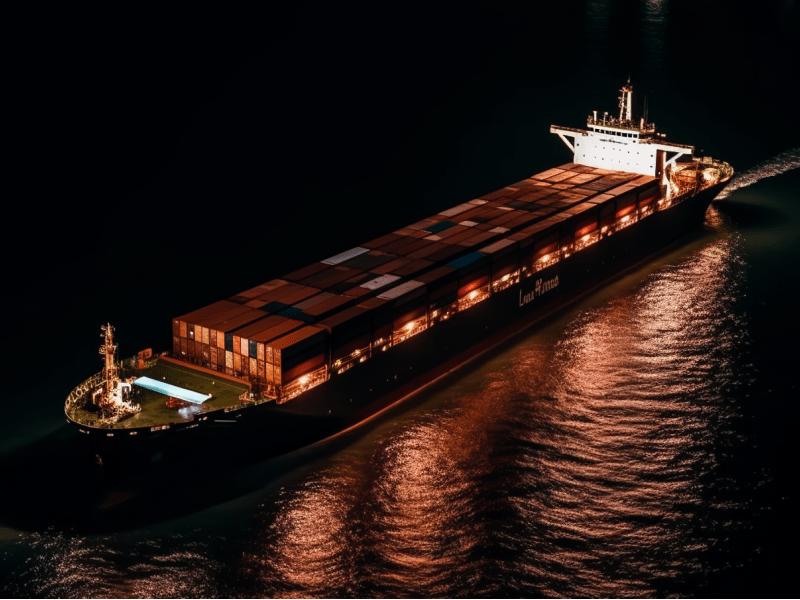
This article aims to explain the relevant regulations, lists the vessels required to install dual navigation lights, and provides practical guidance on selecting a compliant navigation light system. It is hoped that this will be helpful to ship owners.
Table of Contents
What Are Duplex Navigation Lights?
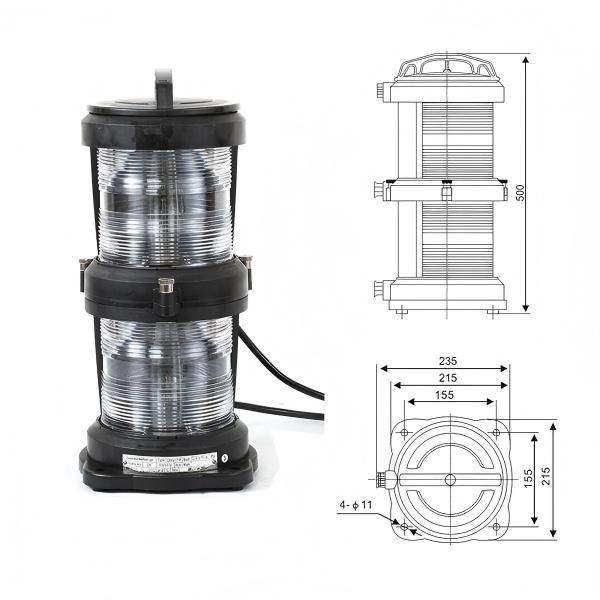
A duplex navigation light is a marine navigation light that contains two independent light sources within one housing or provides an integrated standby lighting system.
Instead of relying on a single lamp, duplex lights allow the secondary light source to take over immediately if the primary one fails. Depending on the product design, this may occur automatically or through a simple switching mechanism.
The main objective is straightforward:
- Maintain uninterrupted compliance with COLREGs
- Reduce the risk of navigation light failure
- Avoid emergency maintenance during voyages
- Improve operational reliability
Unlike standard navigation lights, duplex models are specifically designed for vessels where losing a navigation light—even briefly—could introduce operational or regulatory risks.
Is Vessel Length the Main Factor?
One of the biggest misconceptions is that vessel length alone determines whether duplex navigation lights are required.
In reality, length is only one consideration.
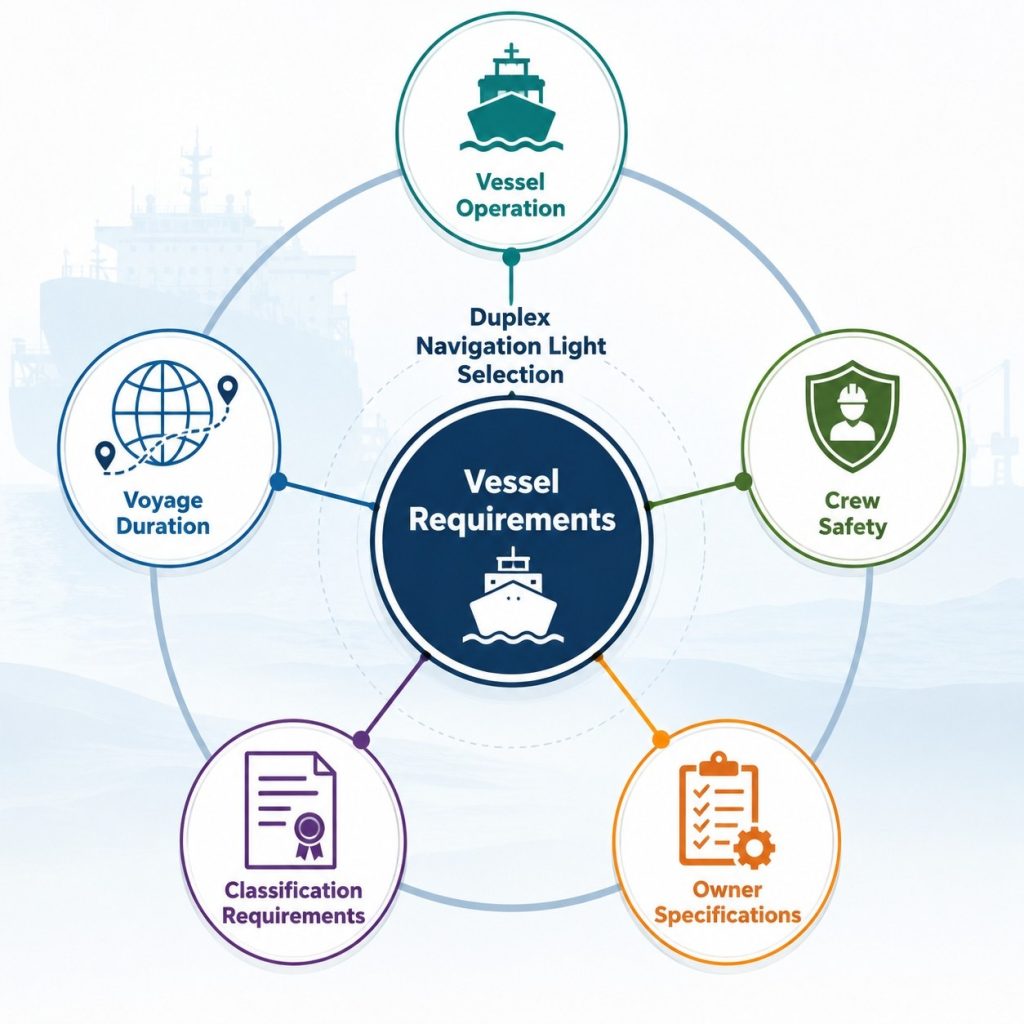
The decision usually depends on several factors:
Vessel Operation
It is important to note that the mode in which a ship operates affects the appropriateness of installing duplex navigation lights. Vessels operating in constant commercial activities, such as those carrying international cargo or working offshore, are always sailing throughout the day. In the event of malfunctioning of the navigation lights during the sail, there may be no means for immediate replacement because of various factors, such as bad weather, workload of the crew members, or location of the light fittings. The installation of duplex lights will ensure there is always a backup in case of any malfunction.
Voyage Duration
Voyage length is another important consideration. A ship that operates along the coast will be able to take care of any problems with its navigation equipment relatively quickly since it will dock daily, while a ship at sea will be away from the dock for many weeks until it arrives at the next location. In such cases, continuous navigation lighting is required by regulations and by navigational considerations.
Crew Safety
Safety of the crew is a major reason many commercial operators choose duplex navigation lights. The masthead lights and other navigation lights are usually mounted at heights on masts or towers which may not always be easily accessible when on the move. Conducting such tasks in rough weather or visibility conditions poses some safety hazards to the crew conducting such work. The use of a duplicate lighting system means that there is less chance of having to do emergency light bulb replacements while at sea.
Classification Society Requirements
Whereas international conventions do not typically call for duplex navigation lights on all vessels, classification societies and project specifications can suggest or mandate redundant lighting systems for particular ships or situations. Requirements are determined based on the design of the vessel and its service use. Therefore, because of this variation, it is not uncommon to see duplex navigation lights chosen in combination with other efforts to enhance equipment reliability.
Owner Specifications
Many shipbuilding programs include more advanced equipment than required by law in their specifications. In selecting the on-board equipment, ship owners consider lifecycle cost and reliability, among other factors. If the ship is expected to sail internationally or operate over a long period, then duplex navigation lights are included in the standard specifications because they cut down on maintenance downtime, make spare parts easier to manage, and increase the likelihood that the vital navigation equipment will function throughout the life of the vessel.
Commercial Ships That Commonly Use Duplex Navigation Lights
Although international regulations do not state that every commercial vessel must install duplex navigation lights, they are widely used across numerous ship types.
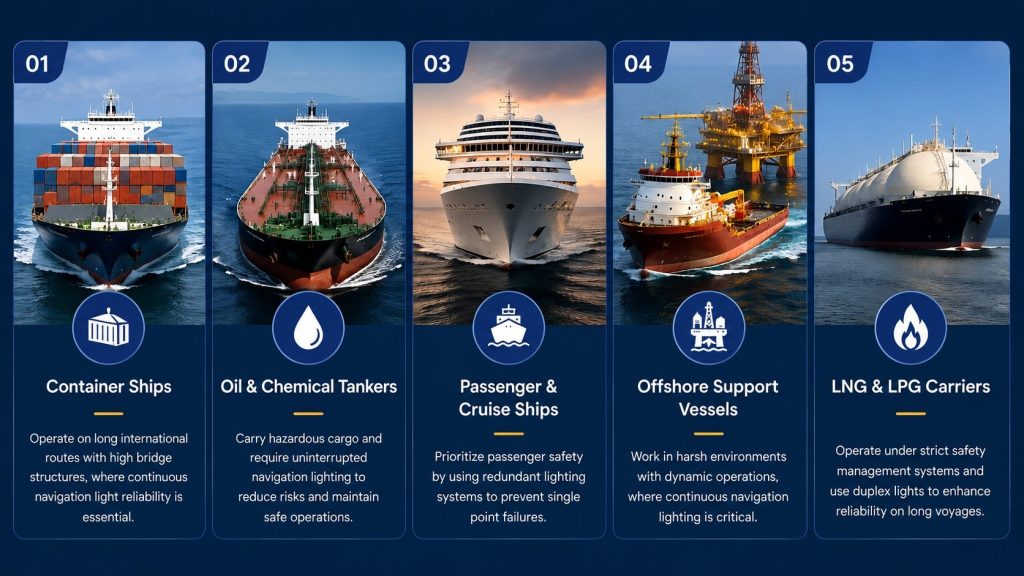
Container Ships
Container ships operate on fixed international schedules where unexpected equipment failures can disrupt operations.
Their navigation lights are often installed at significant heights, making replacement during a voyage difficult.
Duplex navigation lights help ensure continuous compliance throughout long ocean crossings.
Typical reasons include:
- Long international routes
- High bridge structures
- Reduced maintenance interruptions
Oil Tankers and Chemical Tankers
Tankers are often engaged in carrying hazardous cargo.
The requirement of proper maintenance of navigational equipment is regarded important as malfunction of navigational equipment increases the navigational hazards.
Passenger Ships and Cruise Ships
Passenger ships consider safety as the foremost thing compared to anything else.
Since there are several people on board, safety equipment used is not likely to fail due to single point failure.
Navigation lighting redundancy is one component of that philosophy.
Offshore Support Vessels
Offshore ships operate in relation to drilling platforms, wind turbines, and other offshore structures, which are characterized by constant movement and poor visibility.
The use of continuous lighting is highly important in terms of dynamic positioning and night offshore operations.
LNG and LPG Carriers
Gas carriers usually operate under strict safety management systems.
Although regulations may not explicitly require duplex navigation lights, many owners include them to increase equipment reliability during international voyages.
Are Duplex Navigation Lights Required by SOLAS?
This is another common misunderstanding.
The SOLAS Convention primarily requires that ships carry navigation lights complying with COLREG visibility, positioning, and performance requirements. It does not generally mandate that every navigation light must be duplex.
Instead, SOLAS emphasizes:
- Safe operation
- Reliability of essential equipment
- Proper maintenance
- Availability of emergency arrangements where appropriate
As a result, duplex navigation lights are often selected because they help operators maintain compliance even if one lamp fails—not because every vessel is legally required to install them.
How to Decide Whether Your Vessel Needs Duplex Navigation Lights
Choosing duplex navigation lights should be based on how the vessel operates rather than its size alone. For many commercial vessels, the additional cost of installing a redundant lighting system during construction is relatively small compared with the potential risks and maintenance costs associated with a navigation light failure at sea.
When evaluating your vessel, consider the following factors.
Operating Profile
Vessels engaged in international voyages, offshore operations, or long-distance routes benefit most from duplex navigation lights because maintenance opportunities are limited while underway.
Maintenance Accessibility
In case the navigational lights are fitted in high masts or any hard to reach position, repairing the broken light while at sea may pose serious problems not only in terms of difficulty but also regarding the risks posed to the safety of the crew.
Operational and Project Requirements
Duplex navigation lights can be installed on several vessels as part of the requirements made by some shipping companies or shipyards. In other cases, even without being mandatory, duplex lights are seen as an efficient investment to guarantee the constant operation of lights in ships requiring such lights.
In general, if constant operation and crew safety are essential for your vessel, then duplex navigation lights are usually a better choice.
FAQs
Is it necessary to have duplex navigation lights on all ships?
No. Although it is compulsory to have navigation lights that meet international regulation standards, it is not necessary for every ship to have a duplex navigation light system.
Do small vessels need duplex navigation lights?
Duplex navigational lights are normally found on large vessels which conduct long trips and operate under tough commercial circumstances. Small vessels and recreational vessels have standard navigation lights.
Why is it beneficial to use the duplex navigation light?
The biggest benefit is redundancy because in case one of the sources fails, there will still be another one that can supply the necessary navigation light.
Are LED duplex navigation lights better than traditional lamp models?
In most of the commercial uses of these devices, LED duplex navigation lights have proven to be more durable, consume less electricity, have lesser maintenance needs, and resist vibrations, thereby making them very popular.
