
Marine Spotlights for Pilot Boats Lighting for Night Pilot Transfer
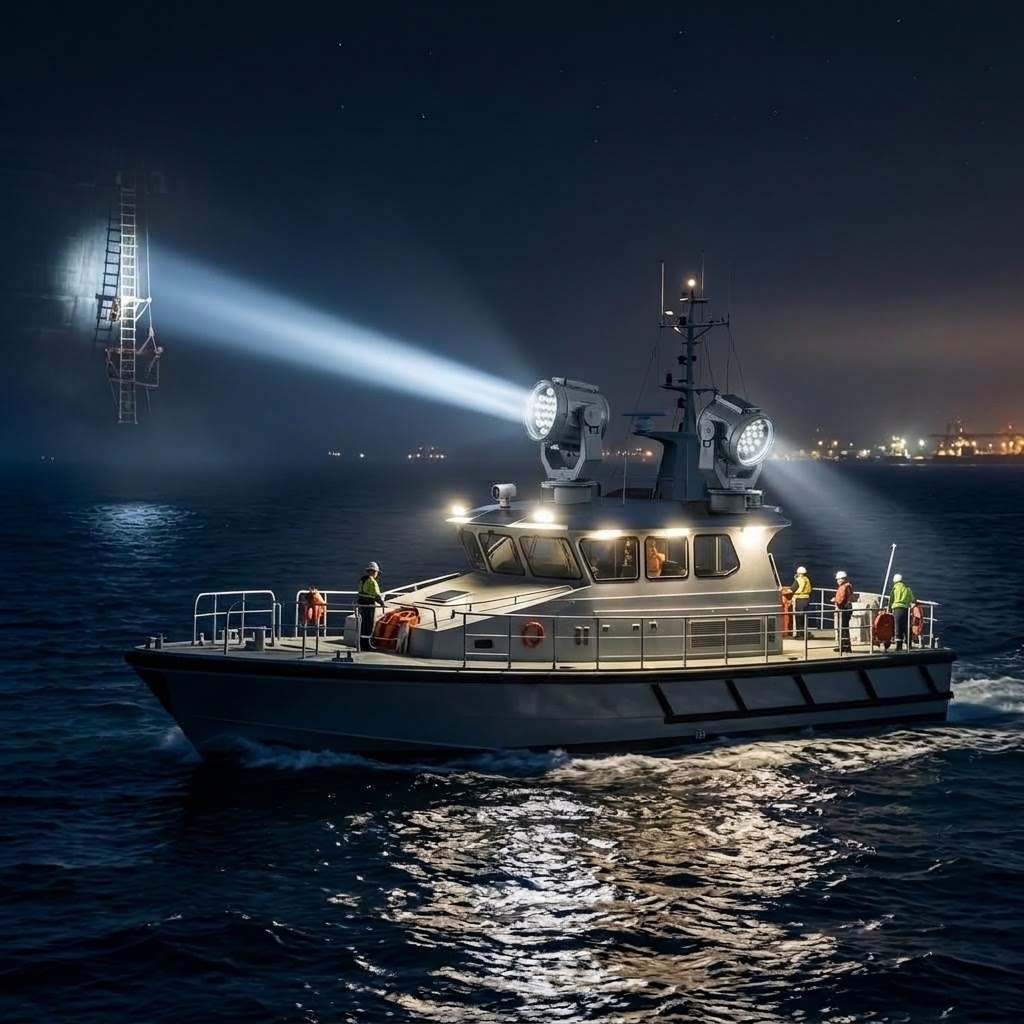
Night pilot transfer is a demanding lighting application. The pilot boat may be operating alongside a much larger vessel, while the pilot ladder, boarding point, hull and deck equipment all need to remain visually identifiable. In this environment, simply increasing light output is not necessarily the right solution.
For marine spotlights installed on pilot boats, the more important considerations are beam direction, target coverage, glare control, mounting position and reliable performance in a saltwater environment.
Table of Contents
Where Marine Spotlights Are Most Useful During Pilot Transfer
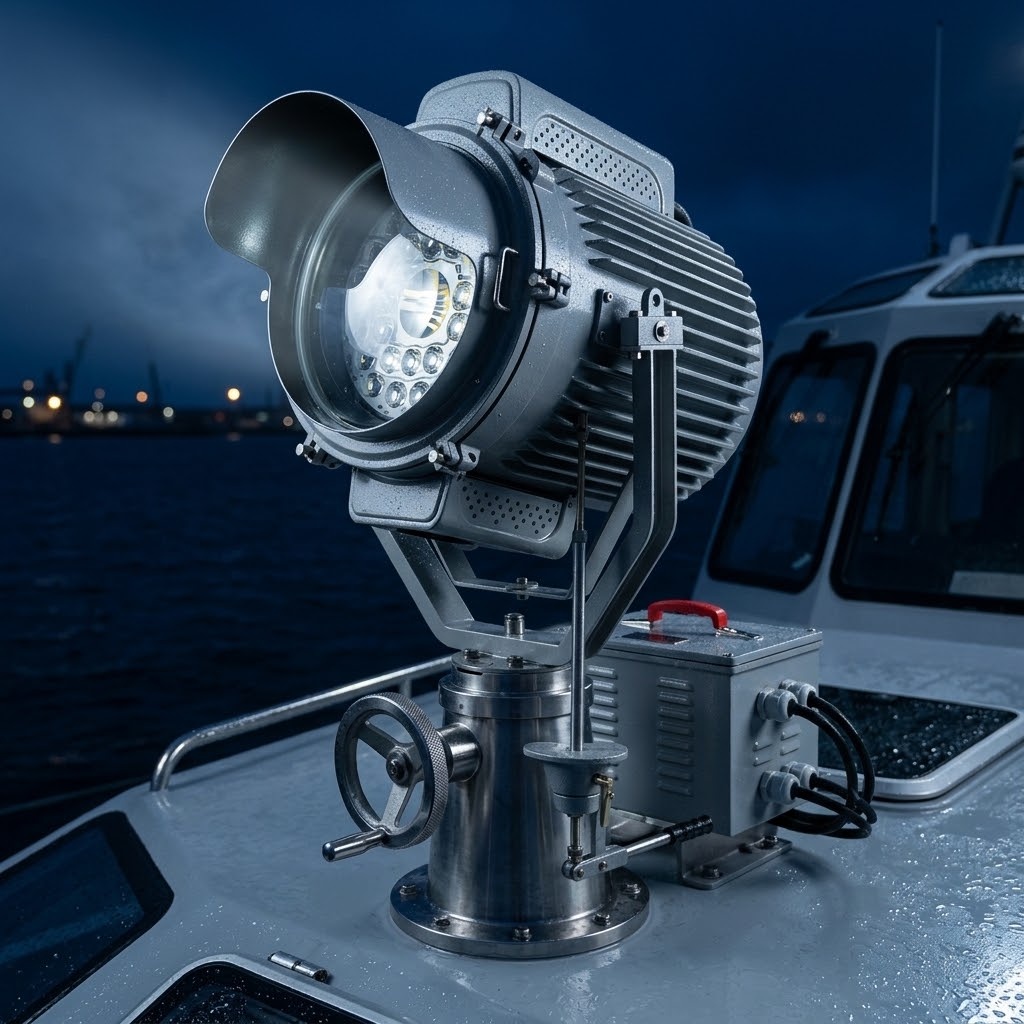
1. Pilot Ladder Area
The pilot ladder is the primary visual target during the final approach.
A spotlight should provide sufficient illumination to identify the ladder position, steps and side ropes, particularly where the lower section is close to the waterline. The crew also needs to maintain visual awareness of the ladder relative to the moving pilot boat.
A narrowly controlled or adjustable beam can be more useful than indiscriminate floodlighting. It allows the operator to concentrate illumination on the transfer arrangement while limiting unnecessary light reflected from the vessel’s hull or surrounding water.
This distinction becomes important in rough conditions, where the apparent position of the ladder can change continuously with vessel movement and wave action.
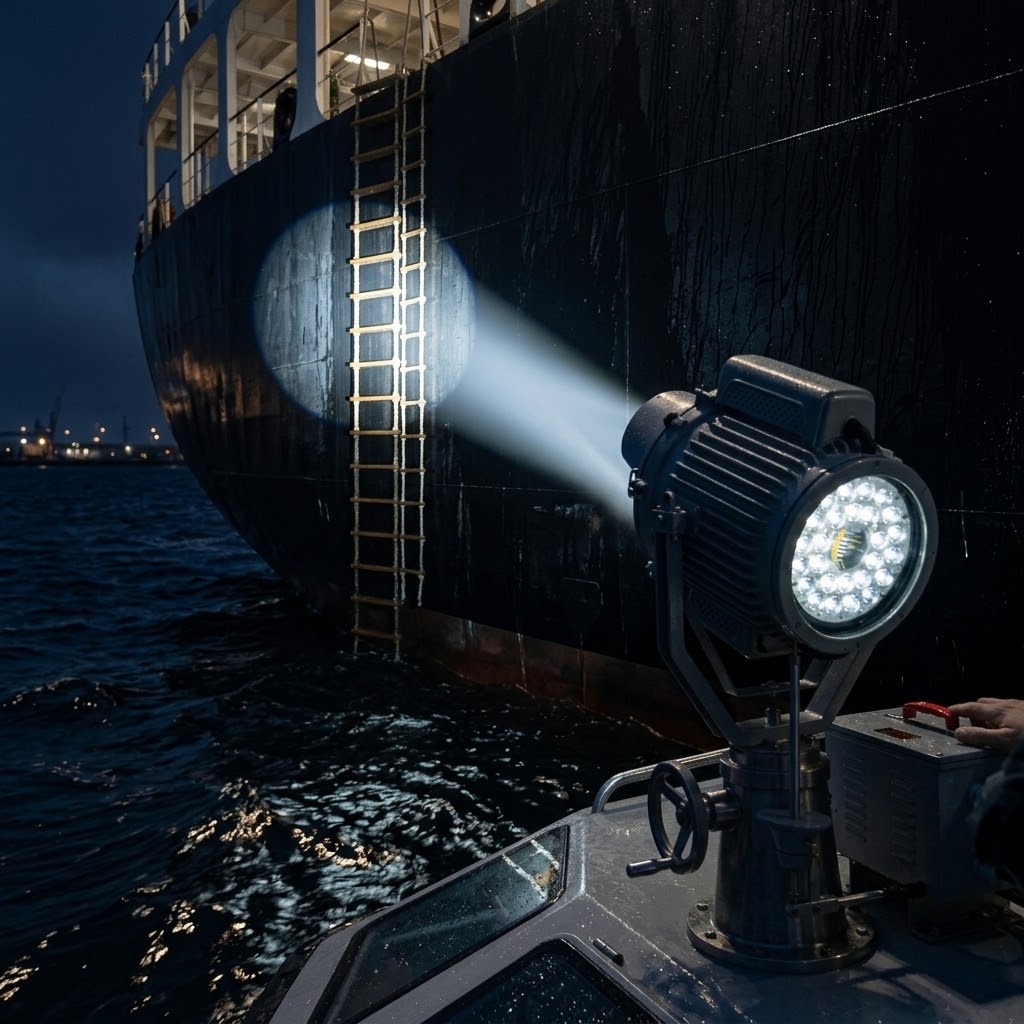
2. Boarding Area
Seeing the ladder is only part of the transfer operation. The actual embarkation or disembarkation position also requires clear illumination.
The lighting arrangement should allow personnel to identify:
- The boarding point
- Access platforms or accommodation ladders
- Handrails and stanchions
- The immediate deck area
- The route between the ladder and vessel access point
The objective is to create a continuous visual path from the pilot boat to the vessel rather than illuminate one isolated component.
This is consistent with the direction of IMO’s revised pilot transfer requirements. The performance standards adopted in 2025 require adequate lighting for pilot transfer areas and deck embarkation points. The associated amendments to SOLAS regulation V/23 are scheduled to enter into force on 1 January 2028.
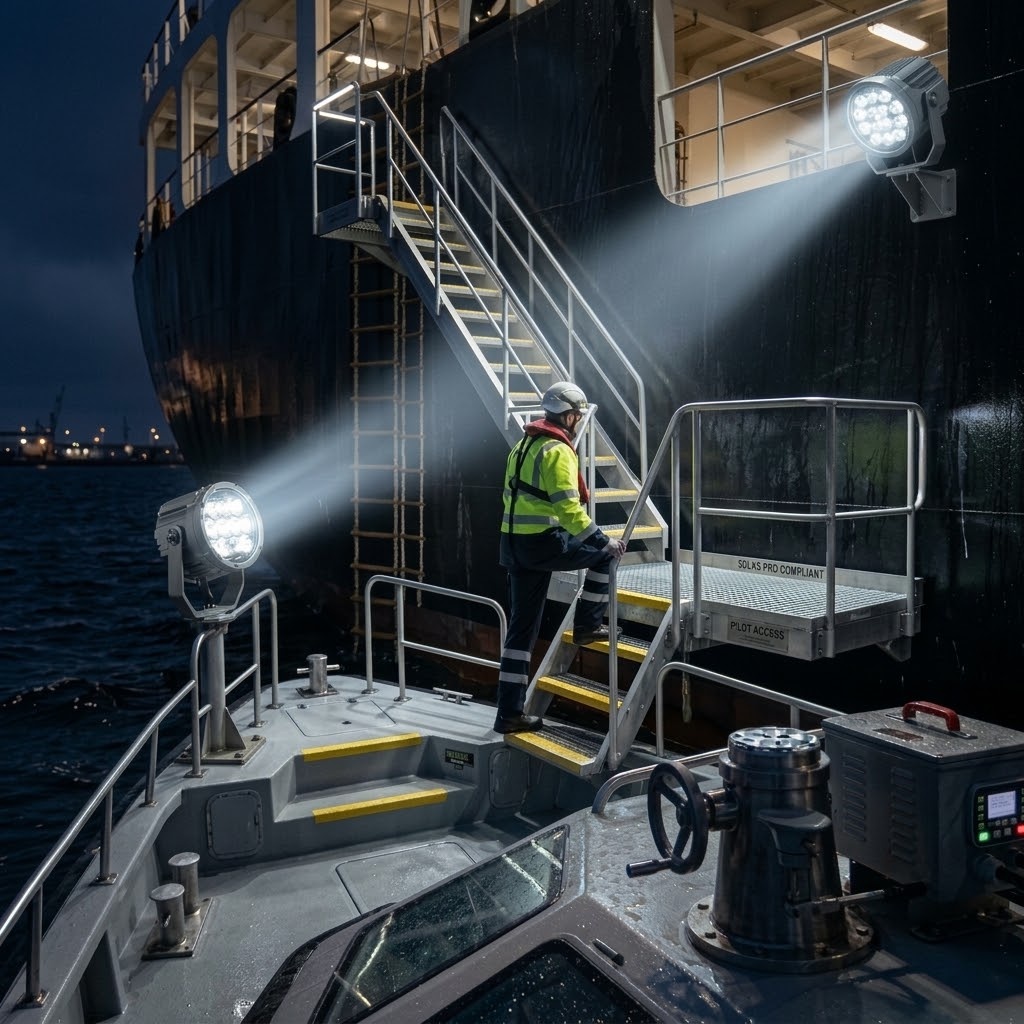
3. Vessel Side
During the approach, the vessel side becomes an important reference for the coxswain and deck crew.
A marine spotlight can help reveal the section of hull alongside the pilot boat, including the relative position of the boarding arrangement and potential obstructions. This can support visual assessment of the transfer area without requiring the entire vessel side to be brightly illuminated.
However, the beam should be carefully controlled.
A spotlight aimed directly toward the bridge, wheelhouse or personnel can create glare and reduce night vision. For pilot transfer, where the light is directed can be as important as how much light it produces.
4. Pilot Boat Deck
The pilot boat’s foredeck is another important lighting zone.
Before the transfer, crew members may need to prepare equipment, move into position and monitor the boarding operation. Illumination should therefore cover practical working points rather than simply producing a bright area on the deck.
The mounting position of the spotlight also matters. A poorly positioned unit can be obstructed by handrails, deck equipment or crew, creating shadows precisely where visibility is required.
For new installations, the lighting layout should be considered together with the pilot boat’s deck arrangement and the expected boarding configuration.
5. Crew Working Area
Pilot transfer involves coordinated work between the coxswain, deck crew and pilot. Each person needs different visual information.
The coxswain may need visibility toward the vessel side and boarding area, while deck crew need to see the ladder, access route and equipment around the foredeck.
This makes adjustable marine spotlights particularly useful where one fixed beam cannot cover the complete working area.
What Should Be Considered When Selecting Marine Spotlights?
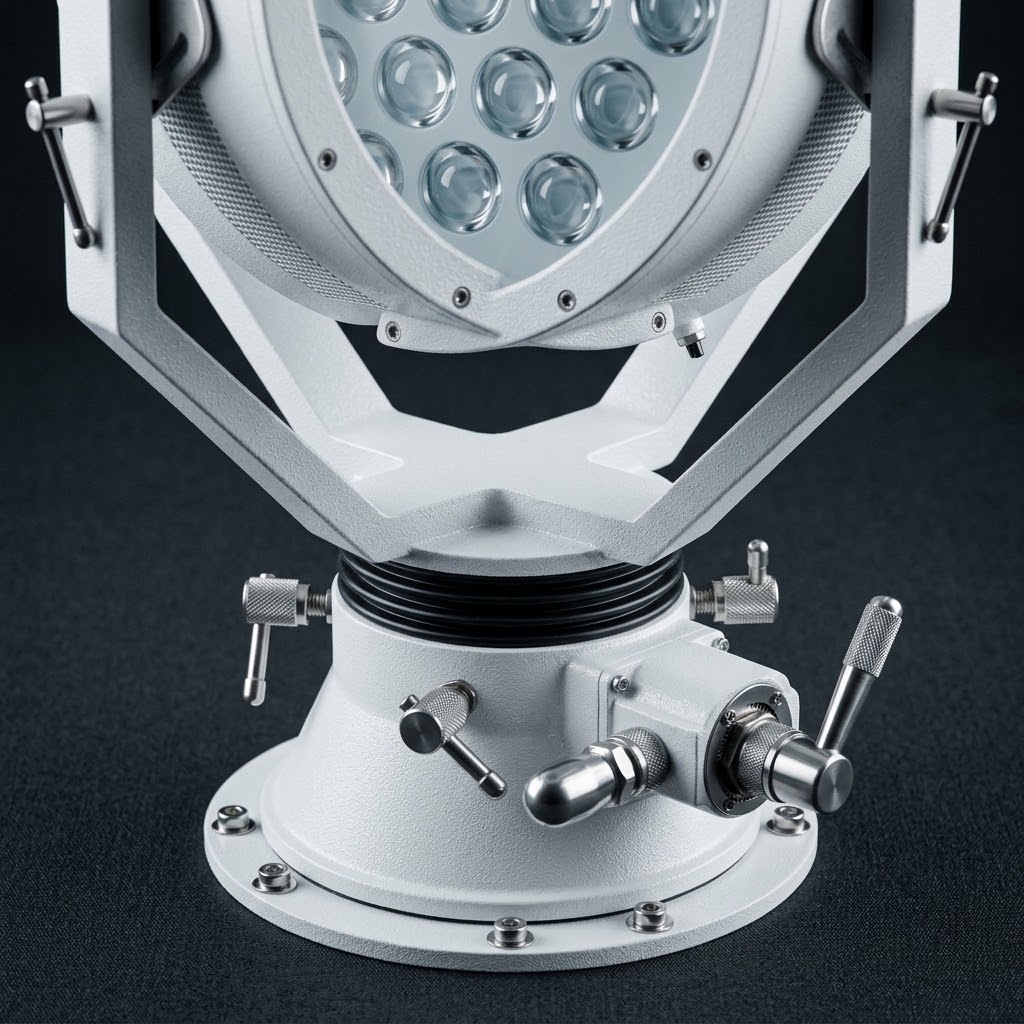
Beam Control
For pilot transfer, beam control deserves more attention than headline lumen figures.
A suitable beam should provide concentrated illumination where the crew needs visual information while limiting unnecessary spill into the bridge, surrounding water or other vessels.
Mounting and Adjustment
The spotlight should allow the beam to be positioned according to the pilot boat’s geometry. Adjustable mounting, horizontal/vertical positioning or remote control can be useful where the boarding arrangement varies between vessels.
Glare Management
Wet decks, painted hulls and metal structures can produce strong reflections. Excessive glare can reduce rather than improve visibility.
The lighting design should therefore consider beam angle, installation height and the direction of reflected light.
Marine Environmental Protection
Pilot boats operate continuously in environments characterized by salt spray, humidity, vibration and temperature changes. Marine spotlights should therefore be evaluated for enclosure protection, corrosion resistance, mechanical durability and long-term optical performance—not simply initial brightness.
Electrical Compatibility
Voltage, power consumption, wiring and control interfaces should match the pilot boat’s electrical system. For retrofit projects, compatibility with existing switches or remote-control systems can be equally important as the optical specifications.
Marine Spotlights Should Complement, Not Replace, the Complete Lighting Arrangement
A pilot boat does not necessarily need one extremely powerful spotlight to illuminate everything.
A more practical approach is to combine directional marine spotlights with appropriate deck and working lights. The spotlight can provide targeted illumination of the pilot ladder, boarding area and vessel side, while other lights maintain safe visibility around the working deck.
This approach also aligns better with the direction of modern pilot-transfer requirements. IMO’s 2025 performance standards address the pilot transfer arrangement as a complete safety system, including design, installation, operational readiness, inspection and maintenance.
A Practical Selection Checklist
When specifying marine spotlights for a pilot boat, buyers and vessel integrators should evaluate:
- Target area: pilot ladder, boarding point, vessel side or deck
- Beam: focused, adjustable or wider working beam
- Glare: potential reflection toward crew or bridge
- Mounting: fixed, adjustable or remotely controlled
- Environment: saltwater, humidity, vibration and corrosion
- Electrical system: voltage, power and control compatibility
- Maintenance: accessibility and long-term reliability
For night pilot transfer, the most effective lighting solution is not necessarily the brightest one. It is the system that provides clear, controlled and reliable visibility at the points where personnel actually need to work—from the pilot ladder and boarding area to the vessel side and pilot boat deck.
