
IP66 vs IP67 Waterproof Switch Socket: Which Is Better for Marine Use?
When selecting a water-resistant switch socket to use in marine applications A lot of buyers think that an IP rating higher implies greater security. In the end, IP67 products are frequently thought of as superior over IP66 models. But in actual marine conditions, the answer is not always as easy.
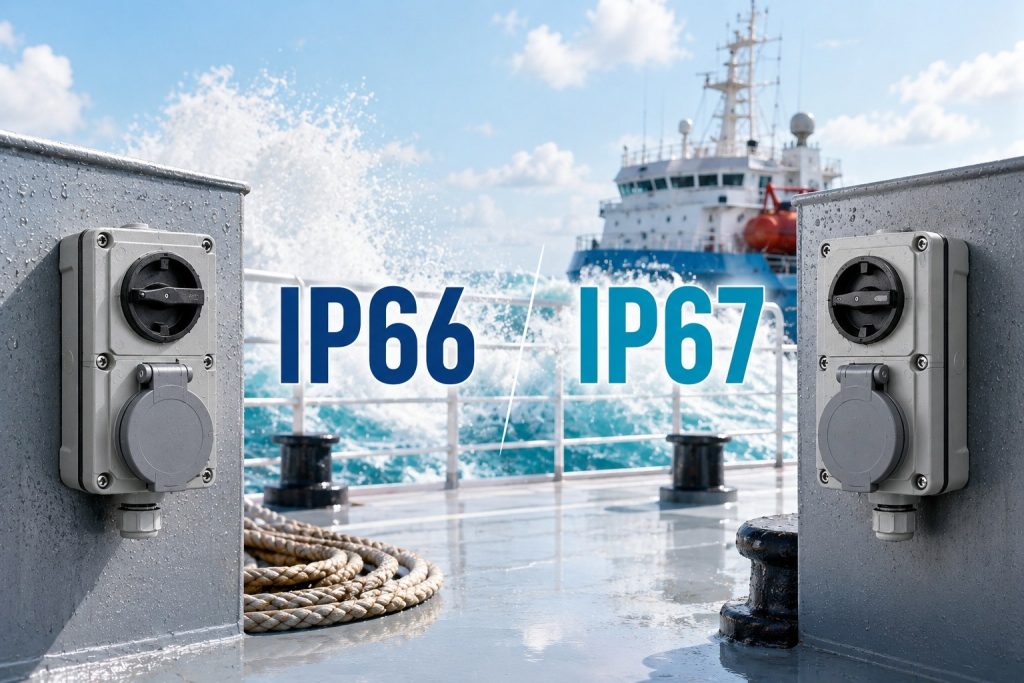
Shipbuilders, maritime contractors distributors, and owners of vessels Selecting the wrong level of protection can result in unnecessary expenses and inadequate environmental protection or a shorter service life. Knowing the distinctions in IP66 or IP67 ratings can assist buyers in selecting an IP67-rated plug-in socket for a waterproof that offers the perfect balance of endurance security, long-term safety, and value.
Table of Contents
What Do IP66 and IP67 Mean?
IP ratings are determined by the IEC 60529 standard for ingress protection which defines internationally recognized tests for electrical enclosures that are exposed to water and dust. This standard is frequently used by manufacturers of marine equipment and shipyards as well as certification bodies to evaluate the environmental protection capabilities of.
| Rating | Dust Protection | Water Protection |
| IP66 | Complete protection against dust | Protection against powerful water jets |
| IP67 | Complete protection against dust | Protection against temporary immersion in water |
Both ratings provide excellent dust protection. The main difference is in the resistance to water.
The IP66 Switch socket that is waterproof has been made to withstand water jets of force in any direction. the IP67 version is tested to withstand a brief immersion in water of one meter or more for 30 minutes, under controlled laboratory conditions.
Understanding the IEC 60529 Test Conditions
The difference of IP66 and IP67 is more apparent when you look at the actual test procedures.
The IP66 product line is tested using water jets that are powerfully projecting from various directions.
Products tested under IP67 are put to the test through short immersion in water for the specified depth and for the duration.
Although these tests offer valuable indicators of performance, they cannot completely replicate the problems encountered when working in the marine environment, which means that equipment could be exposed to saltwater, constant high-frequency vibrations, intense UV radiation and constant temperatures fluctuations.
Challenges Faced by Marine Electrical Equipment
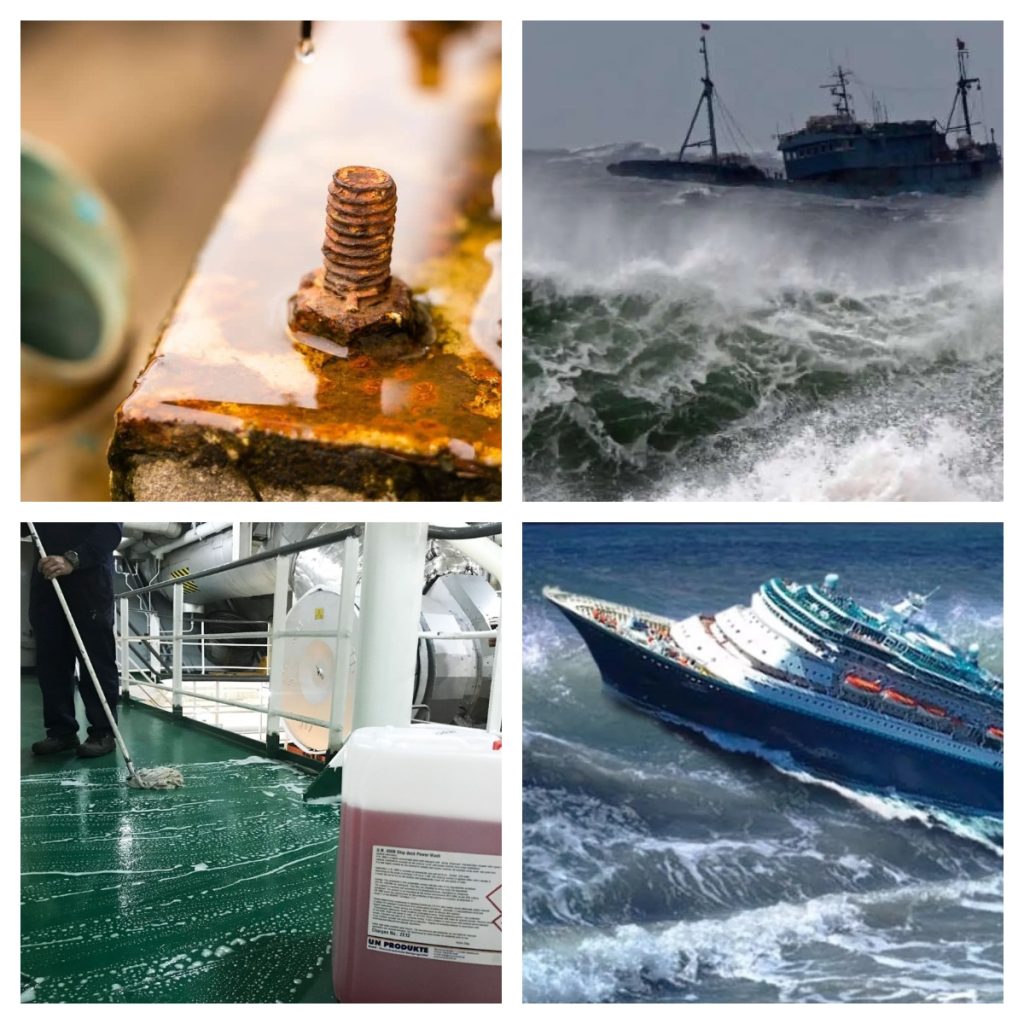
Marine environments can be among the most difficult operating environments for electrical components. Switch sockets with waterproof construction that are installed on vessels are subject to a variety of environmental hazards simultaneously.
Salt Spray and Corrosion
Saltwater is extremely corrosive and could eventually damage the metal contact, seals as well as enclosures if adequate protection isn’t provided.
Heavy Rain and Sea Splash
Marine electrical systems that are used outdoors frequently are subject to heavy rain, waves splash, and seawater produced by vessel movement.
High-Pressure Deck Washing
Commercial vessels typically do routine deck cleaning using the high pressure water system. Electrical equipment has to withstand multiple washdowns, without allowing water entry.
Vibration and Temperature Changes
Continuous engine vibration, hull motion and the changing conditions in the environment can cause seal wear to increase and affect the waterproofing performance over time.
These aspects make choosing the correct switch socket that is waterproof particularly crucial to ensure long-term reliability.
Why Marine Applications Require More Than an IP Rating
Many consumers focus on protection against ingress, however marine reliability is based on more than just water resistance.
In accordance with the guidance that is commonly cited in marine industry which includes the requirements of DNV maritime standards as well as ABS marine electrical requirements environmental exposure assessments should take into consideration:
- Salt spray corrosion
- UV degradation
- Mechanical vibration
- Variations in temperature
- Risks of water ingress
- Accessibility to maintenance
A socket for a waterproof switch which performs well in laboratory tests could still fail prematurely when these additional environmental issues are not considered.
When Is an IP66 Waterproof Switch Socket the Better Choice?
For many marine applications IP66 is the most feasible alternative.
Installation locations that are typical include:
- Decks that are open
- Cargo handling zones
- Ferry terminals
- Power stations for dockside
- Exterior ship structures
In these situations equipment is more prone to be exposed to powerful rain, water jets and wave splashes than full immersion.
Since IP66 products are tested specifically against high-pressure water penetration and ingress, they are often a great protection against decks with exposed surfaces. Additionally, IP66 waterproof switch sockets typically have lower costs for procurement but still meet the demands for most maritime commercial projects.
Lessons from Commercial Vessel Installations
Commercial cargo ships as well as offshore support vessels the routine cleaning of decks frequently exposes electrical devices to seawater that is high-pressure rather than full immersion.
In many of these places the resistance to sprays of water is much more crucial than the protection of temporary immersion. This is one of the reasons why IP66 switch sockets that are waterproof remain frequently used for decks that are exposed locations, despite the availability of more rated alternatives.
Over-specifying IP67 security for each installation may increase the cost of procuring but without providing significant operational advantages.
When Should You Choose IP67?
IP67 can be advantageous if there is a real possibility of submersion for a short period.
Examples include:
- Small workboats
- Recreational vessels
- Areas near the waterline
- Flood-prone compartments
- Offshore platforms
If equipment may be temporarily submerged in stormy weather conditions, maintenance work or floods that happen, IP67 gives an additional layer of protection.
Understanding the Difference Between Testing and Reality
IP67 certification is built on laboratory tests that are controlled conditions, which typically involve an immersion in water at a depth of one meter for 30 minutes.
Yet, environments in the ocean present new challenges that aren’t completely represented in laboratory tests of immersion, such as:
- Saltwater contamination
- Dynamic wave impact
- Long-term UV exposure
- Seal aging
- Mechanical vibration
Therefore IP67 must be considered as a form of protection against short-term immersion, rather than as an assurance of uninterrupted submerged operation.
IP66 vs IP67: Side-by-Side Comparison
| Feature | IP66 | IP67 |
| Dust Protection | Excellent | Excellent |
| Resistance to Water Jets | Excellent | Good |
| Temporary Immersion Protection | No | Yes |
| Typical Marine Deck Use | Highly Suitable | Suitable |
| Flood-Prone Areas | Limited | Recommended |
| Cost | Generally Lower | Generally Higher |
This comparison highlights a crucial aspect: IP67 is not automatically superior to IP66. Each rating is optimized to suit different kinds of exposure to water.
Why IP Rating Alone Is Not Enough
A lot of buyers concentrate upon the IP rating and neglect other crucial factors that influence the long-term performance of marine vessels.
Housing Materials
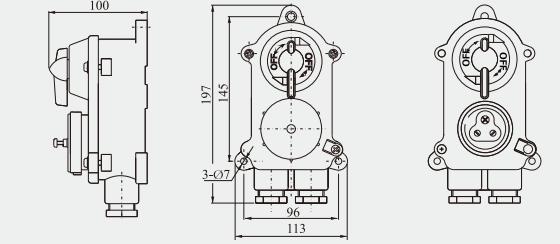
Polycarbonate that is marine-grade and UV-resistant engineering plastics dramatically improve the durability of outdoor environments.
Corrosion Resistance
Steel hardware made of stainless steel and terminals that are resistant to corrosion help prolong service life under saltwater conditions.
Seal Quality
The high-quality rubber gaskets provide their waterproof properties despite the effects of vibration and temperature variations.
Cable Entry Protection
Incorrect cable sealing is one of the main sources of water ingress regardless of enclosure’s IP rating.
What IP Ratings Do Not Tell You
An IP rating evaluates resistance to water and dust intrusion However, it doesn’t assess:
- Resistance to corrosion
- UV stability
- Material durability
- Gasket lifespan
- Protection against electrical contact
For instance for example, an IP67 socket made of low-grade materials could have a shorter time to service than a properly engineered IP66 model that is specifically designed intended for use in maritime environments.
This distinction is crucial when operating vessels in the tropical, offshore or high-salinity areas.
How to Select the Right Waterproof Switch Socket for Marine Use
Choose an IP66 waterproof switch socket if:
- The installation is located on an unfinished deck.
- Equipment will be subject to regular washdowns.
- Rain, spray or water jets pose the main issues.
- Cost-effectiveness is a key factor.
Choose an IP67 waterproof switch socket if:
- It is possible to temporarily immerse yourself.
- Equipment is installed close to the waterline.
- Flooding risks exist.
- Offshore operations require additional security.
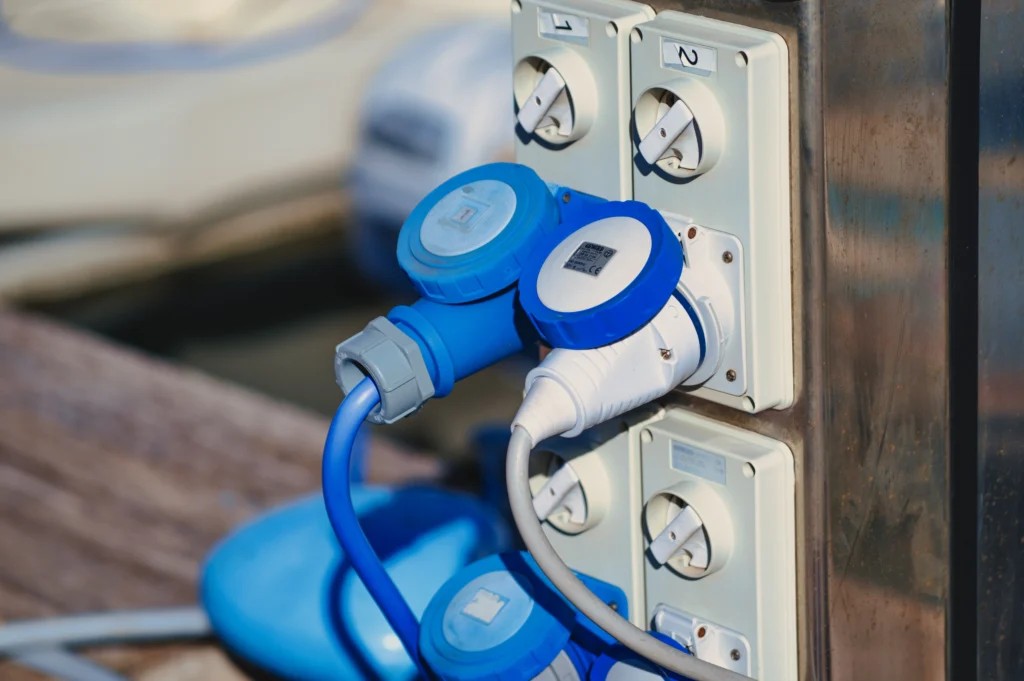
A lot of commercial ships use IP66 because it offers adequate protection and provides excellent endurance and lower cost. IP67 is more useful for specialized applications where the risk of submersion cannot be overlooked.
FAQ
Q1: Is IP67 always better than IP66?
No. IP67 offers temporary protection against immersion and IP66 provides greater resistance to water jets that are powerful. The right choice will depend on the installation location.
Q2: Can IP66 waterproof switch sockets be used on ship decks?
Yes. IP66 is commonly used to cover exposed decks on marine vessels in which excessive rain sea spray, heavy rain, and regular washdowns are common.
Q3: Does IP67 protect against seawater?
IP67 guards against water intrusion during laboratory tests, however the long-term durability of seawater protection depends on the quality of the material, its sealing design.
Q4: How long can an IP67 socket stay underwater?
The standard IP67 test typically requires an immersion of one meter for as long as 30 minutes. Continuous underwater operations generally require greater levels of protection and specially designed equipment.
Q5: What IP rating is recommended for marine electrical outlets?
For the majority of commercial marine applications, IP66 is sufficient. IP67 is suggested when temporary exposure to water is a possibility.
Q6: Is IP rating the only factor that determines marine reliability?
No. The selection of materials, the resistance to corrosion and UV stability, gaskets’ quality as well as cable seals are also important aspects that affect the long-term performance of marine cables.
