
Flashing Signal Light vs Morse Signal Light: Which Marine Signal Light System Is More Suitable for Modern Vessels?
In many vessel procurement projects, Flashing signal light and Morse signal light are often grouped into the same category of marine signal lights. However, once they are used in real maritime operations, shipowners quickly realize that although both are visual signaling devices, they serve completely different safety purposes. Many articles only explain them at a superficial level, describing one as a flashing warning light and the other as a Morse communication tool. But for shipowners, marine engineers, and procurement teams, the more important question is this:
What are the actual differences between Flashing signal light and Morse signal light in the marine environment? Why do modern commercial ships prefer to use the Flashing signal light system, but the Morse signal light is still being used by navy and special ships?
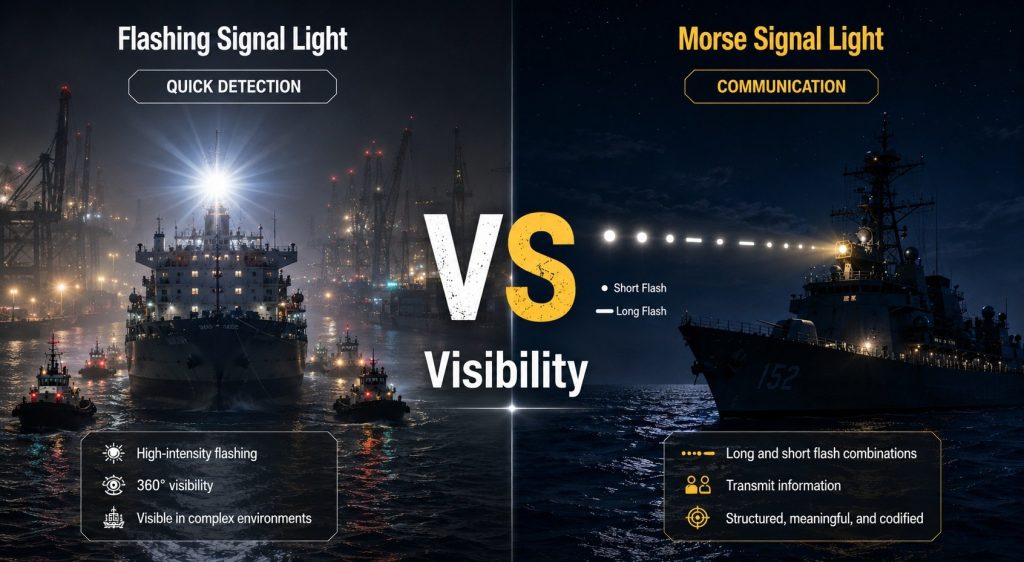
The answer lies far beyond their flashing patterns. The real difference is the type of maritime risk each system is designed to solve.
Table of Contents
Flashing Signal Light Prioritizes Immediate Visual Recognition
The main reason for the use of the Flashing light signal is to facilitate the speed of identification of a ship. Humans have the natural ability to perceive motion more quickly than static objects. This is because in many cases, there will be much distraction within the area, for instance, in fog, rain, or at night time.
Currently, the fixed navigation lights can blend easily in an area full of other industrial lights. Flashing patterns create stronger visual contrast, allowing watch officers and nearby vessels to recognize targets more rapidly.
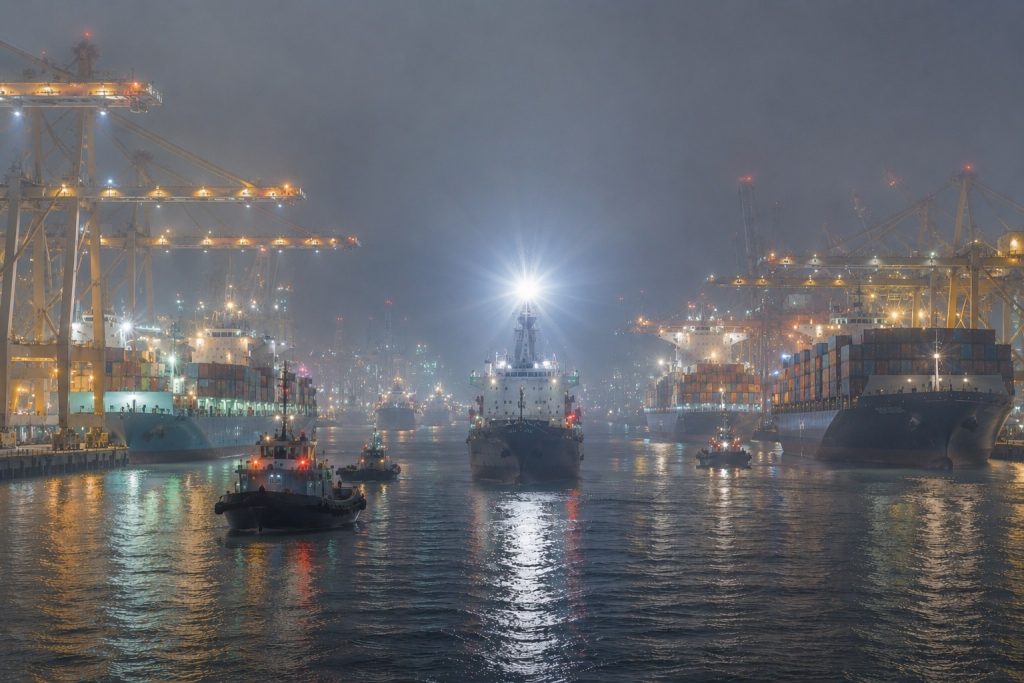
This is why modern Flashing signal light systems increasingly focus on:
- pulse-frequency flashing,
- high-intensity LED optics,
- wide-angle visibility,
- and long-range conspicuity performance.
IALA technical guidance specifically addresses marine signal light conspicuity and effective intensity calculations because visibility is not determined solely by brightness. Beam distribution, background lighting conditions, atmospheric visibility, and viewing angle all affect real operational performance.
In practical maritime operations, Flashing signal light systems are most valuable in scenarios where rapid detection is more important than detailed communication, such as:
- collision avoidance,
- harbor maneuvering,
- tug assistance,
- patrol operations,
- and congested waterways.
From an engineering perspective, the system is designed around one core objective:
ensuring that a vessel is noticed as early as possible.
This is also why many modern marine signal lights are optimized not only for luminous output, but also for optical penetration in rain, fog, and salt-heavy marine atmospheres.
Morse Signal Light Is Designed Around Communication Redundancy
Morse signal light serves a very different operational purpose. Instead of maximizing visual attention, it focuses on maintaining communication capability when electronic systems fail or become compromised.
By transmitting combinations of short and long flashes according to Morse code structure, Morse signal light operates as an independent visual communication system that does not rely on radio transmission, satellite networks, or AIS infrastructure.
This distinction becomes critically important under conditions such as:
- radio failure,
- electronic warfare,
- GPS spoofing,
- communication jamming,
- or silent naval operations.
Even the brightest Flashing signal light cannot deliver structured information in these environments. The Morse Signal Light can still send out distress calls, identity signals, navigation instructions, and even tactical communications protocols.
This is one of the main reasons that naval fleets and specific security ships still have the Morse signaling system despite the advancements in digital communication systems.
COLREG Rule 20 also emphasizes that additional lighting onboard must not interfere with the recognition of authorized navigation signals. This principle highlights an important operational reality: marine signal lights are not simply about illumination; they are part of a structured maritime signaling language.
For vessels operating in electronically unstable environments, Morse signal light provides an additional layer of communication resilience that modern wireless systems cannot fully replace.
The Real Difference Is “Visibility Priority” vs “Communication Resilience”
Many procurement teams compare Flashing signal light and Morse signal light based on specifications such as brightness, beam distance, or power consumption. In reality, these specifications alone do not determine operational value.
The true difference lies in the safety logic behind each system.
Flashing signal light is fundamentally a visibility-priority system. Its goal is to maximize vessel detection efficiency and reduce the likelihood of collision through rapid visual exposure.
Morse signal light, by contrast, is a communication-resilience system. Its purpose is to preserve structured communication capability when conventional electronic systems become unreliable.
This distinction directly affects where each system becomes most effective.
For commercial vessels operating in crowded traffic corridors, port terminals, or offshore engineering environments, Flashing signal light often delivers greater day-to-day operational value because immediate recognition is the primary safety concern.
However, vessels operating in military, offshore security, or long-range maritime environments may place greater importance on Morse signal light because communication continuity becomes critical under degraded electronic conditions.
As a result, many advanced marine signal lights are now moving toward integrated multi-mode systems capable of supporting:
- Flashing mode
- Morse mode
- and emergency SOS signaling
This trend reflects a broader shift within the maritime industry: modern vessel safety increasingly depends on layered redundancy rather than single-function signaling systems.
Why Signal Light Engineering Matters More Than Simple Brightness
One common misconception in marine lighting procurement is assuming that higher lumen output automatically equals better signaling performance. In reality, maritime signaling effectiveness depends on much more complex optical and environmental considerations.
IALA recommendations covering marine signal light intensity, color accuracy, and luminous range calculations demonstrate that marine optical engineering must account for:
- atmospheric transmission,
- background light interference,
- beam divergence,
- salt fog conditions,
- vibration resistance,
- and long-term optical stability.
This is particularly important for vessels operating in harsh marine environments where signal degradation can occur due to salt corrosion, moisture intrusion, thermal stress, or continuous vibration.
In practical engineering applications, reliable marine signal lights are therefore evaluated not only by laboratory brightness figures, but by whether they maintain stable optical recognition performance during long-term maritime operation.
Conclusion
The difference between Flashing signal light and Morse signal light is not simply about flashing patterns or operating modes. They represent two completely different approaches to maritime safety.
Flashing signal light is designed to ensure rapid visual recognition and reduce navigational collision risk.
Morse signal light is designed to preserve communication capability when electronic systems become unreliable.
As maritime operating environments continue evolving, modern marine signal lights are no longer treated as simple lighting accessories. They are increasingly viewed as part of a vessel’s broader safety redundancy architecture.
For shipowners, the key question is no longer which system is more advanced. The real question is:
Does the vessel primarily require faster visual detection, or dependable communication capability when electronic systems fail?
