Night Vision Compatibility in Marine Searchlights
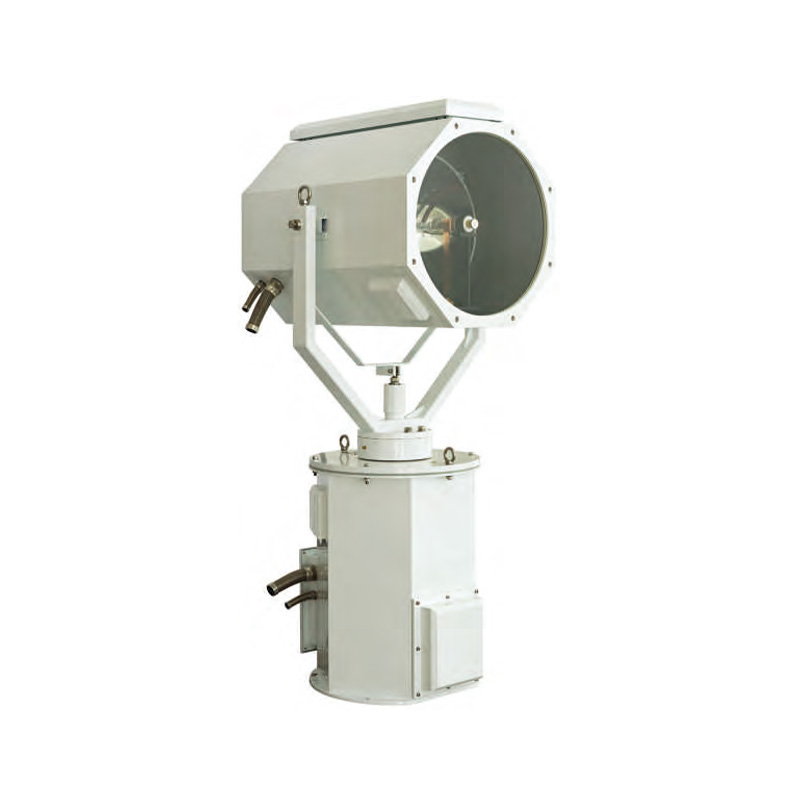
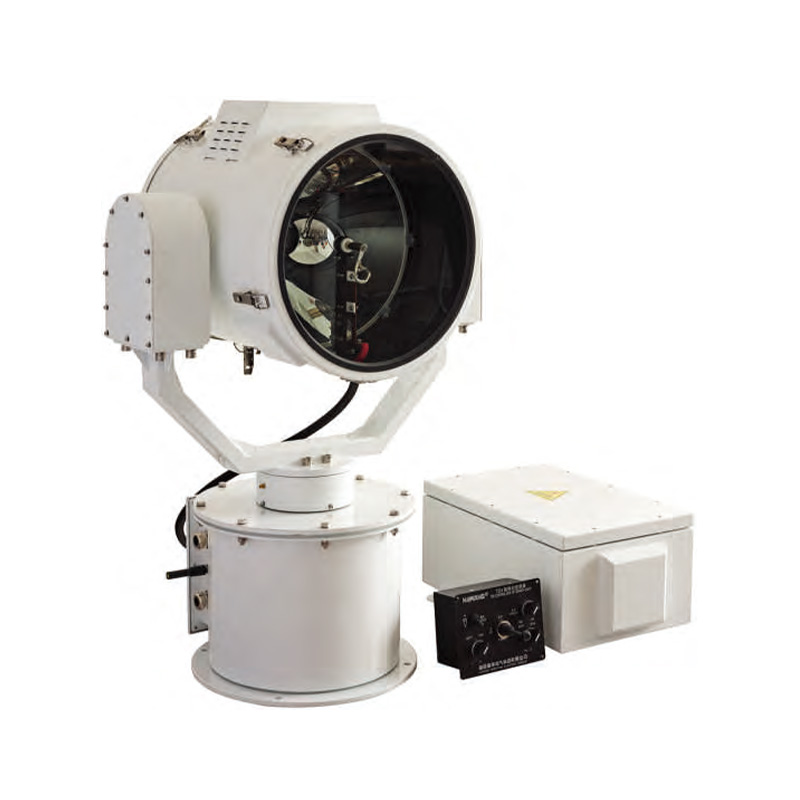
Marine operations require proper lighting solutions which enable operations during periods of darkness and fog and low-visibility conditions. The use of bright white lights causes crew members to lose their ability to see in darkness and it interferes with their night vision equipment. Night vision compatibility has emerged as an essential requirement for marine searchlights which serve naval ships and patrol vessels and rescue boats and commercial vessels and offshore platforms. The design of searchlights with night vision compatibility enables crews to maintain visibility while they protect their awareness of their surroundings and their ability to operate safely.
Table of Contents
What is Night Vision Compatibility in Marine Searchlights
Night vision compatibility describes the capability of a marine searchlight to function without causing disruptions to human dark adaptation and without blocking electronic night vision systems. The strong white light produced by traditional searchlights creates temporary blindness for operators while it exceeds the functioning capacity of night vision goggles and cameras. The design of compatible systems creates equipment which reduces this impact through controlled wavelengths and brightness control and specific optical configurations. Crews can activate lights when they need to work while using advanced technologies which enhance their capability to see in dim conditions.
Why Night Vision Compatibility in Marine Searchlights is Needed
Night vision compatible searchlights are designed to provide illumination while minimizing glare, preserving dark adaptation, and supporting night vision devices. Their role has become more important as marine environments grow more complex and challenging.
| Reason | Why It Is Needed | Operational Benefit |
| Preserve Human Night Vision | Bright conventional searchlights can disrupt dark adaptation and temporarily reduce a crew member’s ability to see in low light. | Maintains natural nighttime visibility and faster reaction times. |
| Reduce Glare on Water Surfaces | Strong light reflecting from waves or wet decks can create visual discomfort and obscure hazards. | Clearer vision and safer vessel handling at night. |
| Improve Navigation Safety | Night operations require accurate detection of buoys, shorelines, docks, floating debris, and nearby traffic. | Better situational awareness during navigation and maneuvering. |
| Support Night Vision Devices | Many vessels use goggles, low-light cameras, and thermal imaging systems that can be affected by harsh lighting. | Ensures onboard optical systems perform effectively. |
| Enhance Search and Rescue Missions | Rescue crews need controlled illumination to locate people or objects without blinding operators. | Faster and safer emergency response in darkness. |
| Increase Tactical Discretion | Patrol, coast guard, and naval vessels may need to operate without revealing their position. | Infrared or low-signature lighting supports covert missions. |
| Reduce Crew Eye Fatigue | Frequent exposure to intense light during long night shifts can cause strain and discomfort. | Better crew comfort and sustained alertness. |
| Improve Docking and Berthing Accuracy | Close-range maneuvering in ports requires clear but controlled lighting. | Safer docking with less glare from structures and surfaces. |
| Support Offshore Operations | Offshore platforms and support vessels often perform nighttime transfers, inspections, and maintenance. | Safer work conditions in hazardous environments. |
| Meet Modern Vessel Technology Needs | Smart vessels increasingly integrate lighting with sensors and automated bridge systems. | More efficient and connected nighttime operations. |
| Increase Energy Efficiency | New night vision compatible LED systems use less power than older lighting technologies. | Lower operating costs and reduced energy demand. |
| Enable 24/7 Maritime Operations | Shipping, security, and offshore sectors operate continuously regardless of daylight hours. | Reliable nighttime performance and operational continuity. |
Key Technologies Used for Night Vision Compatibility in Marine Searchlights
Advanced technologies used for night vision compatible systems in searchlights to improve visibility without compromising safety or operational performance.
1. LED Light Source Technology
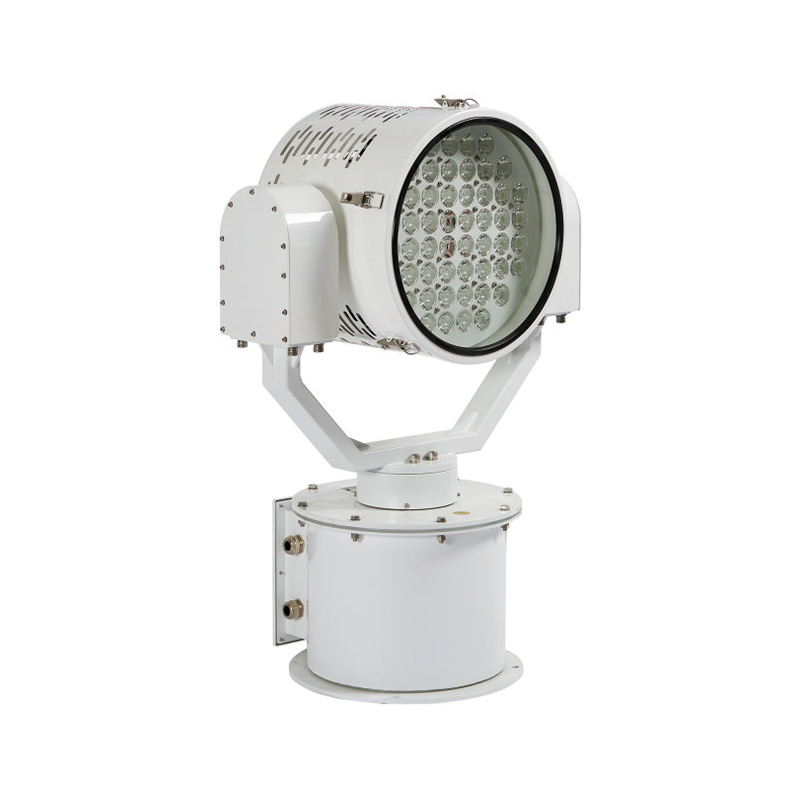
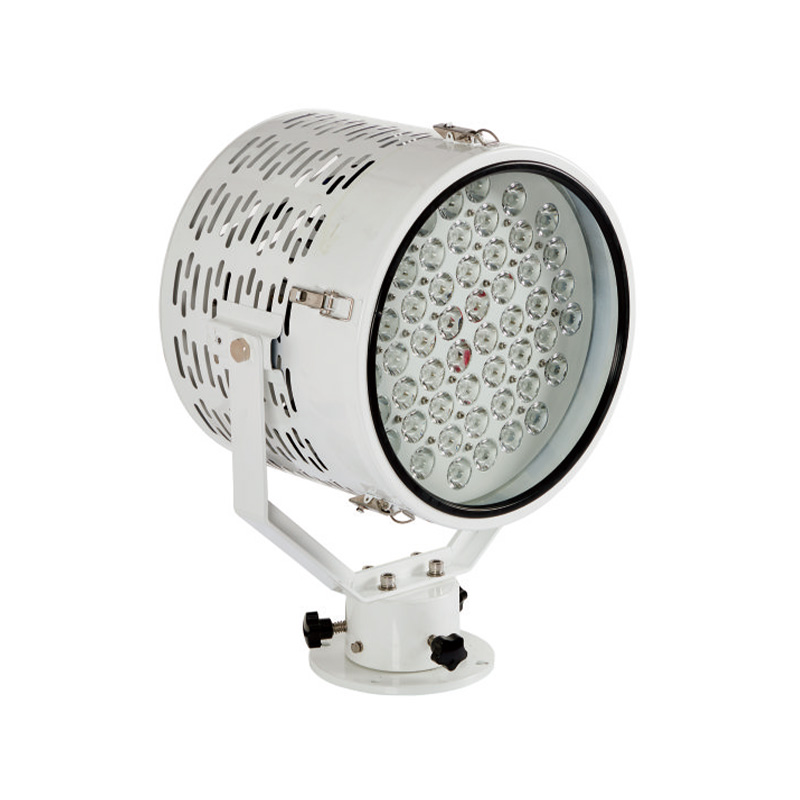
An important advancement in marine searchlight technology is the utilization of LED lighting. LED searchlights provide for accurate brightness control, fast response time, lower consumption of power, and much greater service life when compared with traditional halogen or xenon lamps. LEDs are particularly nice for carrying out night vision operations, because they allow, with a very minimal color shift, for smooth dimming. This way, staff can choose the minimum light levels for whatever needs they might have, hence preventing sudden flashes of excessive brightness and thereby preserving natural night vision.
2. Adjustable Dimming Control Systems
The control of brightness is obligatory in night-time water-marine environments, for it might serve not only to drive long-distance visibility, but also to cause irritation and temporary blindness in case an intensity control system is absent. And hence, in the present day, marine searchlights are fed by electronic dimming systems that allow the continuous kind of lighting or gradual dimming selection to be made. It’s like the possibility not merely for being illuminated at full tilt or in pitch darkness but also for intelligent adjustment while the circumstances may dictate it so. This keeps night navigation, maneuvering in close quarters, and deck-work indeed safer and more convenient.
3. Infrared Illumination Technology
Infrared (IR) lighting is a key technology for vessels using night vision devices. Infrared light is invisible to the human eye but can be detected by compatible cameras and night vision goggles. Marine searchlights equipped with IR modes allow operators to illuminate targets, waterways, or nearby objects without revealing visible light. This is particularly useful for patrol vessels, coast guard operations, military craft, and discreet security monitoring.
4. Red and Filtered Light Modes
Certain light wavelengths affect dark-adapted eyes less than bright white light. Red light has long been used in maritime and aviation environments because it helps preserve night vision while still allowing crews to read instruments and perform basic tasks. Some marine searchlights include red-light or filtered-light modes that provide a softer alternative to standard illumination. These modes are useful during bridge operations, low-speed navigation, and night watch activities.
5. Precision Beam Focusing Systems
Night vision compatibility does not consider just the light output but also the direction of the light. Poorly focused beams could again scatter light off water surfaces, decks, or bridge windows, causing unwanted reflections, which, in turn, diminish visibility. Advanced beam focusing systems in searchlights direct the both spot evacuations and floodonbeam operation in operational requirements. Travel beams often concentrate light on long distance targets, while, with some spill light effect, floodingbeam offers improved near field visibility.
6. Anti-Glare Optical Design
Glare turns out to be the most pronounced problemwe find in the marine environment, and the intensity of light is naturally increasing due to reflections from the water, metal surfaces, or wet surfaces like surfaces that frequently produce these reflections. A wide range of searchlights today employs specially designed optics, reflectors, and shields that prevent much light from leaving the searchlight on the sides or back of the crew. This makes for a more comfortable as well as a more operative and safe environment, especially during rough seas or busy harbor activities.
7. Remote Control and Stabilization Technology
There are greater challenges with night operation of manned searchlights, especially for moving vehicles. In contrast to the headcounts of remote control units, they have foci and direction controlled by the operators on the bridge. The remote control LED searchlights are additionally engineered with stabilization systems to combat vessel motion in waves, thereby steadying the beam on the point of interest and improving nighttime performance.
8. Integration with Cameras and Sensor Systems
Modern marine vessels are running more and more frequently by integrated bridge systems that encompass radar, thermal imaging, and control of CCTVs and navigation systems. Meanwhile, there emerges the possible immersion of complementary CRTV (Counter-Ride Radio Television), Day-night-vision compatible devices such as night vision systems, to work in synchronization. This can facilitate operational instances of the searchlight, such as automatic tracking of camera target, activating upon motion detection, and coordination with shipboard surveillance systems. Consequently, a more responsive and smarter nighttime working environment would become possible.
9. Durable Marine Engineering Materials
As a result, night vision technology must operate even when facing the high demands of the ocean. The searchlight is often constructed using anti-corrosive materials, including special alloys tailored to withstand salt air, sealed housings, and waterproof connectors to protect the inner parts. Vibration-proof components further take care that the equipment continues to function just as well even when exposed to salt spray, humidity, weather changes, and the constant drum of ship movements.
Applications of Night Vision Compatible Marine Searchlights
| Application Area | How Night Vision Compatible Searchlights are Used | Key Benefits |
| Commercial Shipping Navigation | Used during nighttime sailing, harbor entry, and close-range maneuvering to illuminate channels, buoys, and obstacles without excessive glare. | Improves navigation safety while preserving bridge crew night vision. |
| Port Docking and Berthing | Assists captains and deck crews during docking, mooring, and cargo terminal approaches with controlled lighting. | Enhances precision and reduces reflection from wet decks or port structures. |
| Search and Rescue Operations | Helps locate people overboard, life rafts, debris, or distressed vessels using adjustable white light or infrared modes. | Faster target detection while maintaining crew visibility. |
| Coast Guard and Patrol Missions | Supports nighttime surveillance, interception, and coastal patrol activities. Infrared modes allow discreet monitoring. | Increases tactical awareness with lower visible signature. |
| Naval Operations | Used for military navigation, reconnaissance, boarding support, and nighttime vessel identification. | Supports night vision devices and improves operational security. |
| Fishing Vessels | Provides controlled deck and water illumination during nighttime fishing, net handling, and equipment checks. | Reduces eye strain and improves crew efficiency. |
| Offshore Oil and Gas Platforms | Installed on support vessels or offshore structures for inspections, transfers, and perimeter monitoring at night. | Safer nighttime operations in hazardous marine environments. |
| Pilot Transfer Operations | Illuminates ladders, launch boats, and transfer zones during pilot boarding in darkness. | Improves personnel safety and visibility during transfers. |
| Tugboats and Workboats | Assists towing, pushing, escort work, and close-quarter movement in ports or restricted waters. | Better visibility with minimized glare in confined spaces. |
| Yachts and Private Vessels | Used for recreational night cruising, anchoring, and obstacle detection. | Greater comfort and safer nighttime boating. |
| Emergency Response Vessels | Supports firefighting boats, medical rescue craft, and disaster response teams during night missions. | Reliable illumination during urgent operations. |
| Autonomous and Smart Marine Systems | Integrated with cameras, sensors, and remote monitoring systems for automated nighttime detection and lighting response. | Enhances intelligent vessel operation and remote situational awareness. |
Key Considerations for Selecting Marine Searchlights with Night Vision Capability
When choosing a marine searchlight with night vision capability, several factors should be evaluated.
| Selection Factor | What to Evaluate | Why It Matters |
| Night Vision Mode Type | Check whether the unit offers infrared (IR), red-light, low-glare white light, or multiple night modes. | Different missions require different levels of stealth, visibility, and compatibility with night operations. |
| Compatibility with Night Vision Devices | Confirm performance with night vision goggles, low-light cameras, and thermal imaging systems. | Prevents interference and ensures lighting works effectively with onboard equipment. |
| Brightness Control Range | Evaluate dimming capability, smooth adjustment, and low-output settings. | Helps preserve crew dark adaptation and avoids sudden glare. |
| Beam Pattern Adjustment | Look for spot, flood, or variable-focus beam options. | Narrow beams aid long-range detection, while flood beams improve close-range visibility. |
| Glare Reduction Design | Assess lens quality, shielding, reflector design, and spill-light control. | Reduces reflections from water, glass, and metal surfaces. |
| Illumination Distance | Review effective range in real marine conditions such as mist, rain, and darkness. | Ensures the light can detect hazards or targets at required distances. |
| Light Source Technology | Compare LED, halogen, xenon, or hybrid systems. | LEDs often provide longer life, lower power use, and better dimming performance. |
| Power Consumption | Check voltage compatibility and energy demand. | Important for vessel power management, especially on smaller boats. |
| Remote Control Operation | Determine whether the remote control searchlight supports bridge control, joystick control, or wireless operation. | Improves safety and convenience by allowing control from protected positions. |
| Stabilization Capability | Look for gyro-stabilized or motion-compensated models if used on moving vessels. | Keeps the beam steady in rough seas or during fast maneuvers. |
| Mounting Options | Consider deck, mast, bridge-top, or portable mounting styles. | Proper placement improves coverage and ease of operation. |
| Integration with Smart Systems | Check compatibility with navigation systems, CCTV, sensors, or automation platforms. | Enables coordinated nighttime operations and smarter vessel control. |
| Maintenance Requirements | Review lamp replacement frequency, cleaning needs, and spare part availability. | Lower maintenance reduces downtime and ownership cost. |
| Certification and Compliance | Confirm compliance with relevant marine standards and vessel regulations. | Helps meet safety requirements and class society expectations. |
| Budget and Lifecycle Cost | Compare purchase price, installation cost, energy use, and maintenance expenses. | Best value comes from long-term reliability, not only low initial cost. |
Key Trends Shape the Future of Night Vision Compatibility in Marine Searchlights
Nighttime marine operations are becoming more advanced, more connected, and more safety-focused than ever before. As a result, night vision compatibility in marine searchlights is evolving from a specialized feature into a mainstream requirement
1. Smarter Adaptive Brightness Control
One of the most important future trends is the development of intelligent brightness management. It replaces the manual control function while automatically adjusting brightness under changing ambient light, weather, vessel speed, and environmental conditions. For example, one can virtually drop the intensity in fog to reduce any glare, or increase brightness for the detection of far-off obstacles. Such adaptability assists in maintaining night vision while at the same time increasing the efficiency of operations.
2. Greater Use of Infrared and Multi-Spectrum Lighting
Infrared illumination for clandestine nighttime operations are useful, but the future multi-spectrum lighting developments are likely to provide solutions in the near future. Among marine searchlights combining the visible, infrared, and thermal-assistance types of illumination modes is a very promising idea. These light units would become capable of shifting their modes within a split second based on varying mission requirements. This means visual light for the immediate and infrared will be used when the search group wants a low signature/no signature search; thermal-assist could be used to locate heat sources due to humans or machinery in darkness.
3. AI-Assisted Target Recognition and Beam Control
Another trend foreseen in marine lighting systems is the use of AI. A searchlight based on AI may be intended to recognize the existence of possibly any object in water-be it to detect a ship, buoy, floating rubbish, dock, and human being. Through identification, the beam width, direction, and intensity would be automatically regulated by the system, thereby cutting down on the need for member-operated searching. The latter option drives the potential for much higher precision in heavy traffic or while functioning under emergency circumstances.
4. Enhanced Compatibility with Autonomous Vessels
With increasing numbers of autonomous and remotely operated vessels, the design and capabilities of searchlights have evolved. In the future, marine searchlights are expected to form part of unmanned navigation systems and operate autonomously in response to sensor inputs and specific navigation conditions. By so doing, these systems should serve as forward area lights signaling hazards, assisting vessels during docking procedures, or providing help to the remote operators without resorting to onboard manual control mechanisms.
5. Improved LED Efficiency and Compact Designs
With LED technology being transformed and reinvented constantly, the most spectacular developments are expected to come in providing more light with lesser energy consumption, better heat management, and more operating hours. Thus far, the advanced LED technology will enable light fittings to be smaller, lighter, and, possibly, more efficient in terms of output. Such smaller sturdy light heads can be especially advantageous for patrol ships, pilot boats, rescue cats, and smaller naval vessels.
6. Advanced Anti-Glare Optical Engineering
Glare remains a major challenge in marine environments because water and metal surfaces reflect light strongly at night. Much searching light of the future is likely to use improved, most advanced lenses, reflectors, beam shaping optics, and surface coatings in order to remove the unwanted reflections. Such features will ensure visibility for crews for a lesser amount of eye exhaustion during what is generally longer nighttime duty hours.
7. Full Connectivity with Smart Bridge Systems
Digital Bridge Systems are occupying an independent position on vessels, controlled by centralized bridge management systems for control of navigation, cameras, alarms, machinery, etc. Future searchlights will become integral in these platforms. The touchscreens will allow operators to turn on the lights, using automated pre-sets or voice commands or from remote mobile devices. Data, such as operating hours, fault markers, or time for maintenance, can also be instantly tracked.
Summary
For seamless and effective maritime operations at night, night vision compatibility in marine searchlights is essential. The searchlights function to aid navigation, surveillance, and emergency responses by supporting night vision devices, decreasing glare, thus lining the path for the development of safer, more functional vessels.