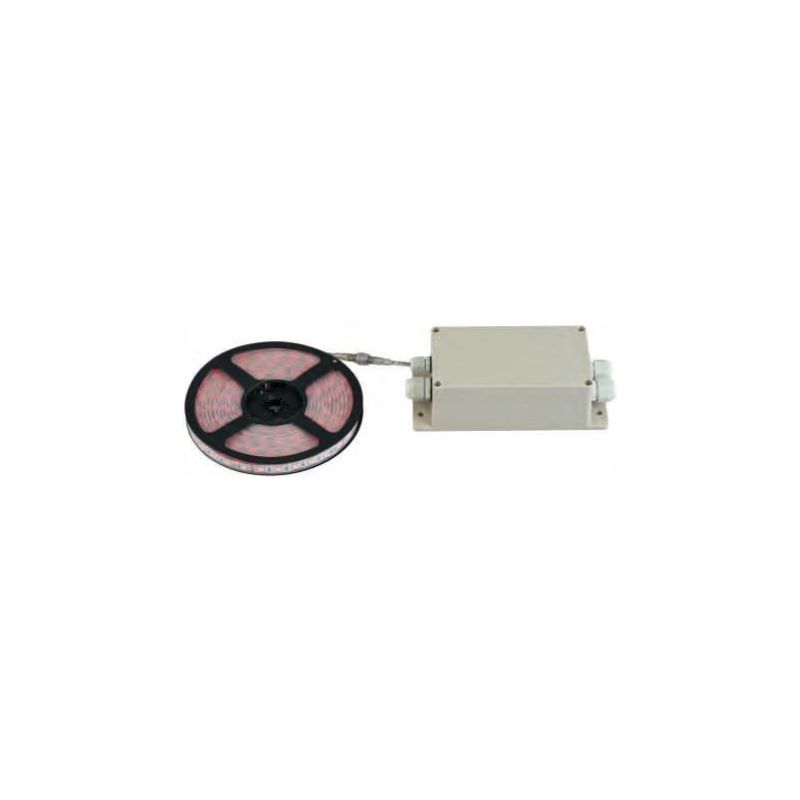
Marine LED Light Stripsvs Ordinary LED Light Strips
There are numerous choices available when it comes to LED light strips, and each manufacturer offers distinct products for diverse applications. In this article, we will explore how regular LED light strips differ from marine LED light strips, enabling consumers to make an informed decision based on their unique needs.ating.
Table of Contents
What Are Marine LED Light Strips and Ordinary LED Light Strips?
| Comparison Aspect | Marine LED Light Strips | Regular LED Strips |
| Application Environment | Marine and high-corrosion environments | Indoor and dry environments |
| Typical Use Scenarios | Seawater exposure (high salt spray) High humidity & condensation Strong UV exposure Continuous vibration (boats / offshore platforms) | Indoor decorative lighting Dry or low-humidity spaces Temperature-stable environments |
| Material & Construction | Corrosion-resistant materials (anodized aluminum, stainless steel) Fully sealed structure design | Bare PCB or basic coating |
| IP Rating | IP65–IP68 (high-level waterproof & dustproof) | IP20 / IP33 (basic protection) |
| Environmental Resistance | UV-resistant Salt corrosion resistant Moisture-resistant | Sensitive to humidity and UV exposure |
| Installation & Structure | Sealed system, focus on integrity and durability | Adhesive backing, simple installation |
| Cost Level | Higher (engineering-grade product) | Lower (consumer-grade product) |
| Core Advantages | High reliability + extreme environment adaptability | Low cost + easy installation |
| Product Nature | Engineered solution for extreme environments | Cost-effective solution for decorative use |
Core Differences Comparison
From an engineering perspective, ordinary LED light strips are designed to meet users’ overall aesthetic and daily needs, primarily used in interior design to optimize the environment; while marine LED light strips are designed to address the high humidity and corrosive environments faced by ships. The two have fundamental differences in their underlying design.
1. Waterproofing capability
Ordinary LED strip lights do not place strict demands on waterproofing capabilities. Under regular domestic usage conditions, waterproofing is unnecessary, and the IP20 level will suffice.
Nevertheless, the marine LED strip lights operate in a humid and saline environment for an extended period and require a higher degree of protection, usually around IP65-IP68. They should be able to resist corrosive substances like rain and seawater over time.
2. Material Structure
Ordinary LED strip lights usually have a very simple construction, using little or no coatings and adhesives for securing; furthermore, sealed constructions are seldom used.
In the case of marine applications, however, LED strip lights must be potted in silicone or fully encapsulated using an extrusion seal, together with aluminum or stainless steel parts. The entire design must be corrosion-resistant. In marine environments, salt spray corrosion is often more likely to cause malfunctions or damage to the lights than water ingress.
3. Environmental Adaptability
In shipboard or coastal high-corrosion environments, regular LED strips usually cannot complete a full service lifecycle, while marine LED light strips are specifically engineered to ensure long-term stable operation under such conditions.
| Factor | Regular LED Strips | Marine LED Light Strips |
| Humidity | Easily affected by moisture | Stable in high humidity |
| Salt spray | No protection, easy corrosion | Anti-corrosion design |
| UV exposure | Ages and yellows quickly | UV-resistant materials |
| Vibration | Easy to loosen | Vibration-resistant structure |
4. Engineering Reliability
Ordinary LED light strips are prone to short circuits and failures due to adhesive peeling, moisture intrusion, PCB corrosion, and accelerated light decay.
However, marine LED light strips are immune to these issues. This is a fundamental characteristic of marine LED light strips, designed specifically to prevent material aging and reduced luminous efficiency caused by moisture intrusion and salt spray corrosion.
5. Installation Logic
The usual type of LED lights involves mounting through an adhesive backing, making it easy to use even for people who do not have any professional knowledge about such fixtures. But more consideration must be exercised when selecting the adhesive material to use.
As for the marine LED light, more attention should be given to the overall strength of the lighting system when installing it, thus requiring the use of mechanical mounting along with watertight seals.
6. Environmental Boundary
| Product Type | Suitable Environments |
| Regular LED Strips | Indoor decoration |
| Dry environments | |
| Low-risk applications | |
| Marine LED Light Strips | Marine environments |
| High-humidity areas | |
| Salt-spray zones | |
| Long-term outdoor exposure |
FAQ
Q1. Can the marine LED light strips work underwater permanently?
A: No. All the marine LED strips are not made for permanent installation underwater. Only those strips that have been rated as IP68 and have waterproof ratings will only function underwater.
Q2. Are there specific power supplies for marine LED strips?
A: Yes. Many times, marine LED lighting requires:
- Waterproof power supplies
- Constant voltage
- Corrosion resistance wires
Q3. Can Marine LED Light Strips Be Cut?
A: Yes, however, with precautions in mind. In case they have been cut, proper sealing is required.
The ends should:
- Be properly sealed
- Have waterproof end caps/silicone
- Otherwise, they can easily get damaged due to water ingress.
Q4. Are Marine LED Light Strips Saltwater Safe?
A: Good quality marine LED light strips can handle saltwater. This would depend on the:
- Quality of material used
- Level of sealing
- How they have been installed.
Q5. How do you maintain marine LED light strips?
A: Maintenance is relatively simple:
- Periodically check seals and connectors
- Clean off salt deposits
- Inspect for physical damage
- Preventive checks help extend lifespan significantly.
Q6. Can marine LED strips be used in non-marine outdoor environments?
A: Yes. They are often overqualified for standard outdoor use, making them ideal for:
- Gardens
- Poolsides
- Industrial outdoor lighting
Q7. Do marine LED strips consume more energy than regular ones?
A: No. Energy consumption depends on LED specifications (wattage, chip type), not whether the strip is marine-grade.
Q8. What color options are available for marine LED light strips?
A: Marine LED strips are available in:
- Single color (warm white, cool white)
- RGB / RGBW
- Custom marine signaling colors (in some applications)
Q9. Are marine LED strips flexible or rigid?
A: Most are flexible, but there are also rigid options for structural installations. Flexible sealed strips are commonly used for:
- Curved surfaces
- Deck edges
- Cabin interiors
Q10. How do you ensure long-term performance in marine lighting systems?
A: Long-term performance depends on a combination of:
- Correct product selection
- Proper installation
- Quality sealing and connectors
In practice, choosing well-designed solutions—such as sealed flexible strips used in marine environments (e.g., Yushuo JBL15 series)—helps reduce failure risks over time.