How to Match Marine Searchlights with the Ship’s Power Supply Voltage System
For any kind of marine lighting brightness and beam distance are key concerns. Also, the stability and safety of the lighting depend on the compatibility of the underlying power system.
All vessels need appropriate lighting whether it be for a fishing vessel, a cargo ship, or even a naval landing craft. For marine searchlights of the vessel to be safe, reliable, and effective, the voltage and power system of the vessel must be matched.

Table of Contents
Understanding Marine Power Systems
Before buying a marine searchlight, one needs to know the basics of a ship’s electrical systems. These systems provide the following types of power:
- 12V DC – Usually found on small boats, yachts, and fishing vessels.
- 24V DC -Usually found on medium-sized patrol boats and rescue vessels.
- 110V/220V AC – Usually used on large commercial or industrial vessels.
- 380V AC (three-phase) – Usually used in dry docks, engine rooms, and heavy operations.
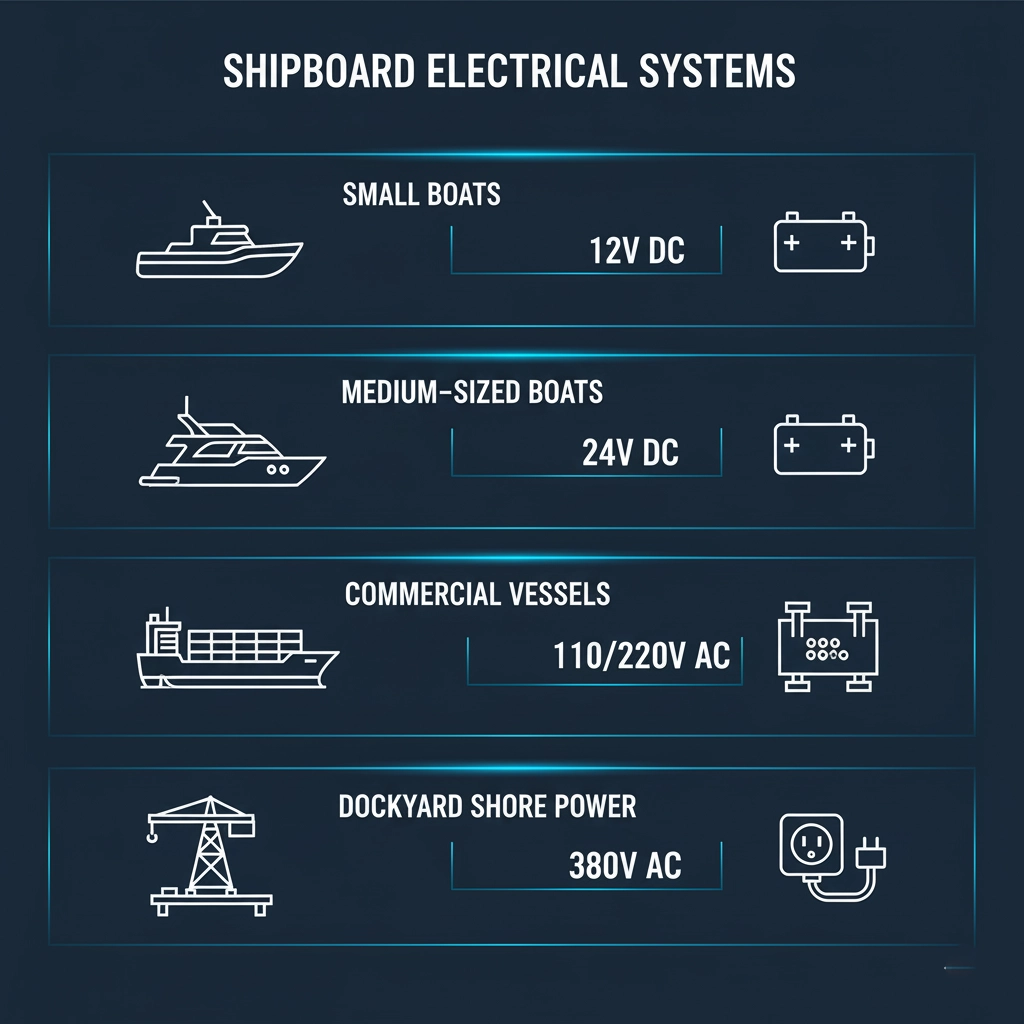
Modern ships have a dual-voltage setup: low-voltage DC power used for navigation and electronics and high-voltage AC for propulsion and heavy gear.
Lighting systems also need to match the various power configurations. For instance, a 12V bulb on a 24V system will overheat, but an underpowered 220V bulb will flicker or malfunction.
Voltage Compatibility and Bulb Selection
Make sure the bulb’s voltage on your marine searchlight is compatible with your ship’s power supply. This is shown in the table below:
| Ship Power System | Recommended Searchlight Type | Key Features | Typical Application |
| 12V DC | Compact LED Searchlight | Low power draw, easy install | Small boats, yachts |
| 24V DC | Medium-power LED / HID | Stable operation, bright beam | Patrol & rescue boats |
| 110V / 220V AC | High-power LED or halogen | Continuous long-range illumination | Commercial ships |
| 380V AC | Industrial-grade floodlight | Ultra-high output, requires stabilizer | Dockyards, shipyards |
Take care to verify the ratings for voltage and current. If wires are too small, it may cause voltage drops which can lead to diminishing the efficiency of the light and even ruining the internal driver.
How to Figure out What Power System Your Vessel Uses
Knowing what kind of power system your boat uses is important to select the right marine searchlight. While it seems simple, many boat owners—particularly those buying second-hand boats—don’t understand this. Getting it wrong could cause severe damage to a boat’s gear or create a risk of electric shock.
Start with the Main Electrical Panel
Find the main electrical control panel on the ship. It’s commonly situated around the bridge or engine room.
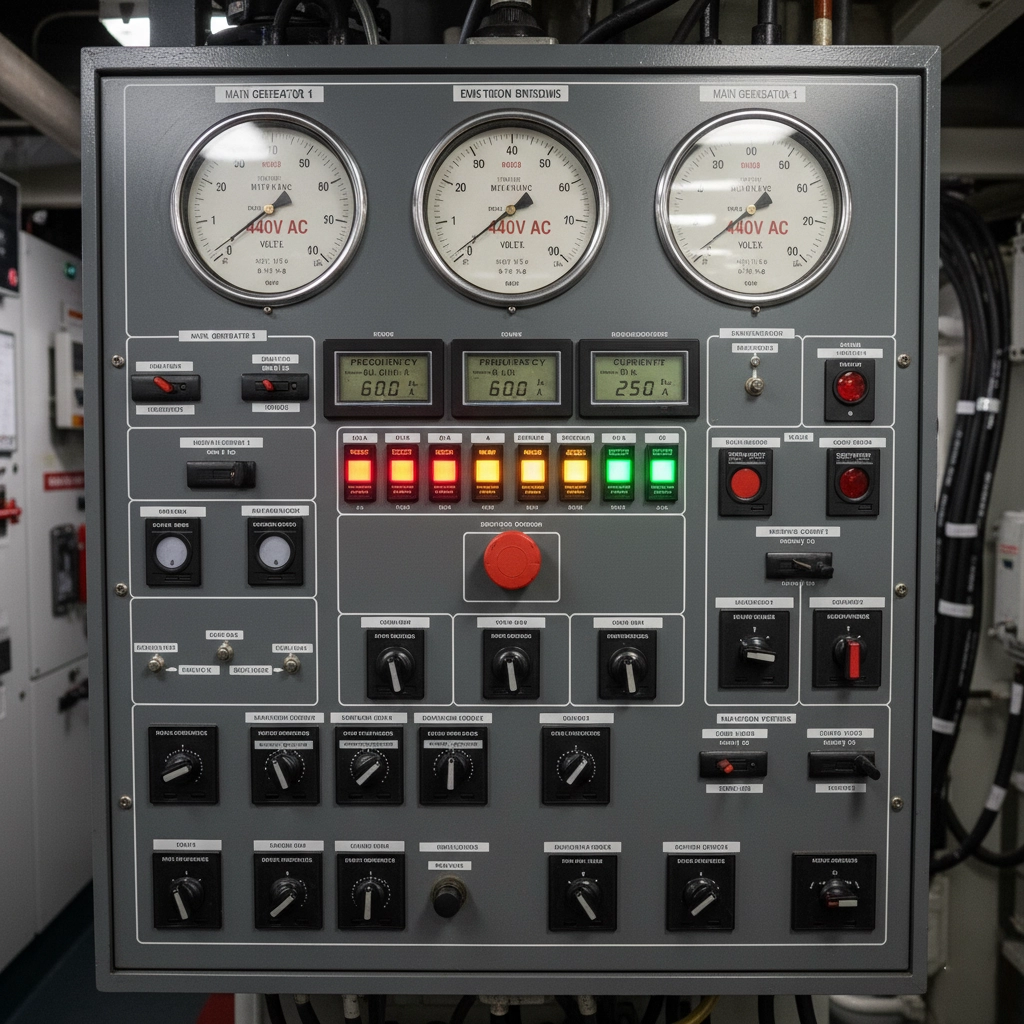
You’ll notice the voltage indicators ranging from “12V DC” to “220V AC”.
Control panels with “AC” and “DC” power switches have a dual-voltage system. This is typical for modern vessels where DC is for lighting and navigation and AC is for powerful equipment.
Generator or Battery Bank Inspection
Now, get to know the power source of the boat/ship. If the boat/ship uses batteries as the primary power source, look at the battery pack labels. Most batteries will show their nominal voltage (e.g., 12V or 24V) quite clearly.
For boats/ships with an onboard generator, it is also necessary to check the generator nameplate. The nameplate contains the rated voltage, current, frequency (Hz) and the phase type (which will be either single-phase or three-phase) of the generator.
Apart from determining the operating voltage, this detail will guide you on the type of searchlight drive circuitry your system can support.
Applying a Multimeter for Direct Measurement
When one or more of the panel labels has faded or becomes too difficult to read to confirm the system then a digital multimeter can be used to define the system instead.
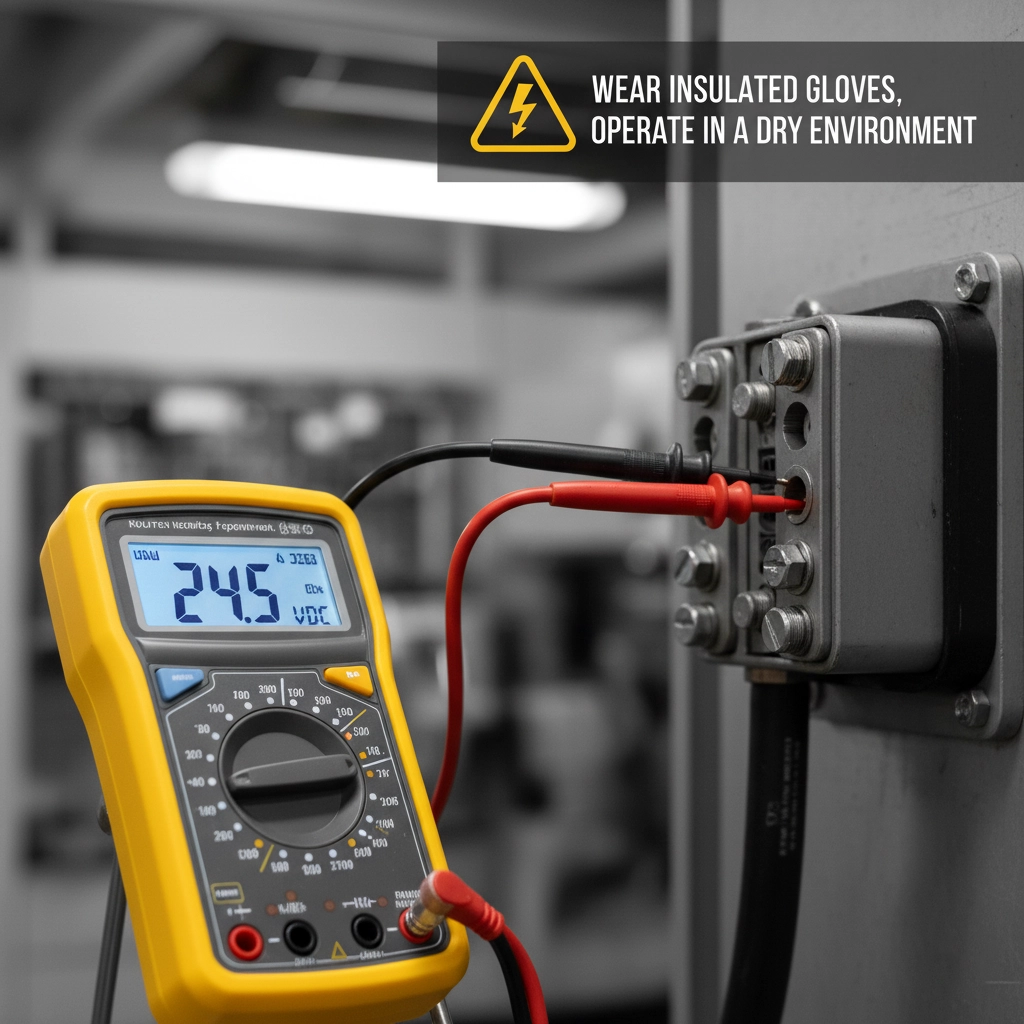
- Start by setting the multimeter to measure voltage (V).
- Then measure the voltage across the power terminals. The red probe must be put on the positive terminal and the black probe must be placed on the negative (DC) or neutral (AC) terminal.
- Take the reading when the ship’s electrical system is operational.
This measures the actual working voltage which can sometimes be different than the nominal value by a small amount due to the battery condition or the load on the generator.
Safety Reminder. Insulated gloves are an absolute must and measurements must only be performed in dry conditions. Reach out to a certified marine electrician for help if you do not have experience with electrical work.
Check Your Ship’s Documentation or Contact the Builder
Looking through the ship’s manual, as well as the electrical drawings or documentation from the builder, will likely yield results regarding the ship’s electrical configuration. Older vessels or custom-built ships may have had their wiring systems retrofitted, so the best approach is to ask the manufacturer, the conversion shipyard, or the marine engineer who last serviced your ship.
Observe Connected Equipment
Voltage can also be determined indirectly by checking the voltage on other electrical devices.
Consider the case where the navigation lights, bilge pump, or radio draws 12V or 24V, it can be inferred that the light DC circuit is also at 12V or 24V. In contrast, if the kitchen appliances or HVAC system operate at 110V or 220V, it can be inferred that the main power supply is at 110V or 220V which is AC.
There is a notable trend in most modern vessels where both systems are utilized concurrently, that is, low-voltage DC is reserved for essential electronics and almost always high-voltage AC is used for auxiliary systems.
Key Takeaway
Although panels may state “100V,” the output can deviate 10% -10% to +10% under load or due to unstable generator output.
Look for marine searchlights that can withstand voltage rating flexibility to tolerate 100V-240V AC input range.
Not only does this range facilitate consistent illumination, but it also helps to avoid the early burnout of fragile lighting drivers or circuits.
Common Mistakes in Power Matching
Even experienced engineers make mistakes when installing marine searchlights. Below are five common pitfalls and how to avoid them:
Choosing the Wrong Voltage
One of the widespread mistakes in marine light setup is picking a searchlight that doesn’t fit the operating voltage of the vessel. Most small vessels have 12V or 24V DC systems while bigger vessels are on 110V or 220V AC systems. If you connect a 12V marine searchlight to a 24V circuit, the bulb can overheat and blow or the LED driver can get fried, while under voltage equals a faint, flickering light, and unstable brightness.
The rated voltage should always be on the searchlight nameplate or in the technical data sheet. If the vessel system voltage is different, you can make boat-safe DC-DC converters or transformers work. You can also check the power supply with a multimeter which will help you check the real operating load. Most of the time, generator performance and the state of the charge on the battery will impact the voltage variations that will cause instability in the lights.
Using Oversized Wiring
The next mistake is picking wires that are too thin for the electrical load. Over long distances, thin wires are incapable of carrying the necessary current. This results in excessive voltage drop and dangerous heat build up in conduits. Poor performing lights become a greater fire risk along with degrading the cable insulation.
With marine searchlights, always account for a voltage drop in the cable run. In marine applications, a drop over 3% is unacceptable. Use marine-grade tinned copper wire, which stands up to humid, salt-laden air. For compliance, follow the America Boat and Yacht Council (ABYC) E-11 standards for cable sizing and circuit protection.
Ignoring Surge Protection
A power system on a vessel may experience voltage fluctuations due to changes in generator load, connections to shore power, or heavy electrical equipment onboard. Quick spikes in voltage may damage marine searchlight’s LED and electronic controls, and circuits used for dimming, and may also affect other electronics onboard.
Powering an light fitting used on sea with a marine rated built in surge protective devices or voltage stabilizers gives primary protection. The surge protective devices absorbs over voltage levels and prevent internal components from failing. For LED light sea searchlight models especially, steady current during normal uplifts and downlifts of power balance in the system promotes stable, constant and enduring light. This also stabilizes current and increases the longevity of the light.
Failing to Ground Systems Properly
Overlooking inadequate grounding in a marine electrical installation can be one of the most dangerous oversights. Failing to Ground Systems Properly Neglecting to ground a system could result in hazardous stray electrical currents which may interfere with navigation and operational radios, elicit sensor and system failures, and may result in an electric shock hazard in high-risk locations such as the engine room and bridge deck, which are wet and contain conductive metals.
Searchlights should be connected to a corrosion resistant grounding bus, which in turn drills down to the ship’s grounding system. This aids in the safe dispersion of fault currents into the hull of the ship, preventing hazard to crew and equipment. Globally, the safe and effective grounding of marine systems is documented by the International Electro Technical Commission as part of the maritime IEC 60092 standards.
Using the Wrong Relay or Controller
The last, and often overlooked, issue is mismatching the relay, switch, or control system that operates the searchlight. Each searchlight is designed to handle a specific current draw, and using an undersized relay or incompatible controller can result in contact welding, voltage spikes, or unreliable switching performance. In automated systems, it may even trigger control errors or short circuits.
Always verify that your relay’s rated current and voltage match the light’s specifications. For remote-controlled searchlights, ensure that both the motor driver and lamp relay are compatible with the vessel’s DC or AC supply. When in doubt, consult the manufacturer’s documentation or contact the supplier for guidance—most reputable brands, including Yushuo Lighting, provide detailed compatibility charts and wiring diagrams.
Pro Tip – Stabilize LED Searchlight Power
Using a marine-certified power stabilizer for LED marine searchlights can boost the reliability of the system significantly. It keeps the power steady, avoiding sudden spikes when a generator is switched on and off and when changing between battery and shore power. This protects the sensitive electronics of the light which enhances operational life and steady light output during navigation.
Yushuo Marine Searchlights’ Voltage Compatibility and Reliability
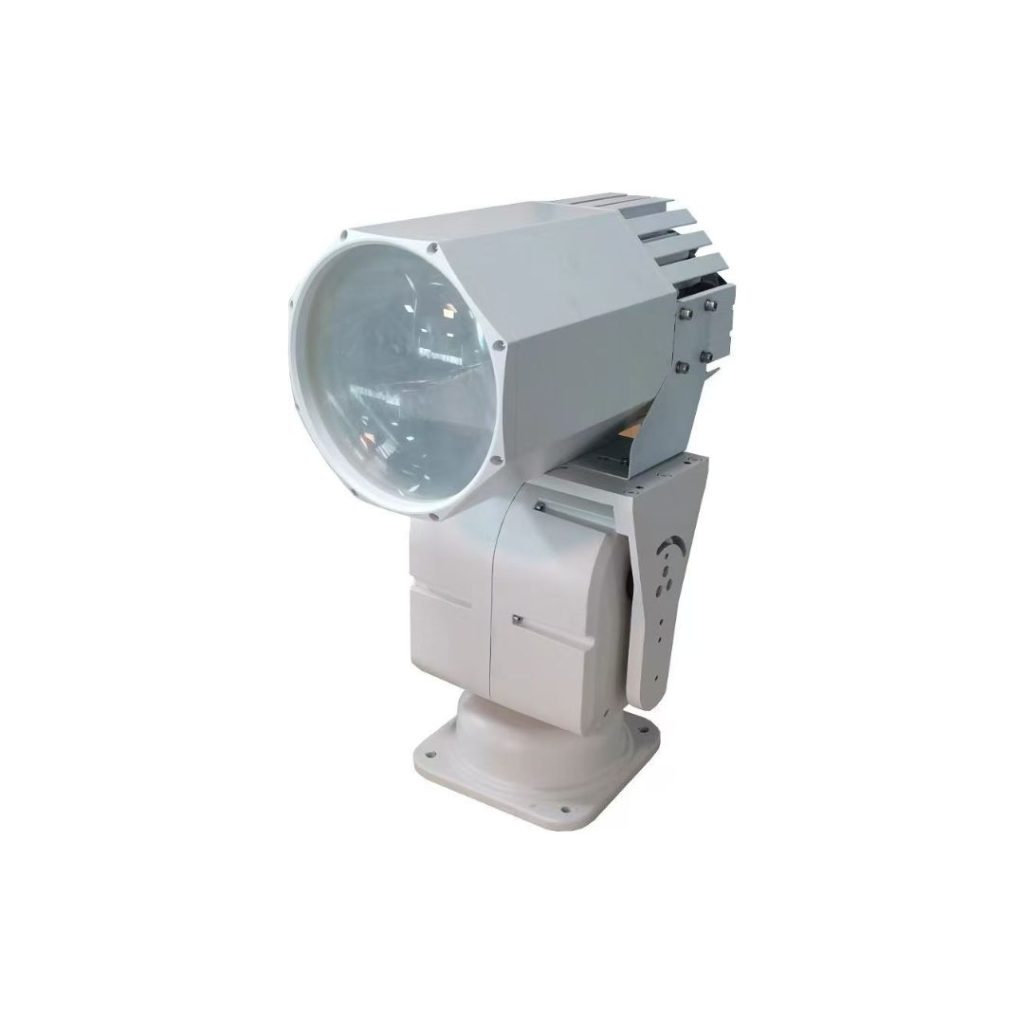
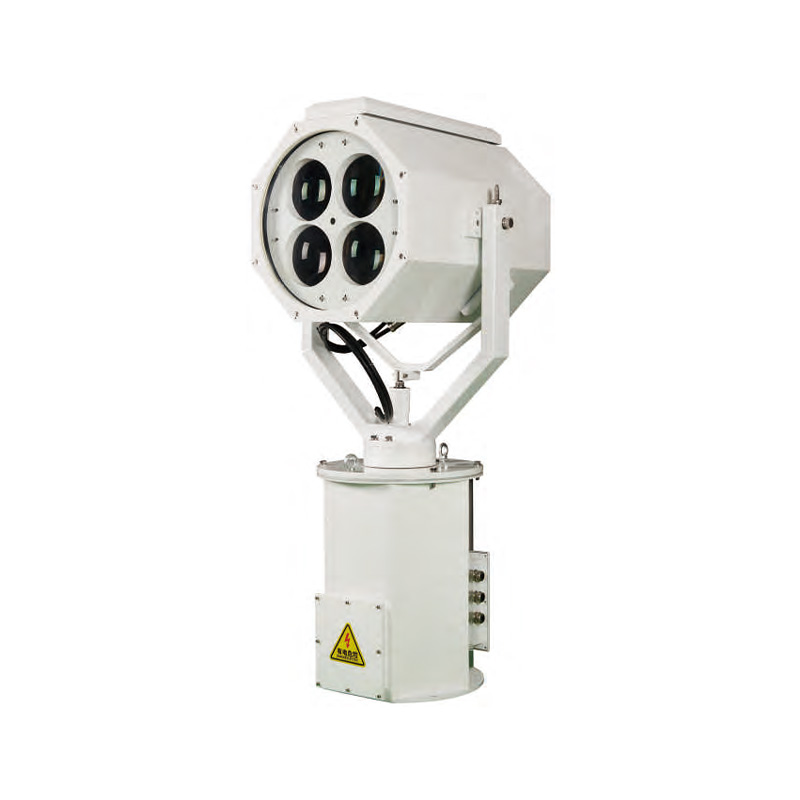
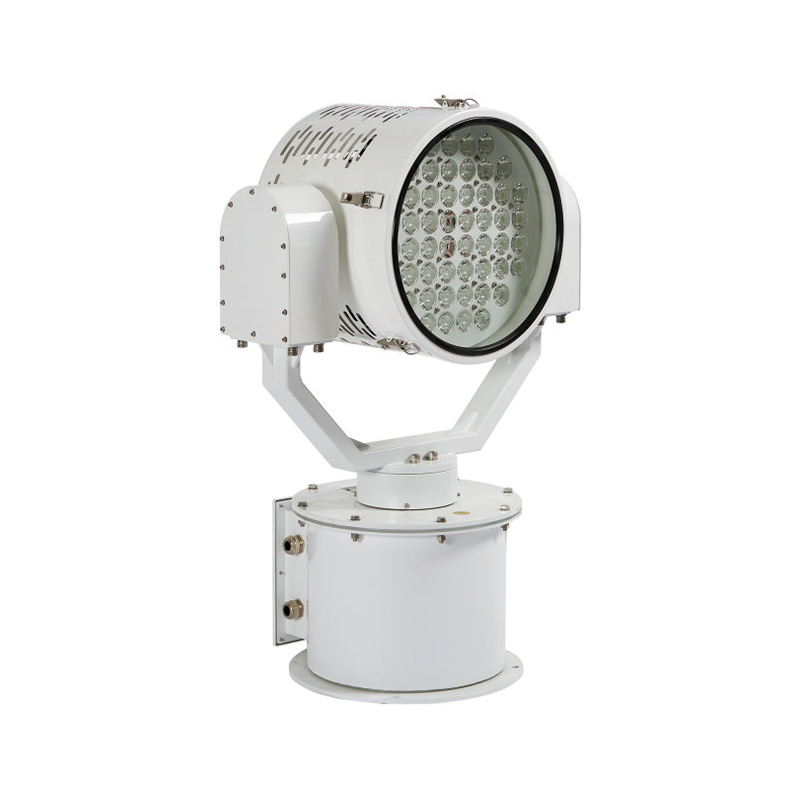
Yushuo balances the design of its high-temperature-resistant marine searchlights considering power flexibility and environmental endurance. The TZ6 LED Marine Searchlight from Yushuo is an excellent example of how engineering consideration can solve both the issues of voltage compatibility and prolonged reliability.
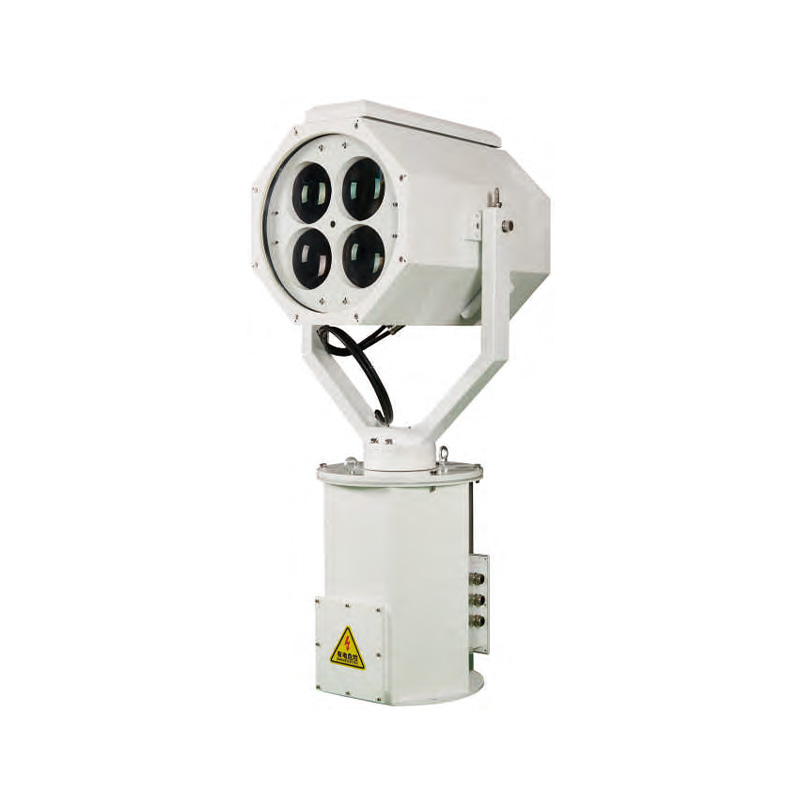
Wide Voltage Input and Flexible System Integration
The TZ6 model can accommodate AC 220 V 50/60 Hz and AC 110 V 50/60 Hz power supplies.
Since it can accept dual voltage inputs, it can be used on vessels that operate on standard commercial AC voltage, adapting to larger vessels and dock/port facilities. This also minimizes the hazards associated with incompatible equipment. For ship operators, this versatility streamlines logistics: one model can accommodate many applications, thus, reducing inventory.
High Power Rating and Load Capability
The TZ6 has an 800 watts rated power and power factor of ≥ 0.9.
The 800 watts offered by the TZ6 means the searchlight offers strong illumination required for search operations for long distances or for large area illuminations such as for cargo ships, port facilities or over lengthy complex waterways.
Equally, a power factor of ≥ 0.9 means the engineering of the device has efficiently coupled the active supplied voltage and current as well as minimized reactive power loss which contributes to stability improvement and electrical system load reduction.
In ship electrical systems, which have frequent load changes (like generator starts/stops and battery backup), a searchlight powered by a stable clean power supply will have the least chance to flicker or trip, thereby positively supporting the argument.
The TZ6’s Rugged Design for Environmental Reliability
Having the appropriate voltage is just part of the solution. Having the correct voltage is only part of the solution. Consider the following for the TZ6.
Stainless steel construction. This grade of steel will withstand corrosion from salt spray and will humid air withstand corrosion in harsh marine environments.
Manual focusing with 360° horizontal rotation and more than 60° elevation will permit exact alignment.
Operating temperature -30 to +55. This temperature range means the device will withstand extreme cold and heat frequently encountered in a marine dock environment.
IP56 rating. Will withstand high-pressure water jets
Practical Tips for Installation & Use
Check the electrical supply for the vessel before installation—if it’s 220 V AC ensure the fixture is wired for that; if it’s 110V AC make sure to select or switch to the correct nominal input version of the TZ6.
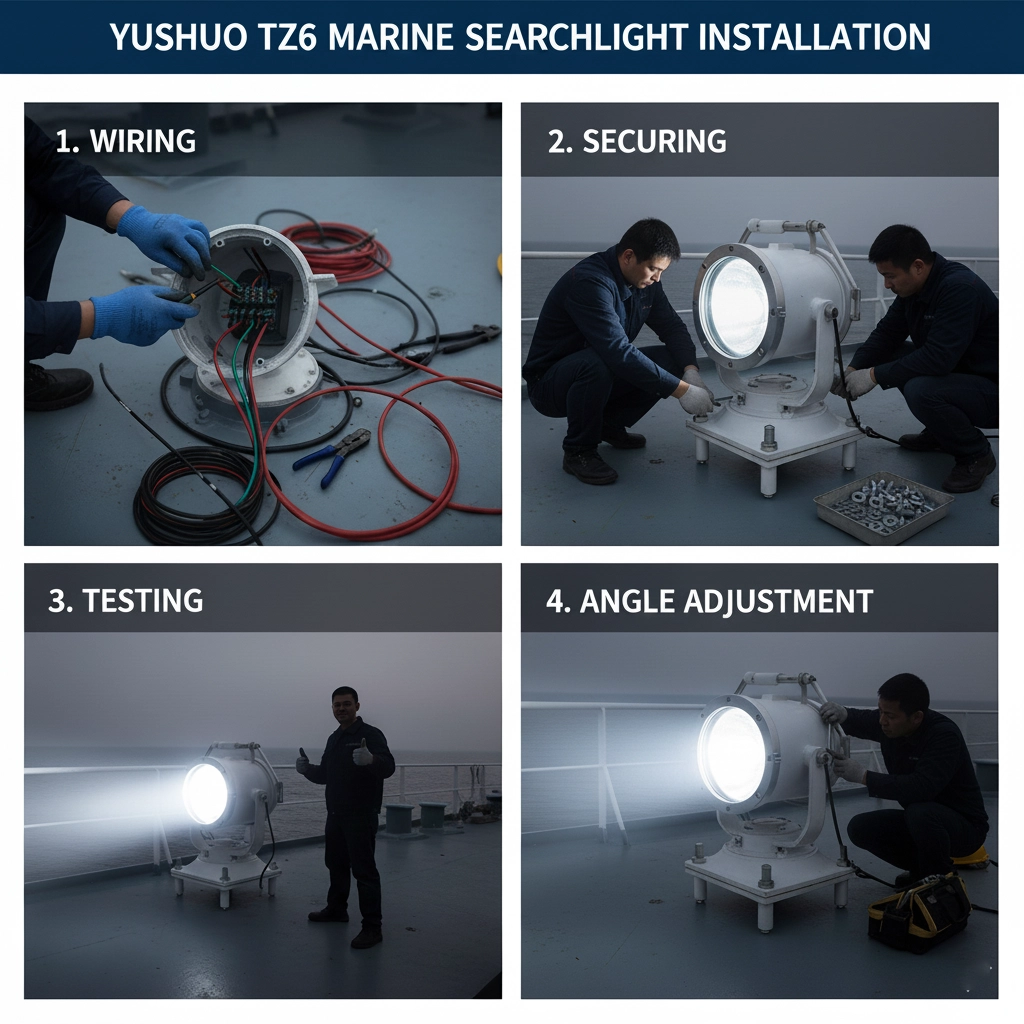
Use the correct gauge marine rated cable because an 800 W fixture draws significant amperage. Make sure the cable assembly is as short as possible to reduce the voltage drop.
Check that the distribution panel provides stable voltage, and your generator/shore supply can handle the starting surge that the lamp will demand once it’s powered on.
Check the rated marine stainless steel housing for corrosion; also check the mounting bolts and cable glands and connectors for corrosion; ensure contact is made and is tight to avoid significant voltage drop.
Use the full tilt and rotational capability to properly position the beam—if alignment is incorrect, higher brightness settings will be needed to counter the dim spots, which will stress the power supply.
For vessel-owners and their lighting engineers, the Yushuo TZ6 LED Marine Searchlight provides the high electrical efficiency and rugged construction to ensure the light can be safely integrated and operated on wide voltage input.
Final Thoughts
When it comes to SSR, it becomes pivotal to integrate the appropriate configuration to the authentic standards. Configuring optimal standards with the appropriate circuitry ensures the safe maritime operation of the selected SSR. For stable illumination, maintained focus over life span, and decreased overall maintenance costs, selecting properly matched voltage LED marine search lights is paramount.
Prior to making the next selection, his or her the integration of circuitry on board should be consulted and properly performed where one should be advised by a Licensed Marine Electrician.
For warmth withstanding, shock withstanding, and marine grade durable tests properly conducted, Yushuo LED marine search lights would serve as a suitable selection.