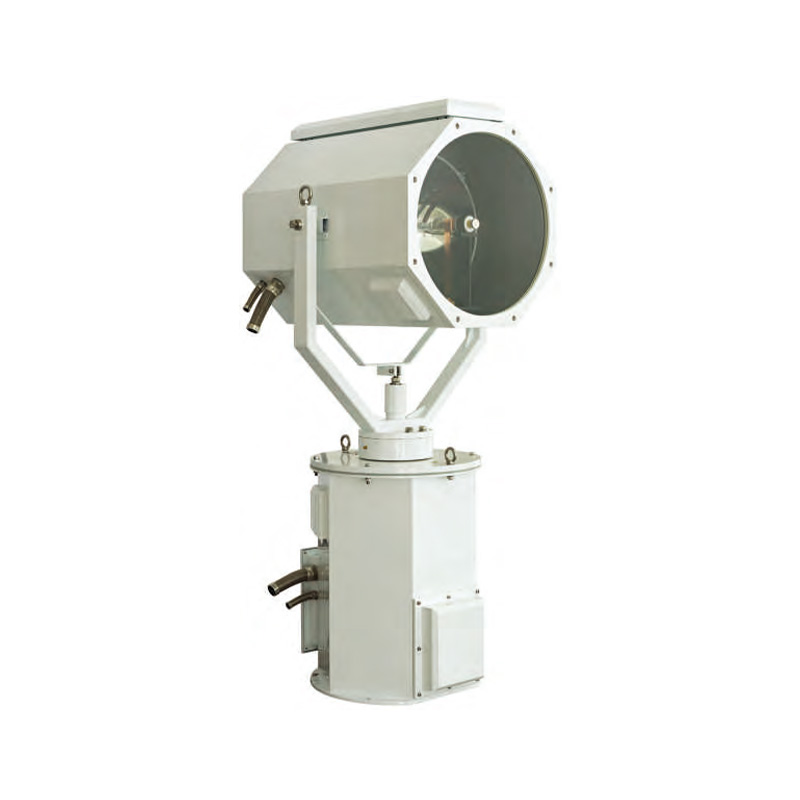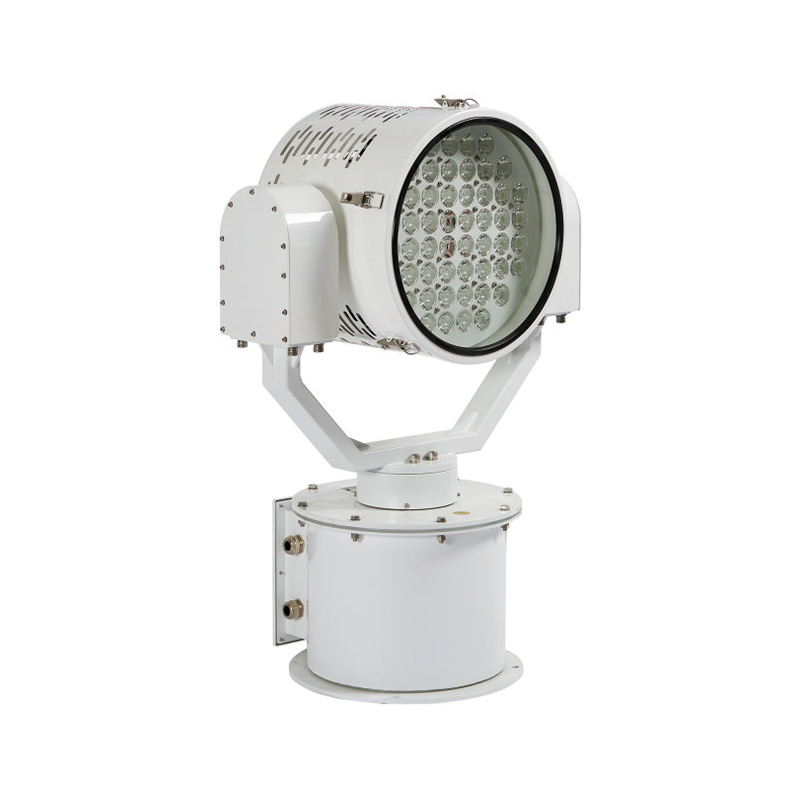
Weatherproof Design in Marine Searchlights
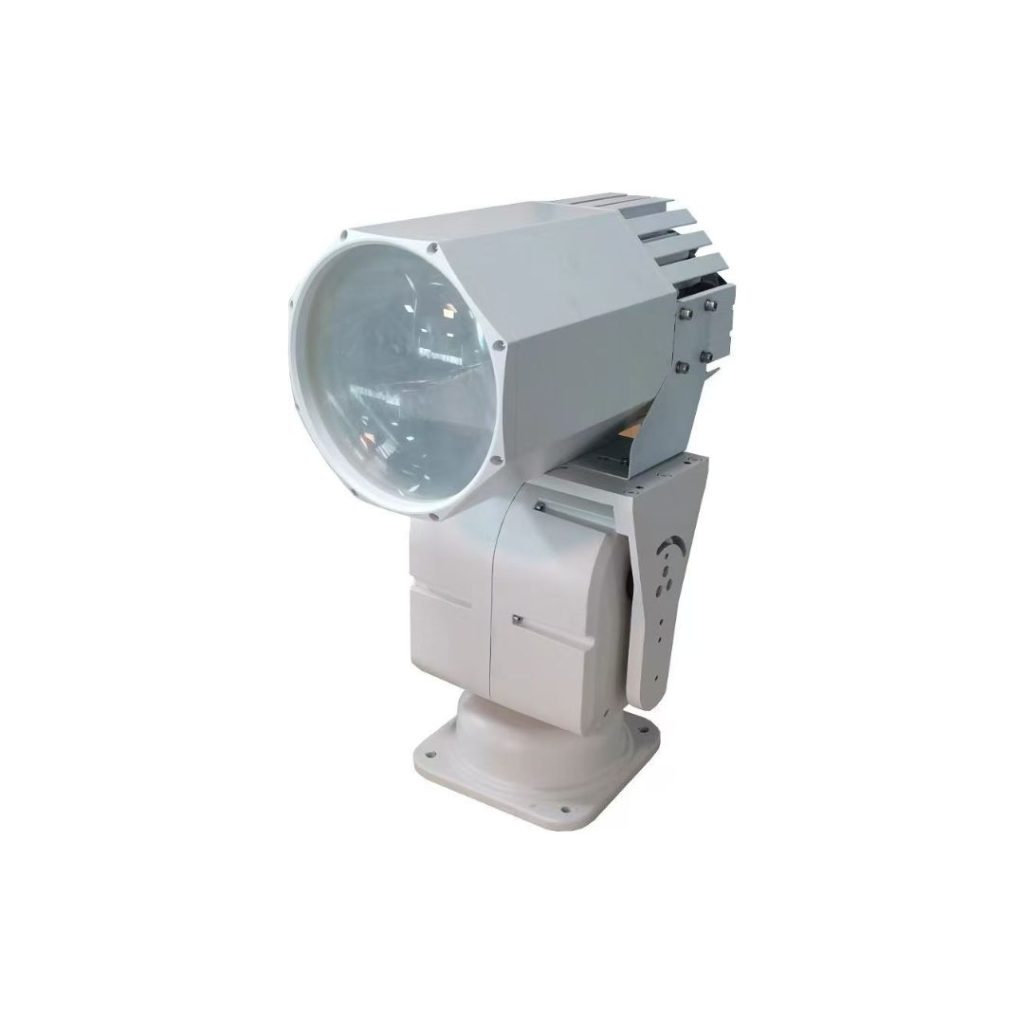
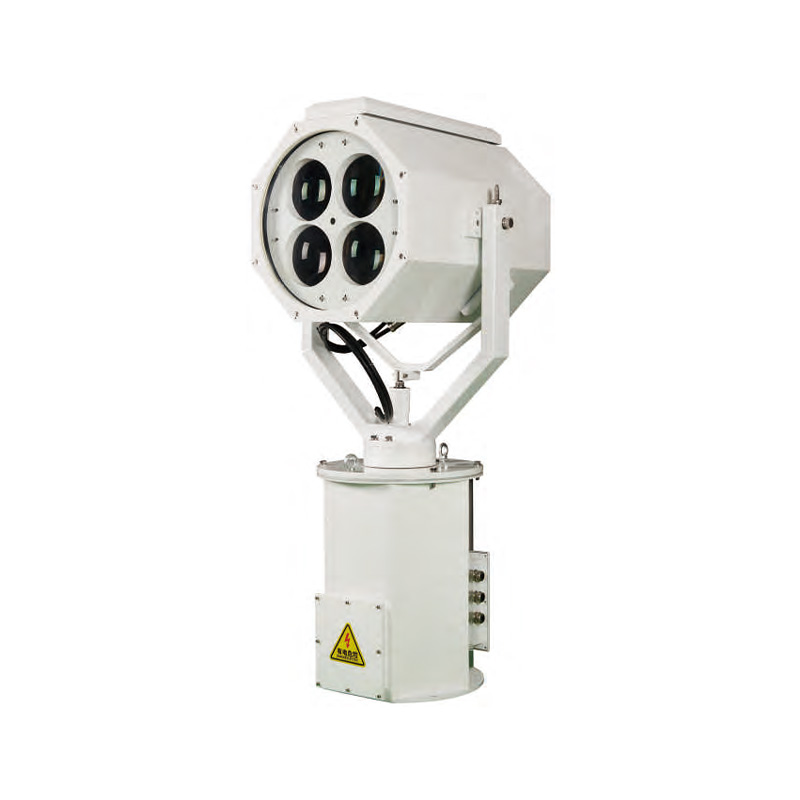
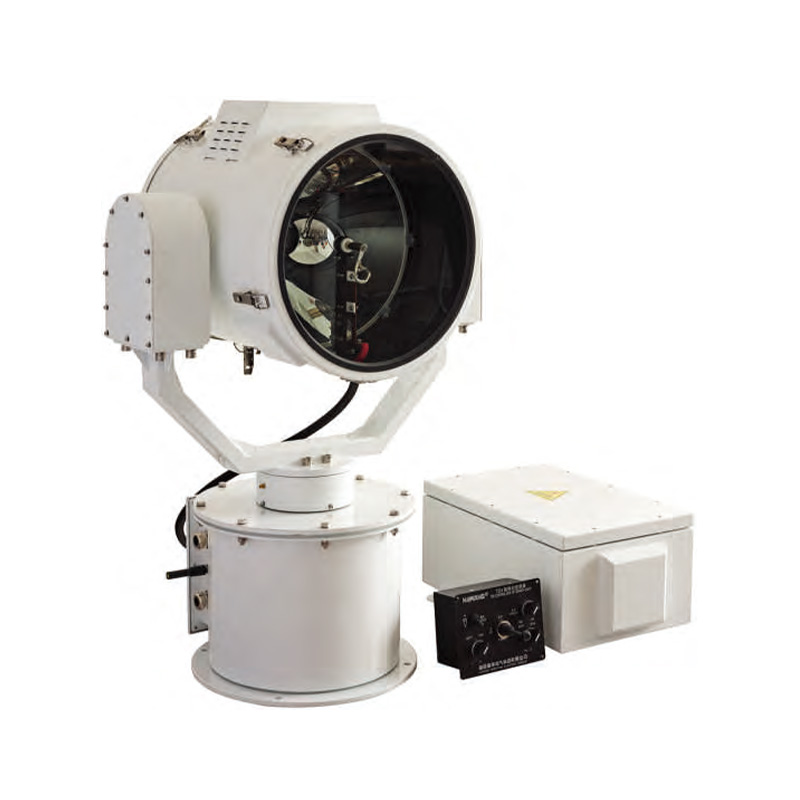
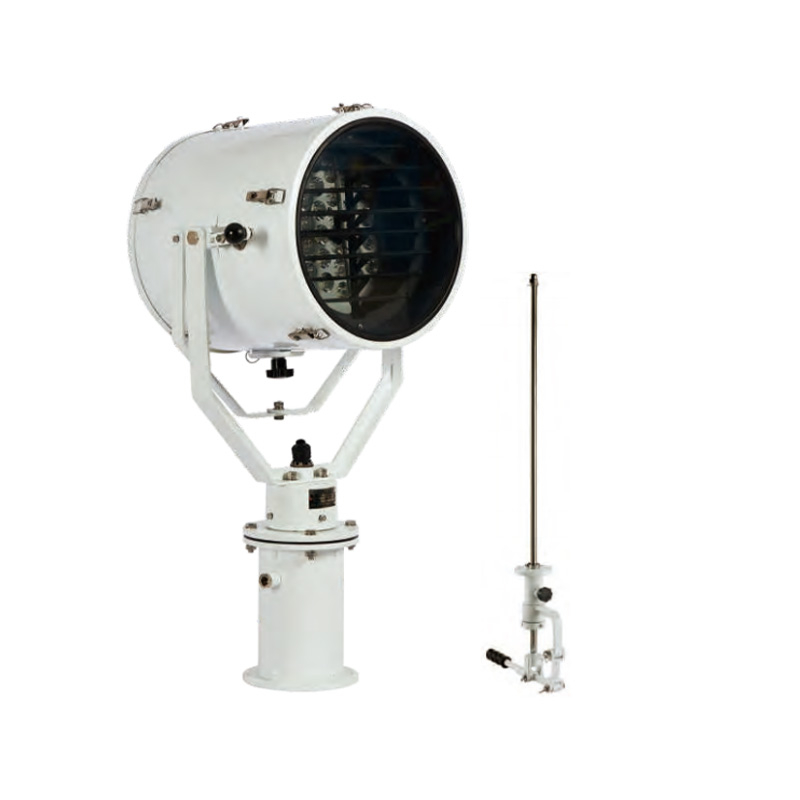
Marine searchlights serve their purpose in extreme locations which experience saltwater exposure, high humidity levels, heavy rainfall, strong winds and extreme temperature changes. The sea requires weatherproof design which maintains operational reliability and extends its operational life while providing security for marine search lights. This article discusses the main design principles, materials, technologies and trends in weatherproof design for marine search lights.
Table of Contents
Challenges in Marine Environments
The marine environment presents equipment designers with two major obstacles which include corrosive elements and mechanical forces that attack badly constructed devices. Oxidation happens more quickly in areas which contain salt-laden air and materials experience damage from continuous ultraviolet radiation exposure. The rapid temperature variations which occur from daytime to nighttime and from one sea area to another cause materials to expand and contract, which increases the possibility that seals will fail. The design process faces additional challenges because of continuous vibration and wave impacts, which engineers must address through durability testing.
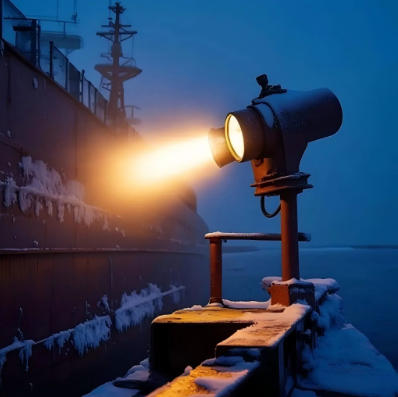
Key Design Principles for Weatherproofing in Marine Searchlights
1. Achieving High Ingress Protection Standards
This means, of course, the first principle for ensuring the weather-resistant design of marine searchlights is protection even when surrounded by water and dust. Usually this is defined by a rating for ingress protection, which stands out as a testament to the effectiveness of the enclosure in defending against external elements. The best searchlight can resist water penetration even in the heaviest rain or in a sea spray. Every joint, hole for cable entry, mechanical interface, among others, contribute to implementing a highly engineered resistance to water entry. This will both make these fixtures weather-resistant and durable, while enforcing the guarantee of quality in manufacture.
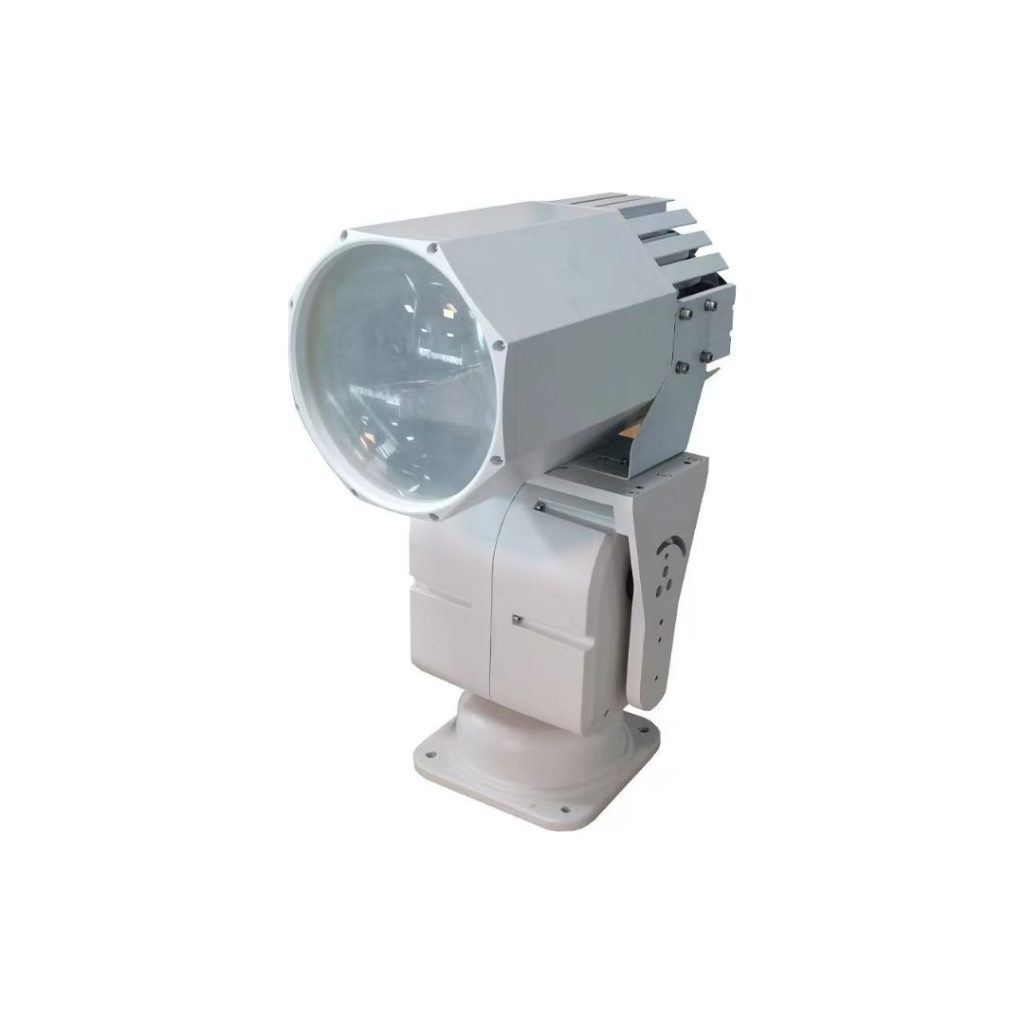
2. Selecting Corrosion-Resistant Materials
Selecting the correct type of materials is critical to the lifespan of marine searchlights.
This chart provides the common corrosion-resistant materials in marine searchlights to help make a right choice for your specific applications
| Material | Key Properties | Corrosion Resistance Mechanism | Applications in Marine Searchlights |
| Marine-Grade Stainless Steel (e.g., 316) | High strength, excellent durability | Contains molybdenum, which improves resistance to saltwater corrosion | Housings, brackets, fasteners |
| Aluminum Alloys (e.g., anodized aluminum) | Lightweight, good thermal conductivity | Protective oxide layer (enhanced by anodizing) prevents corrosion | Lamp housings, frames |
| Brass | Good machinability, moderate strength | Forms a protective patina layer that resists seawater corrosion | Electrical connectors, fittings |
| Bronze | High strength, excellent seawater resistance | Copper content forms a stable protective oxide layer | Mounting components, fasteners |
| Engineering Plastics (e.g., ABS, polycarbonate) | Lightweight, non-metallic, impact-resistant | Naturally resistant to corrosion and chemical degradation | Lens covers, protective casings |
| Tempered Glass | High transparency, heat resistance | Non-reactive surface prevents corrosion | Lenses and protective covers |
| Powder-Coated Steel | High strength with protective coating | Powder coating creates a barrier against moisture and salt | External housings and support structures |
| Titanium | Exceptional strength-to-weight ratio | Forms a highly stable oxide layer, highly resistant to seawater corrosion | High-end or specialized components |
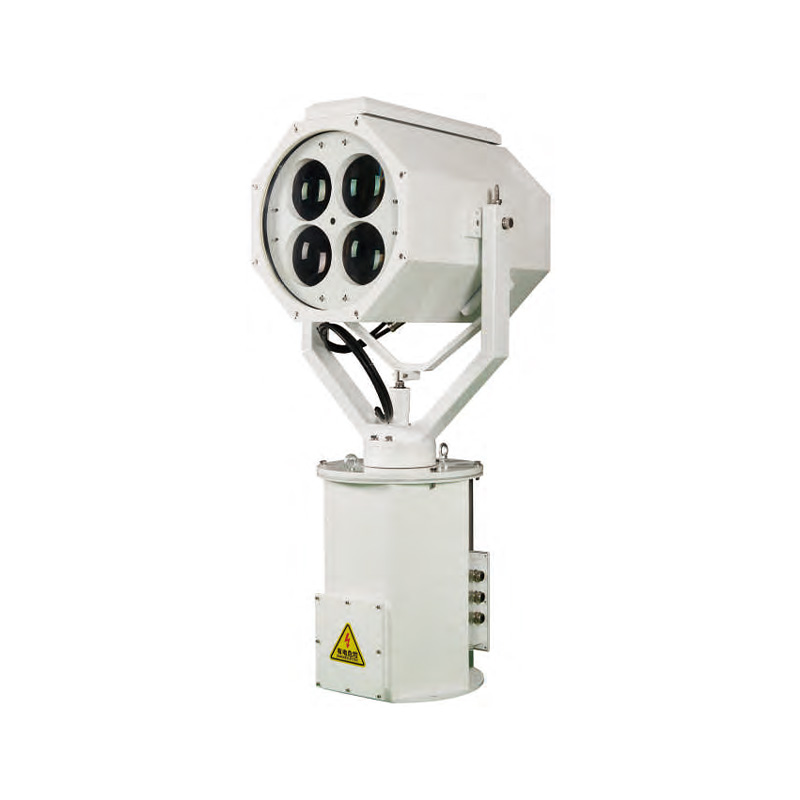
3. Designing Reliable Sealing Systems
The core of weatherproof design is sealing systems. The sealing must be effective with respect to blocking water ingress; however, the development must also ensure that the seals can sustain mechanical stress, vibration, or thermal expansion. It is important to create a strong and reliable seal system; for this purpose, highly performing gaskets, O-rings, and sealing compounds can be employed to establish a watertight seal. Design decisions must ensure uniform compression of the sealing elements since uneven pressure may mean that a product’s seal will be less secure in the long run. In mission-critical areas, backup sealing strategies are sometimes put in place to provide another line of defense.
4. Protecting Electrical Components from Moisture
A significant advantage of an air cooled lantern is that it takes advantage of the electric lamp’s frequent operation and does not rely on batteries for its power supply. The glare caused by normal daylight is merely a slight disadvantage, as the glare created by kerosene is much heavier. It is justified as long as the fine spotlight optics are physically covered.
5. Managing Heat Within Sealed Enclosures
Because weatherproof design is generally associated with sealed housings, there is restriction of good air flow, trapping of heat produced by the light source and electronic components. Therefore, effective thermal management is extremely important to operate and serve longer. Thus, the internal design of the fixture must be highly conductive. Ensuring Mechanical Strength and Stability is another focal point that will propel the life of the product, and integrity plays a crucial role in the entire design and production process.
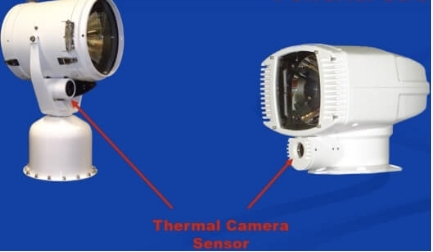
6. Ensuring Mechanical Strength and Stability
In marine environments subject searchlights to continuous vibration, shock, and strong wind forces. Weatherproof design must therefore incorporate structural features enhancing mechanical strength and stability. Reinforced housings, secure mounting systems, and vibration-resistant components ensure that the alignment and performance of such systems are maintained under dynamic conditions. Streamlined designs can also further reduce the effects of wind and water forces, which adds to overall system durability.
7. Preventing Condensation and Internal Moisture Build-Up
In fully sealed systems, condensation may form because of temperature changes. Controlling the moisture inside the enclosure is important to save the optical along with the electrical components. Some ways to do this are using desiccants, anti-fog coatings, and pressure- equalizing elements that stabilize the internal humidity. Proper design ensures that the interior configurations remain consistent without compromising the exterior seal.
8. Maintaining Optical Clarity and Protection
For marine searchlights to continue to work properly in such instances as exposure before nature due to the harsh environmental condition-leveling any system should remain clear- equally. Lenses and dust protectors are intentionally designed to withstand impact, scratching, and environmental degradation. Rangers help offer a rustic view of the landscape during fogging and water-repelling conditions. Long-term optical clarity must be assured to maintain user-affected effectiveness for searchlights intended for navigation and safety.
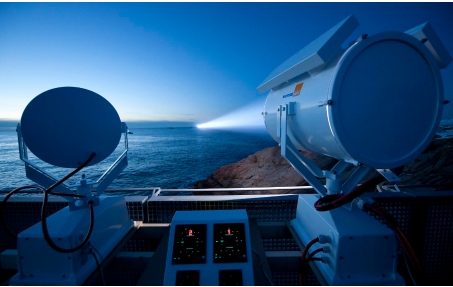
Testing and Standards in Marine Searchlights for Weatherproof Performance
Weatherproof design is only effective if it can be validated under real-world conditions. Marine searchlights undergo extensive testing to ensure they meet required performance standards.
| Test / Standard | Purpose | Testing Method | Weatherproof Evaluated | Typical Standard |
| Ingress Protection (IP) Testing | Verify resistance to water and dust intrusion | Exposure to water jets, immersion, and dust chambers | Sealing integrity, enclosure protection | IEC 60529 (IP66, IP67, IP68) |
| Salt Spray (Fog) Test | Assess corrosion resistance in marine environments | Continuous exposure to saline mist in a controlled chamber | Corrosion resistance of materials and coatings | ASTM B117, ISO 9227 |
| UV Weathering Test | Evaluate resistance to sunlight and UV radiation | Accelerated UV exposure using UV lamps | Material degradation, discoloration, cracking | ASTM G154, ISO 4892 |
| Thermal Cycling Test | Test durability under temperature fluctuations | Repeated heating and cooling cycles | Seal expansion/contraction, structural stability | IEC 60068-2 |
| High Humidity Test | Assess performance in moist environments | Exposure to high humidity (typically >90% RH) | Moisture resistance, insulation reliability | IEC 60068-2-78 |
| Water Pressure / Jet Test | Ensure resistance to strong water impact | High-pressure water jets directed at enclosure | Waterproof sealing of the searchlights under dynamic conditions | IEC 60529 (IPX6) |
| Immersion Test | Confirm protection during temporary or prolonged submersion | Submersion in water at specified depth and duration | Watertight integrity | IEC 60529 (IPX7, IPX8) |
| Vibration and Shock Test | Evaluate mechanical durability under motion | Simulated vibration and mechanical shock conditions | Structural integrity, sealing durability | IEC 60068-2-6, IEC 60068-2-27 |
| Condensation Test | Assess resistance to internal moisture buildup | Controlled temperature and humidity cycling | Anti-condensation design effectiveness | IEC 60068-2-30 |
| Pressure Equalization Test | Validate venting systems under pressure changes | Simulated altitude and temperature pressure variations | Seal stress resistance, vent performance | Manufacturer-specific / IEC guidelines |
| Electrical Insulation Test | Ensure safety and reliability of electrical components | Insulation resistance and dielectric strength tests | Moisture protection of electrical systems | IEC 60598, IEC 60065 |
| Marine Certification Testing | Confirm compliance with marine operational standards | Combined environmental and mechanical testing | Overall weatherproof and operational reliability | International Maritime Organization, Det Norske Veritas, Lloyd’s Register |
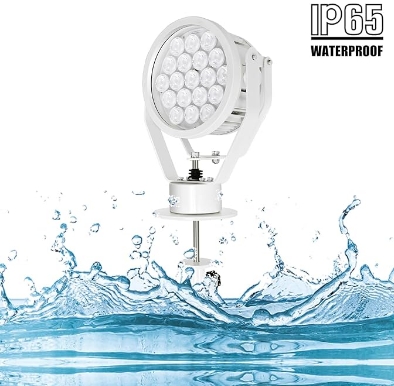
Emerging Technologies in Weatherproof Design for Marine Searchlights
Traditional weatherproofing methods, while effective, are being enhanced by emerging technologies for improving marine resistance capability, prolonging searchlight lifespan and decreasing maintenance requirements in marine searchlights
1. Advanced Materials
Material science is playing a critical part in developing weatherproof designs. Unlike previous generations, today, corrosion-resistant alloys and different composite materials are providing the maximum corrosion resistance in the saltwater environment. The structure is designed at the microstructural level so as to resist pitting, oxidation, oxidization, and even chemical attacks. In some cases, hybrid material designs, that integrate metals with high-performance polymers, are being used to ensure the best balance within strength, weight, and environmental resistance. Thus, they make searchlight housings stronger and more efficient.
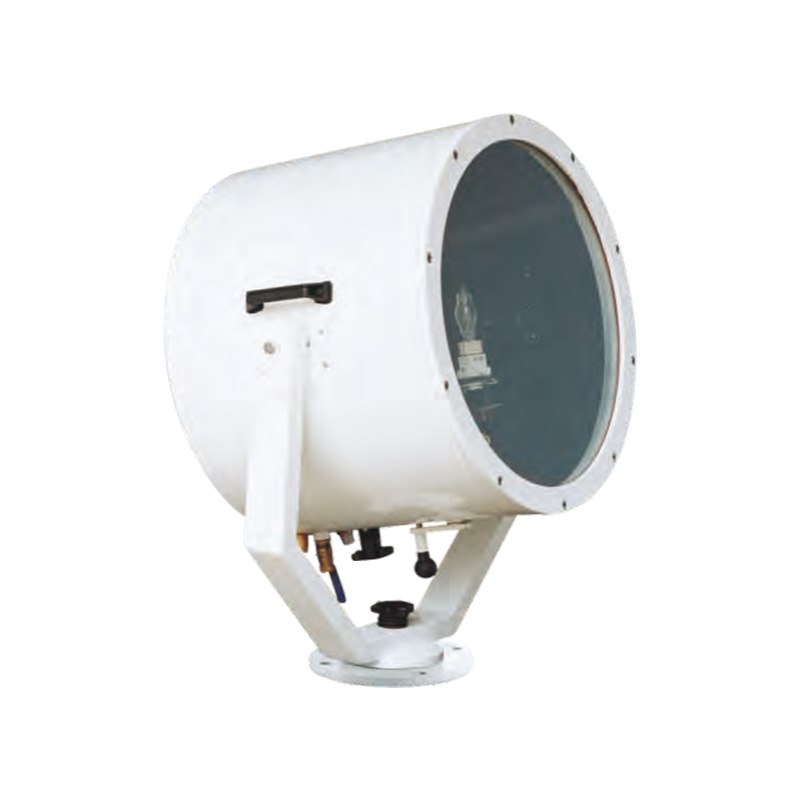
2. Nanocoatings and Hydrophobic Surface Technologies
A noteworthy development in the practice of weatherproofing has been introduced by nanotechnology-based coatings. Ultra-thin coatings alter surface material energy, waterproofing and resisting corrosion. Hydrophobic and superhydrophobic coatings create water repellency on surfaces thus allowing the droplets to bounce off the surfaces while they collect and carry away all the specific moisture content and salts. This in turn increases the life span of the materials and maintains the optical clarity of lenses, while denying water marks and debris buildup.
3. Smart Sealing Systems
Intelligent sealing arrangements are replacing traditional sealing systems across a variety of marine and offshore applications to provide condition-monitoring capabilities and forecasting of the environment inside the seal enclosure. Sensors, humidity, pressure change, and even the early detection of seal degradation, will provide a remote indication about a potential failure, rather than a sudden report. Due to the integration of a smart sealing solution, marine searchlights will continue sustaining good performance with minimal downtime and lower maintenance costs.
4. Pressure Equalization with Advanced Membrane Technology
State-of-the-art pressure equalizing systems use latest membrane techniques that allow air to pass through but block water and particulate contaminants. These breathy membranes maintain internal pressure balance during temperature changes and changes in altitude and reduces the amount of stress on the seals. Materials used in these membranes present better resistance to chemical degradation, greater durability, and potential stability over time, making them practically ideal for challenging marine environments.
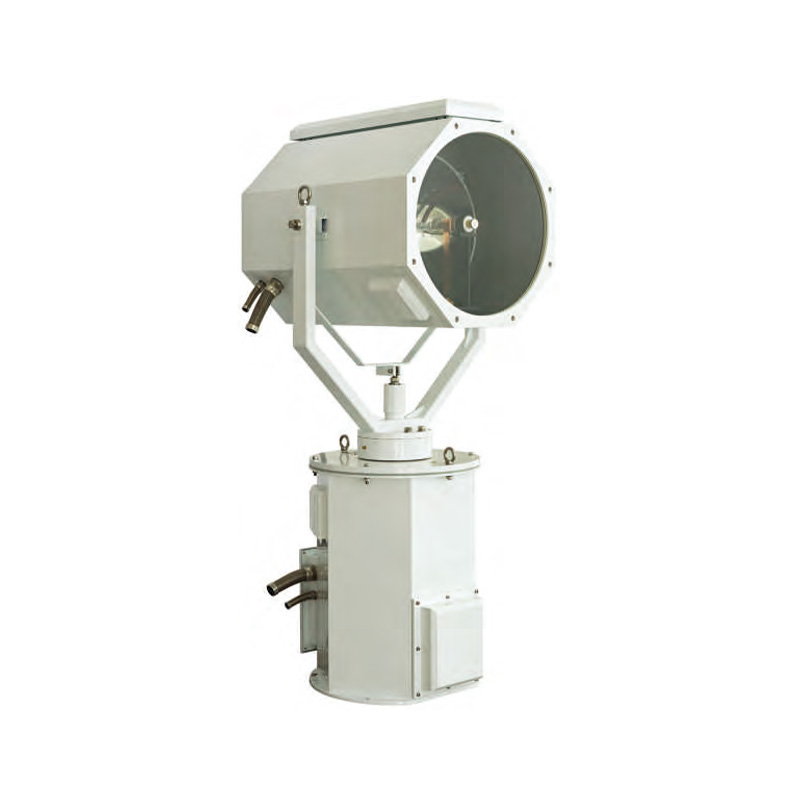
5. Enhanced Thermal Management Solutions
With the growing adoption of high-power LED searchlights, the ability to manage thermal issues has started to flow within the weatherproof design. Many new technologies focus on managing the heat dissipations of the searchlight without affecting the sealed structure. These introduce the latest advancements in heat sink geometries, the use of phase-change materials, or thermally conductive coatings. Consequently, wireless management solutions provide efficient heat sinking to maintain optimal operational temperatures and the life expectancy of their components.
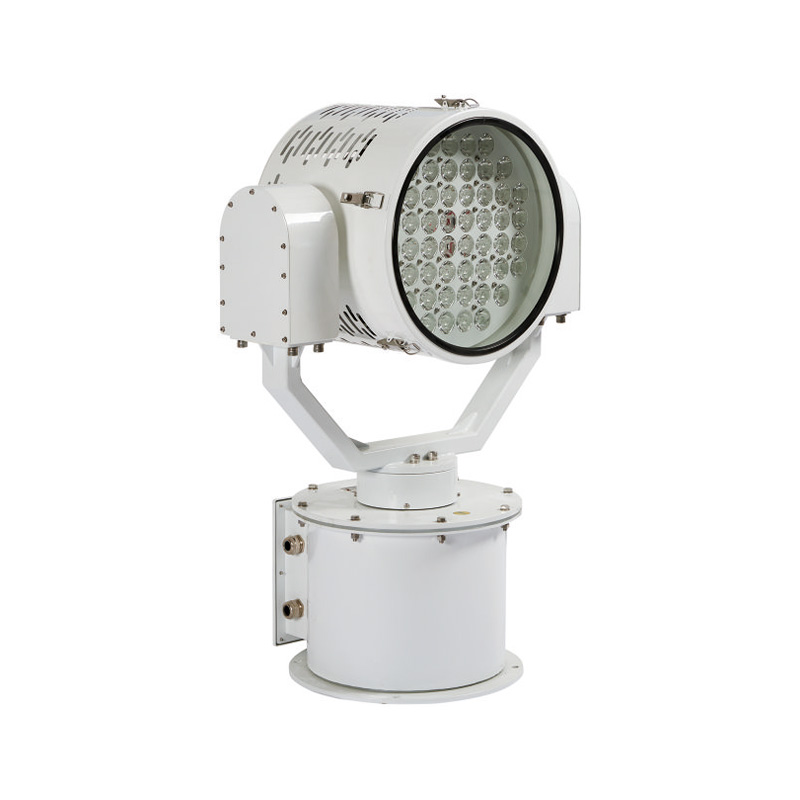
6. Self-Healing and Anti-Degradation Coatings
A significant epitome in defensive techology is the self-healing coating. These coatings can automatically repair minor scrapes and damages to the top layer that is responsible for protecting them without the help of any human effort. Together with UV and oxidation resistance, they help away support the lifetime of marine searchlights by virtue of maintaining a continuous barrier against the damages caused by the environment.
7. Advanced Optical Protection Technologies
Emerging optical technologies are enhancing both durability and performance. Films for anti-fogging, scratch-resistant layers, and advanced raw optical materials reduce the lenses’ stress from environmental factors, blocking induction of their high light commandeering. The collaboration with adaptive optics or protective shutters, whose role is to block the lens in the most severe conditions, will ensure the consistency of their performance under such harsh conditions.
Summary
Weatherproof design is an essential aspect of marine searchlights affecting their durability and safety. By integrating corrosion-resistant materials, advanced sealing technologies and effective thermal management, thorough testing in marine environments, manufacturers can confidently ensure operation of the search lights in tough marine conditions. With advancements in technology, innovative techniques, such as the application of smart monitoring and advanced coatings, could further enhance the resilience and efficiency of marine searchlights to support safer and more efficient maritime operations.