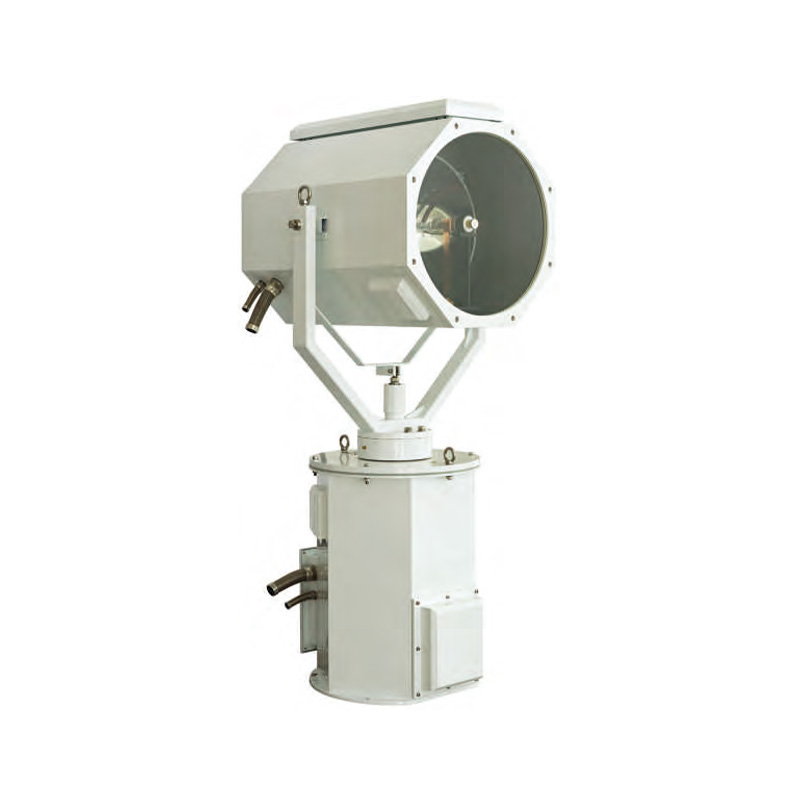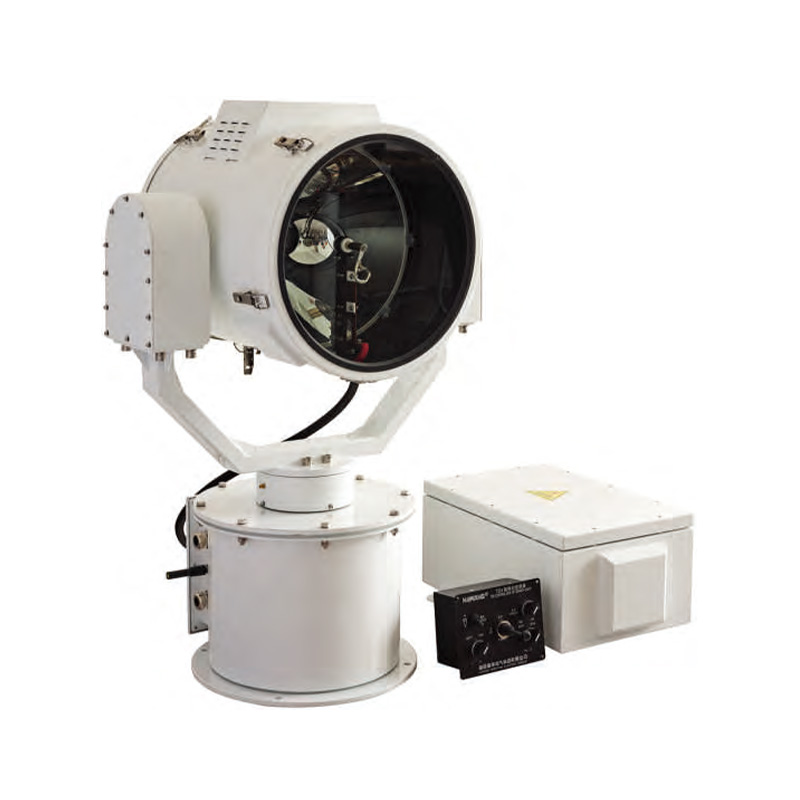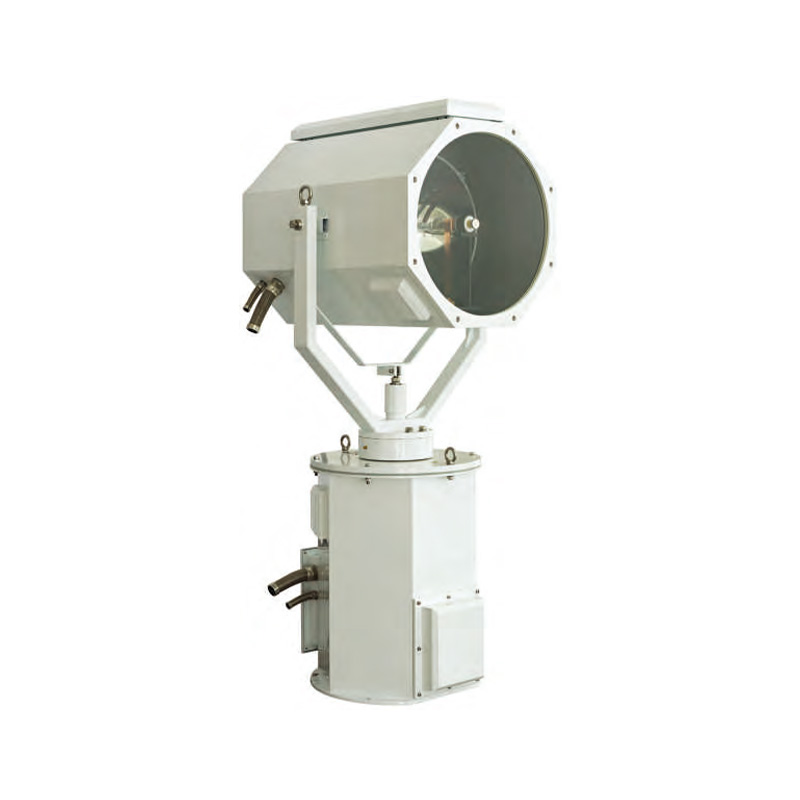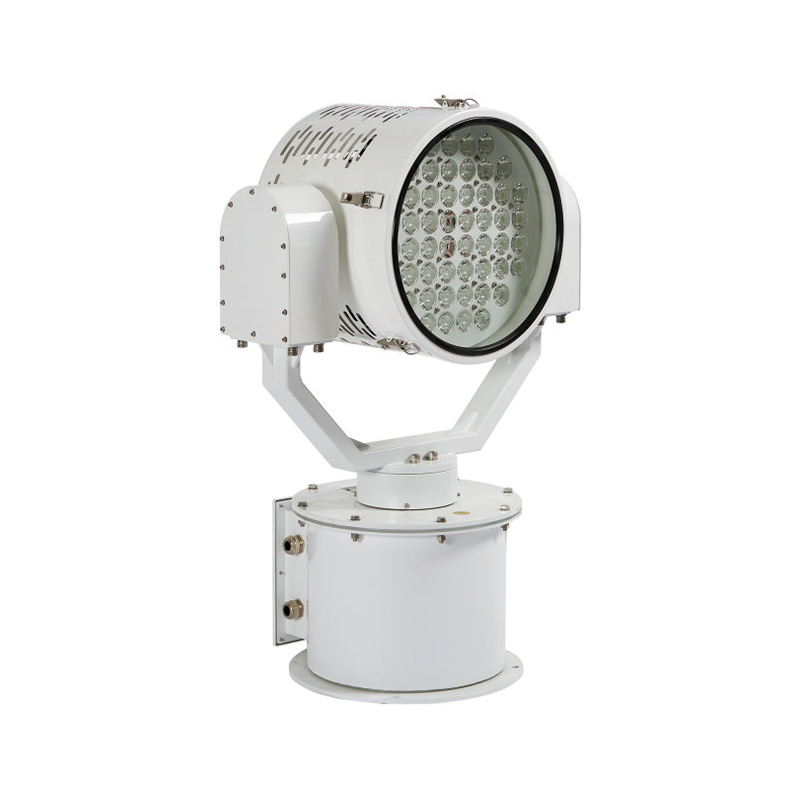
Choosing the Right Marine Searchlight for Container Ships
Due to the nature of container ships as key factors in the global trade, they traversing large water areas, including busiest sea areas and operating in conditions of restricted visibility and adverse weather conditions. Vessels also require a marine searchlight during night navigation, easy maneuvering of the vessel towards the port, berthing and during emergencies to ensure their safety and the promotion of the vessel and her operations in general.
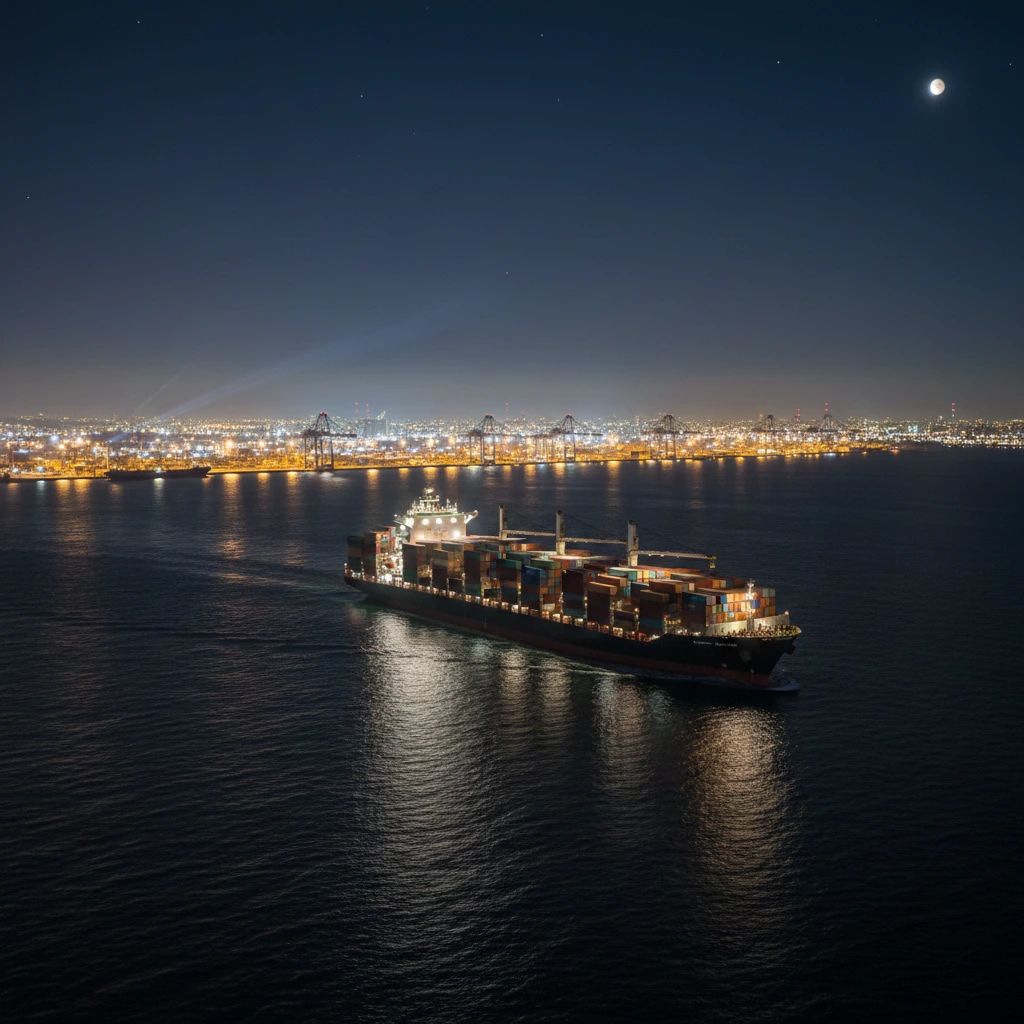
In this regard, a marine searchlight may not suit a container ship. The size of the vessel, configuration of the deck, working environment and obligatory requirements all affect the solution design.
Table of Contents
Why Marine Searchlights Are Essential on Container Ships
By sourcing effective and handy ways of transport, shippers solve all logistics and transportation challenges. For night time port operations, focusing on a more sophisticated array of container ship lighting factors becomes a necessity along with a narrowing of attributes to positive boat/barge/ship positive. On the contrary, a high power LED marine searchlight decreases the workload on the eyes while operating in the dark over long durations.
Visibility Challenges Caused by Ship Size and Deck Structure
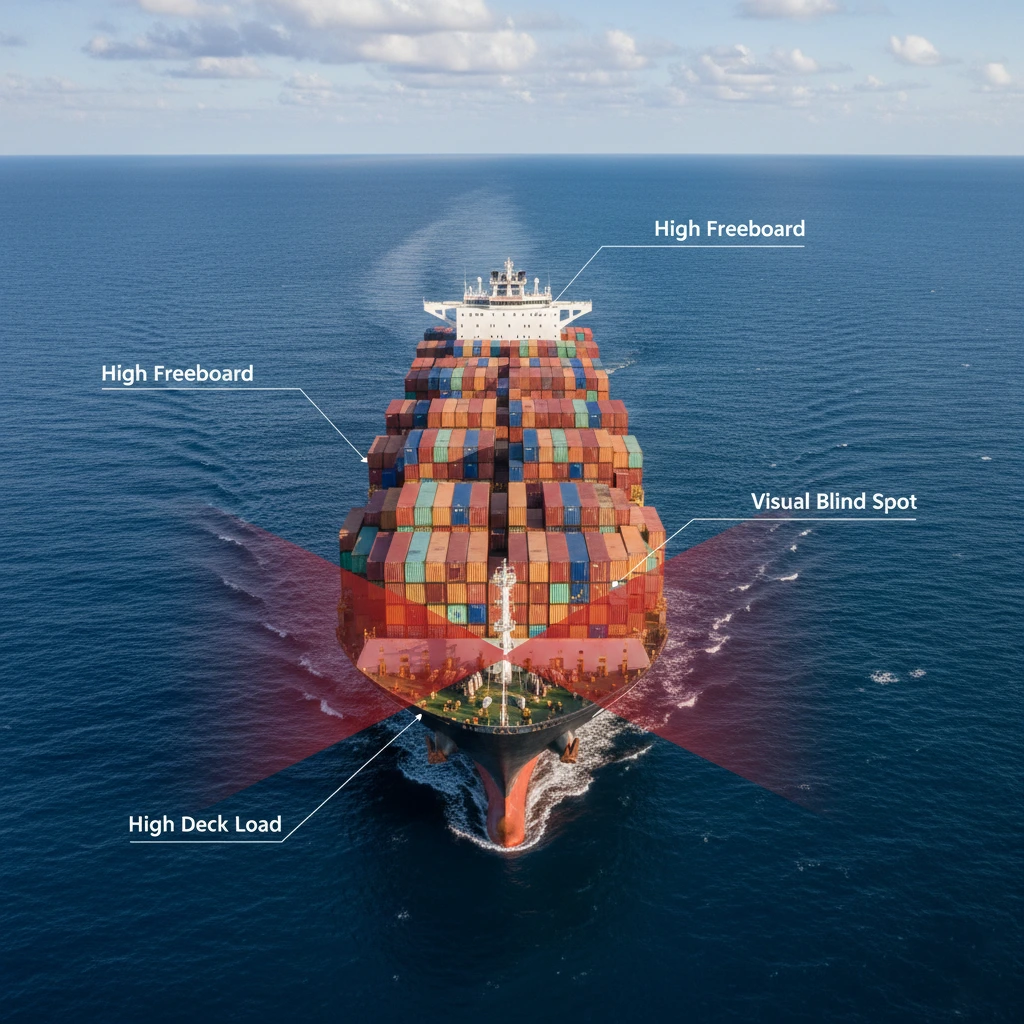
Container vessels structure is such that configures high freeboard along with elevated bridge and decks most of the time blocked by containers stacked up. Such enclosed spaces tend to reduce the natural one’s visual field in particular in close proximity maneuvers. Brighter marine searchlights are able to enhance the visibility of specific targets, channels, obstacles and other crafts involving these lenses.
Supporting Night Navigation and Port Operations
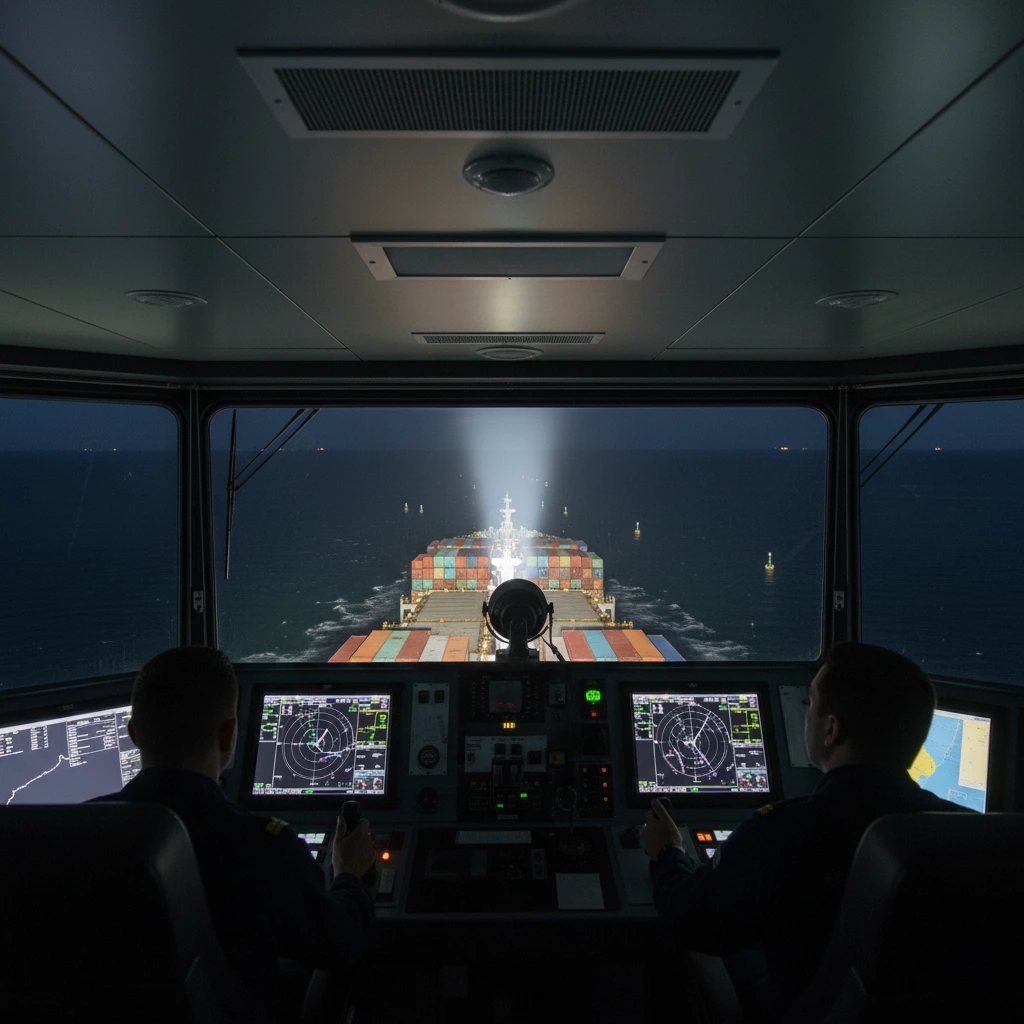
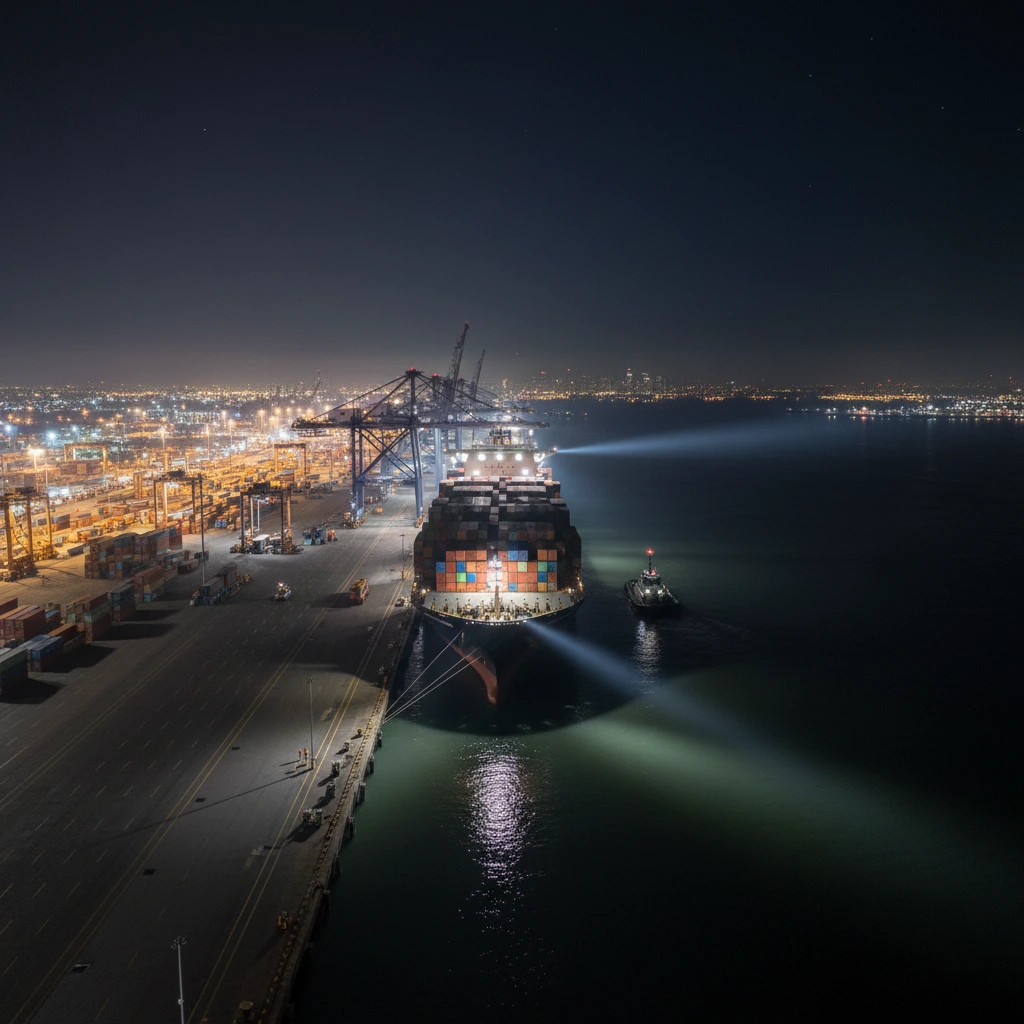
Container ships working under tight schedules have high chances of transiting congested ports and other navigable waters during the night. Searchlights easily illuminate the berths, channel sides, adjoining vessels among many other features making it easier for bridge teams to navigate safely or in better ways in such situations.
Enhancing Safety During Maneuvering and Emergency Tasks
When this type of light is used to embark on similar activities such as docking, mooring and even during inspections or rescuing, it provides effective and directional light exactly where it is needed. This aids in achieving progress with less errors, cuts down on crew exposure to danger and greatly enhances the ability to react in case of emergency.
Key Factors to Consider When Selecting a Marine Searchlight
Beam Distance and Light Intensity
Ship containers require a long range of searchlights with even illumination. A searchlight of such characteristics helps in making the vessels maneuverable safely and accurately. The aspect of beam distance and intensity of the light on the other hand are some of the performance characteristics that should be assessed any time together because they are important to visibility, operational aspect and the level of satisfaction of the crew particularly during night time operations.
| Parameter | Recommended Range / Feature | Operational Purpose | Risk if Underspecified | Selection Insight |
| Beam Distance | 800–2000 m | Aids visibility in large rigs’ approaches navigation through narrow waters as well as early diagnosis of obstructions | The lack of exercise and reaction time; a hazard is detected. | The choice for beam distance can be narrowed down by the size of the ship, its bridge height and the kind of routes that will be navigated most of the times. |
| Luminous Intensity | High candela output | Assists in better identification of objectives in mist, downpours, haziness as well as in low contrast conditions | When the weather conditions are poor, the visibility is low and there is always a possibility of crashing into an obstacle | The level of intensity needs to be suited with the beam focus and not enhanced without a course. |
| Beam Angle Control | Narrow, focused beam | Focuses light on shipping channels while minimizing false lighting | Glare, containers reflections, and the weariness of the eyes of the crew | Operational comfort is achieved through adjustable or optimized angles of the beam. |
| Light Distribution Uniformity | Even central hotspot with controlled spill | Gives the target light well without shadows | Exposed to bright sunlight making some areas of the scenery invisible | A uniform distribution results in better depth perception and judgment of the distances. |
| Intensity–Focus Balance | Optimized optical design | It replaces bare illumination with meaningful incident radiation | Inefficient use of energy and low action area | Optical efficiency takes precedence over mere lumen ratings. |
In real-world container ship operations, searchlights that combine adequate beam distance with precise optical control offer superior performance, delivering clear, usable visibility without introducing glare or unnecessary energy consumption.
Light Source and Technology
The choice of light source affects efficiency, maintenance, and operational lifespan.
| Technology | Feature / Specification | Operational Purpose | Risk if Underspecified | Selection Insight |
| LED | Long lifespan >50,000 h, instant full brightness | Minimizes Repairs and Power Use | Often, bulbs have to be replaced, which results in a loss in productivity | Preferred for continuous operations and retrofit projects |
| Halogen/Xenon | Traditional bulbs, high initial brightness | Sufficient Temporary Light | More power consumed over a shorter period | Consider only if LED is not feasible or for legacy systems |
| Color Temperature | 5000–6000K (cool white) | Improved Day-Game in terms of Ambient Light | Weak object identification, straining of eyes | Neutral-cool temperature improves target detection in fog or haze |
Modern LED searchlights provide long-term operational reliability, energy efficiency, and reduced maintenance, making them ideal for container ship use.
Durability and Environmental Resistance
Container ship searchlights must endure harsh marine conditions and continuous vibration.
| Parameter | Specification / Feature | Operational Purpose | Risk if Underspecified | Selection Insight |
| Housing Material | Marine-grade aluminum or stainless steel | Corrosion resistance | Rust, structural failure | Make sure to use high-quality materials that are resistant to saltwater |
| Waterproof Rating | IP66–IP67 | Protection against water ingress | Short circuits, electrical failure | Important for sea application |
| Vibration & Shock Resistance | Built to withstand ship motion | Maintains optical alignment | Misalignment, reduced beam accuracy | Important to ensure long term operational stability |
| Surface Treatment | Anti-corrosion coating | Prevents metal degradation | Reduced lifespan | Coating integrity is indicated in terms of salt spray durability – which is not ignored |
Control and Operational Flexibility
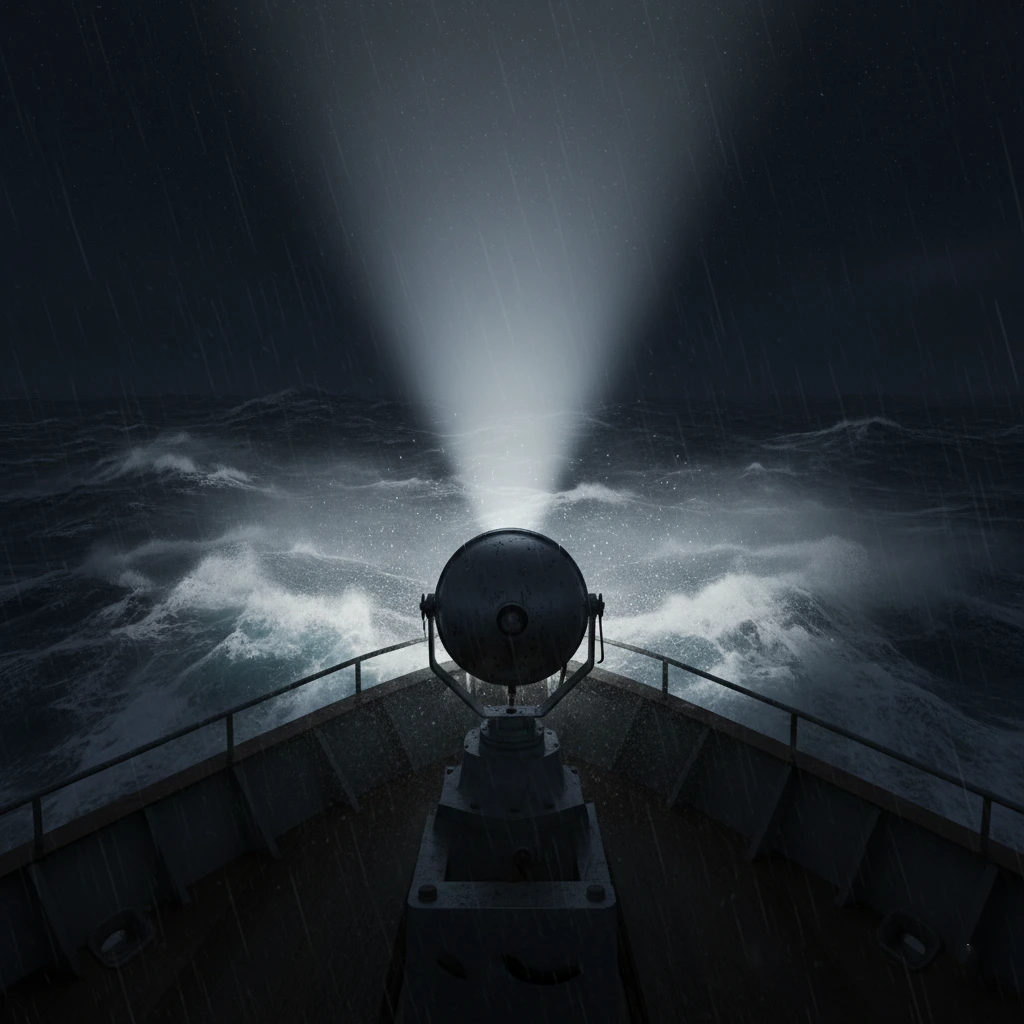
Efficient operation requires flexible and precise control from the bridge.
| Feature | Specification / Capability | Operational Purpose | Risk if Underspecified | Selection Insight |
| Remote Control | From bridge, motorized pan & tilt | Facilitates accurate aiming without going on the deck | Crew exposure to hazards, slower response | Crucial for ships with substantial height above waterline |
| Manual Override | Backup control | Can function even without power supply | Inability to adjust during emergencies | Ensures continued operation in case of a failure |
| Smooth Motion | Precision motor or servo | Provides accuracy in lighting zones on way | Overshoot, misalignment | Necessary for confined areas docking or rescue operations |
| Multi-Mode Operation | Spot and flood modes | Able to diffuse focusing beam to a different level of one’s needs | Inflexibility for varying operational needs | Allows for better execution of tasks onboard, maintenance of the vessel, searching or rescue operations |
Compliance with Marine Standards
Meeting marine standards ensures reliability, safety, and regulatory compliance.
| Standard | Feature / Requirement | Operational Purpose | Risk if Underspecified | Selection Insight |
| IEC Certification | Electrical safety and performance | Select certified products to ensure compliance | Select certified products to ensure compliance | Select certified products to ensure compliance |
| Classification Society | DNV, ABS, CCS, BV approvals | Essential for commercial operations and audits | Essential for commercial operations and audits | Essential for commercial operations and audits |
| SOLAS Compliance | Safety of Life at Sea requirements | Critical for night-time navigation and port operations | Critical for night-time navigation and port operations | Critical for night-time navigation and port operations |
Conclusion
When discussing marine searchlight applications for container vessels, the brightest alternative is not necessarily the best for choosing specifics. There shall also be references to factors such as the distance of the beam, opposed to how far the beam will go, how strong it is, whether there are provisions to control it and the marine regulations applicable to it.
LED marine searchlight is a combination of modern LED technology and proper marine design, if selected carefully, and constructed properly, can increase the visibility of a vessel, the safety of operations and the operation life of the equipment. For managers of container vessels, choosing LED marine searchlight is therefore, both effective and abortable in the short and in the long run.