
Remote-Controlled vs. Manual Marine Searchlights: How to Make a Choice
Marine searchlights are lighting equipment installed on ships, boats, offshore platforms, and rescue craft. They help improve visibility during nighttime navigation, emergency work, and offshore tasks. With advances in marine technology, operators now have two common choices of marine searchlights. One is a remote-controlled type. The other is a manual type. Both throw strong light, but they work in different ways. They also vary in flexibility, safety, price, and where each one fits best.

Table of Contents
Understanding Remote-controlled Marine Searchlights
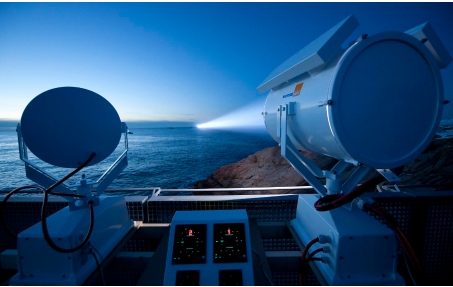
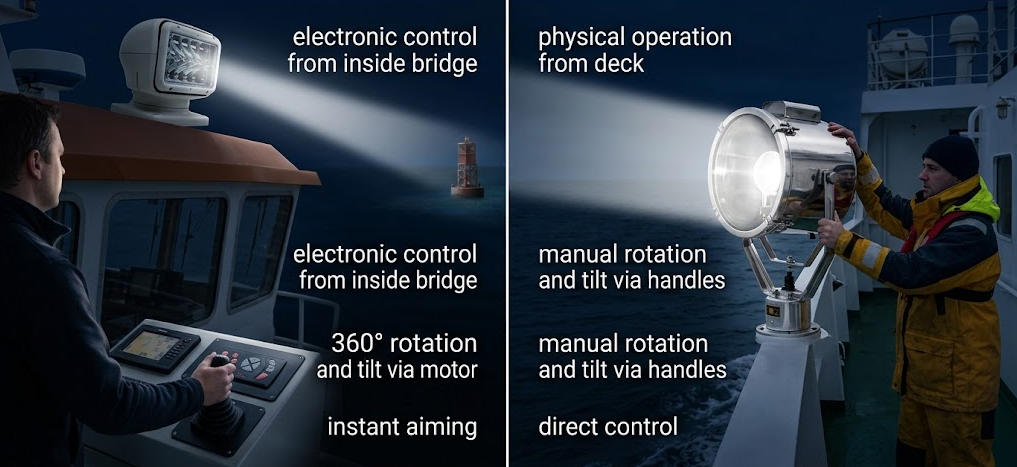
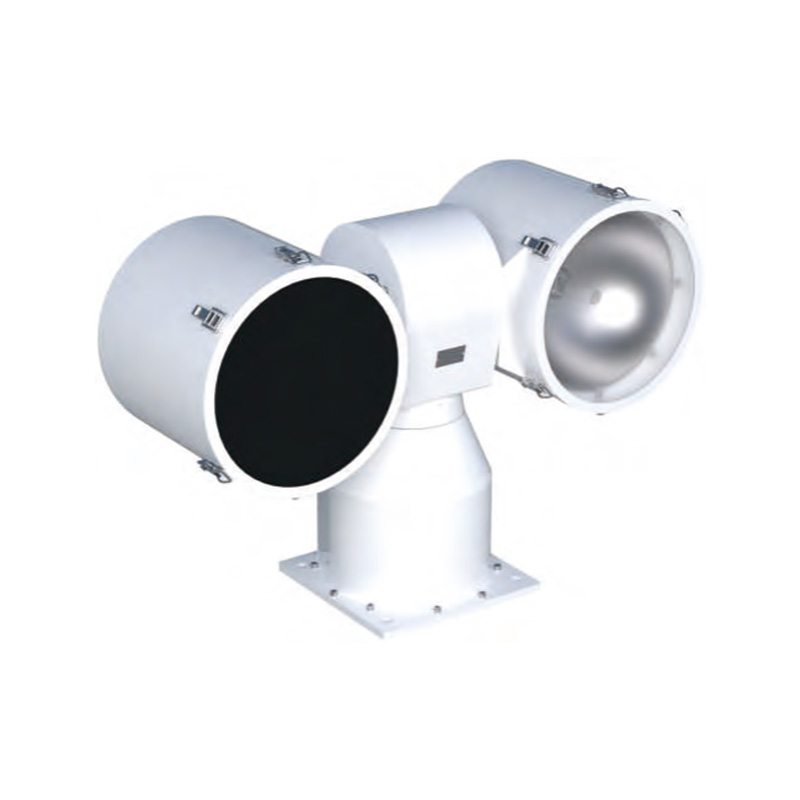
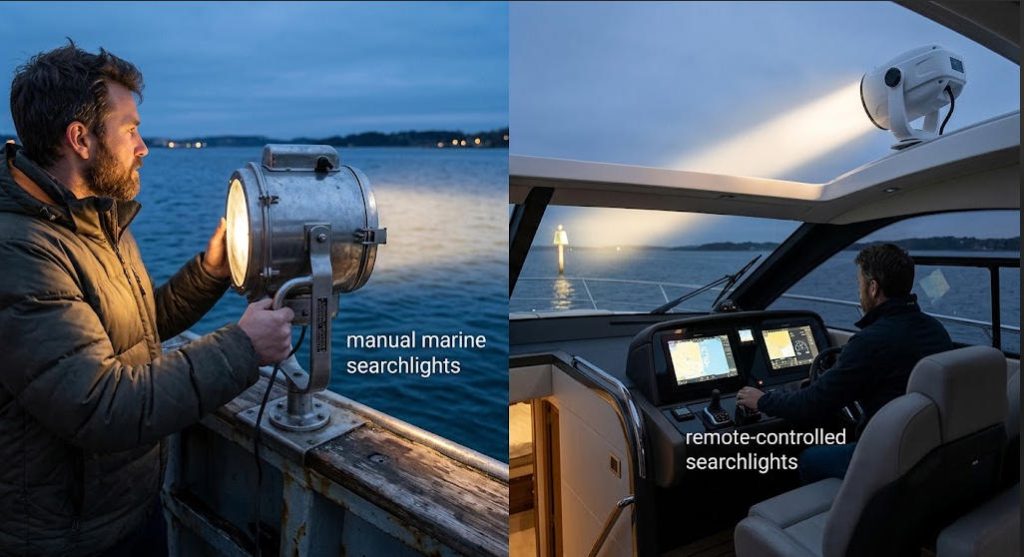
Remote-controlled marine searchlights let the crew aim and manage the unit from a distance. Usually, the system uses electric motors to move the head. Control is done through a panel, joystick, wireless controller, or a bridge control setup.
These searchlights can turn in both horizontal and vertical directions. They can also change the beam angle. In many setups, the operator can switch light modes without walking out to the fixture.
Advantages
- Improved Safety: The crew can aim the light from the bridge or control room. This avoids exposed deck work in rough weather.
- More Exact Aiming: Electric rotation helps place the beam where it is needed for travel support, checks, or rescue needs.
- Quicker Adjustment: Fast direction changes can help crews find a target sooner during urgent events.
- Better Light Handling: Remote use can cut down on hands-on effort and make lighting control easier.
- Better Fit with Vessel Controls: Some units can join newer ship control systems for smoother operation
Limitations
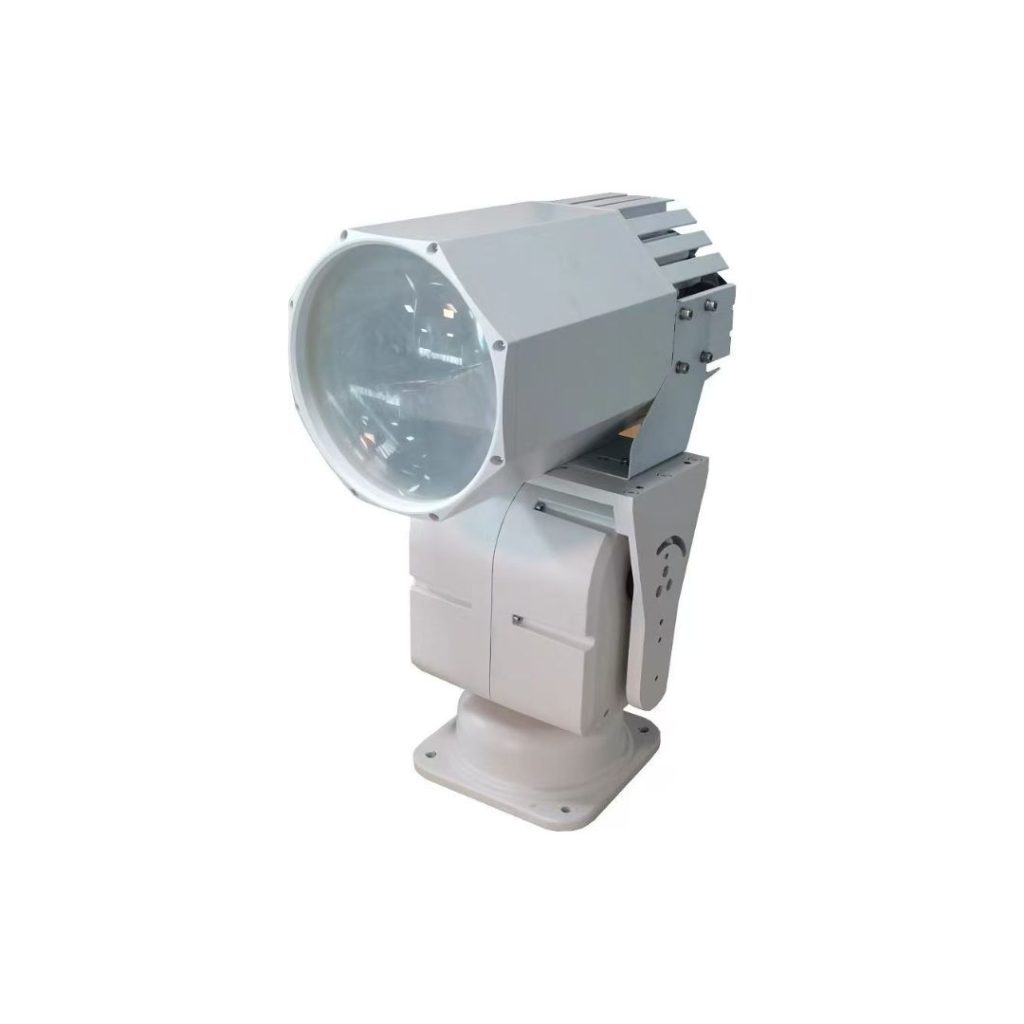
- Higher Cost: Remote units add motors, control gear, and electronics. That raises the purchase and setup cost.
- More Maintenance: Electrical and moving parts need routine checks. Corrosion protection is also required.
- Power Dependence: If the ship power drops, the searchlight can be limited or unable to run.
- Complex Installation: Installation needs correct wiring, mounting, and system setup.
Understanding Manual Marine Searchlights
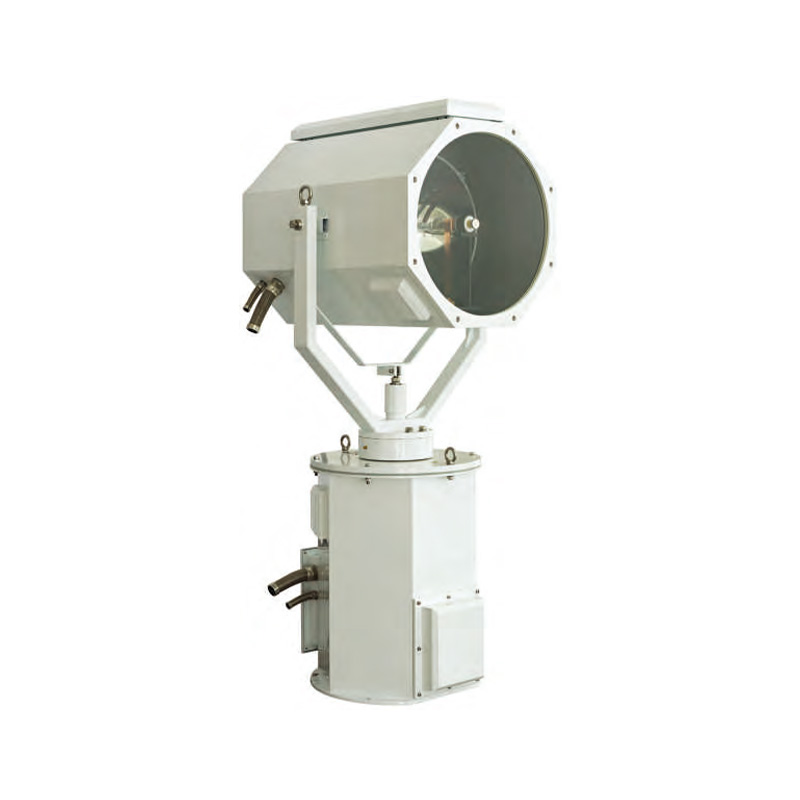
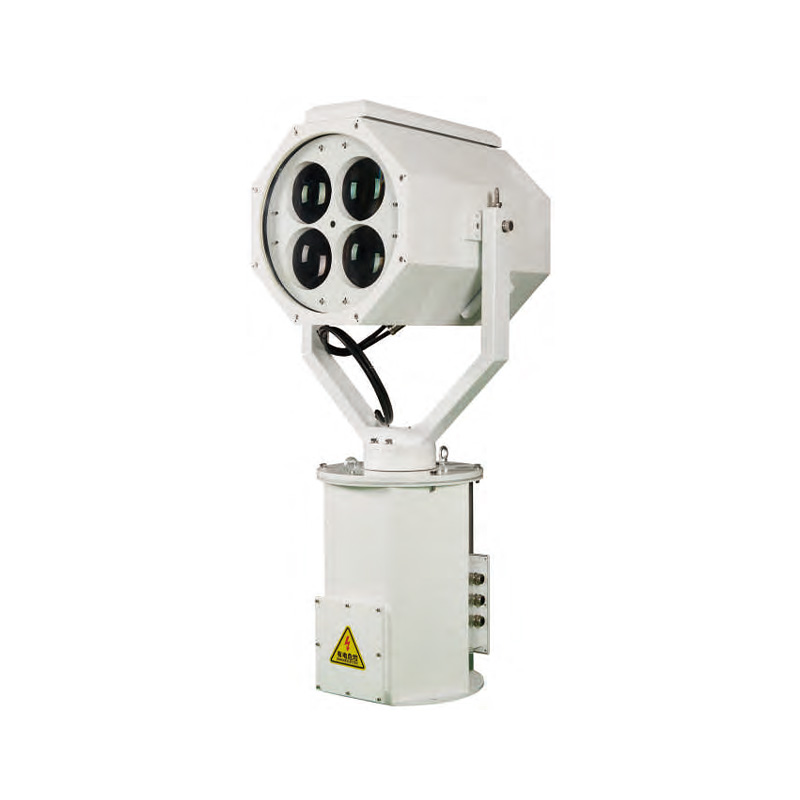
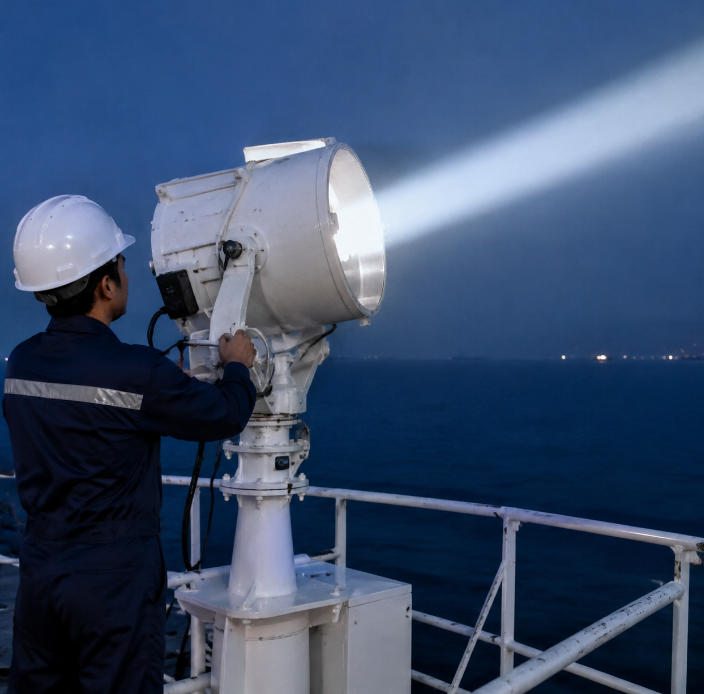
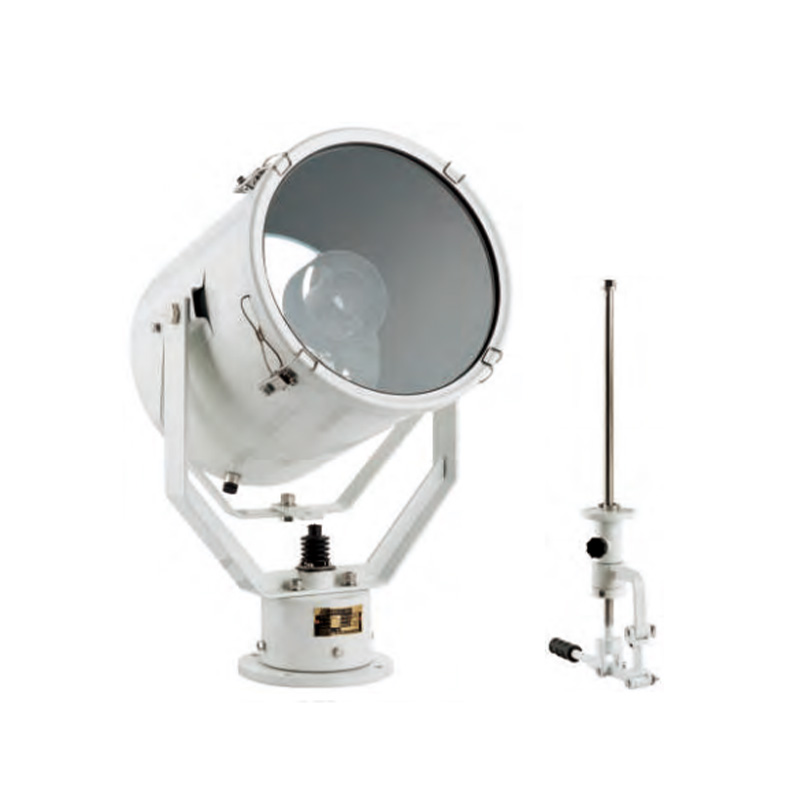
Manual marine searchlights are traditional, simpler designs. The operator must stand at the unit and change the aim by hand. Typically, the crew uses handles, knobs, or a mechanical adjustment lever to move the head up and down and left and right.
Advantages
- Lower Cost: These models are usually cheaper. They do not need motors, remote controls, or heavy electronic parts.
- Easy Use: The design is direct, so daily handling is usually simple.
- Steady Reliability: With fewer electronics, manual models are less likely to suffer control related failures.
- Easy Maintenance: The mechanical parts are simpler to check, fix, and swap out if something fails.
- Works well on small boats: They can give useful illumination for vessels that only need basic navigation and clear sight.
Limitations
- Limited Convenience: To aim or fine-tune the light, the operator has to go to the unit and handle it by hand.
- Reduced Safety: In rough water, poor weather, or risky work areas, manual use is harder and more stressful.
- Slower Adjustment: Turning the beam usually takes more time than remote systems.
- Less Precision: The beam direction depends on what the operator can do and how much experience they have.
- Limited Automation: These manual units do not fit into newer ship control setups as easily.
Comparison Between Remote-Controlled and Manual Marine Searchlights
| Comparison Factor | Remote-controlled Searchlights | Manual Searchlights |
| Operation Method | Controlled remotely through joysticks, switches, or onboard systems | Adjusted manually by turning handles or mechanical controls |
| User Convenience | High convenience; operators can control the light from a safe location | Requires physical access to adjust the light |
| Safety Level | Safer, especially in rough weather or hazardous environments | Lower safety due to direct manual operation |
| Beam Control Accuracy | Provides precise and smooth positioning | Depends on operator skills and manual adjustment |
| Response Speed | Quickly changes direction for rescue and navigation tasks | Slower adjustment process |
| Installation Cost | Higher due to motors, controllers, and electrical systems | Lower because of simple mechanical design |
| Maintenance Requirements | Requires maintenance of electronic and motor components | Easier maintenance with fewer components |
| Reliability | Reliable when properly maintained but depends on electrical systems | Highly reliable due to simple structure |
| Automation Capability | Can integrate with navigation and vessel control systems | Limited automation features |
| Power Requirement | Requires electrical power for movement and control | Mainly depends on the light power source |
| Suitable Applications | Commercial ships, offshore vessels, rescue boats, naval vessels, large workboats | Fishing boats, yachts, small vessels, basic marine operations |
| Flexibility | Offers advanced functions such as remote positioning and automatic control | Provides basic lighting adjustment only |
Key Factors to Consider for Choosing Between Remote-controlled and Manual Searchlights
Choosing between a remote-controlled and a manual searchlight is not a one-size decision. You need to look at how the vessel is run, what kind of lighting is required, and how long the unit will be used.
1. Vessel Type and Operational Requirements
Vessel type matters a lot for marine searchlights. Boat size, where it works, and day to day tasks can change the lighting needs.
Bigger commercial ships, offshore support vessels, coast guard boats, and rescue craft often need lights that can react fast. Remote-controlled searchlights are usually the better match here. Operators can point the beam from the bridge or control room. That way they do not have to go onto exposed decks just to steer the light.
For smaller craft like fishing boats, yachts, and recreational vessels, manual units can still work well. Those boats often have simpler navigation duties. They may not need remote features or constant repositioning.
2. Safety and Working Environment
Safety is a key point when selecting the marine searchlight. Sea conditions can turn quickly. Wind can rise, waves can get rough, rain can be heavy, and visibility can drop.
Remote-controlled marine searchlights help keep the crew safer. The operator can manage the light from a safer spot. This lowers the chance that staff must step outside onto open areas during bad weather.
Manual searchlights call for hands-on adjustment. In rough conditions, that can add risk. For offshore work or emergency duty, remote systems can reduce how much time people spend out in the elements.
3. Control Accuracy and Operational Flexibility
Beam direction and light output are also part of the choice.
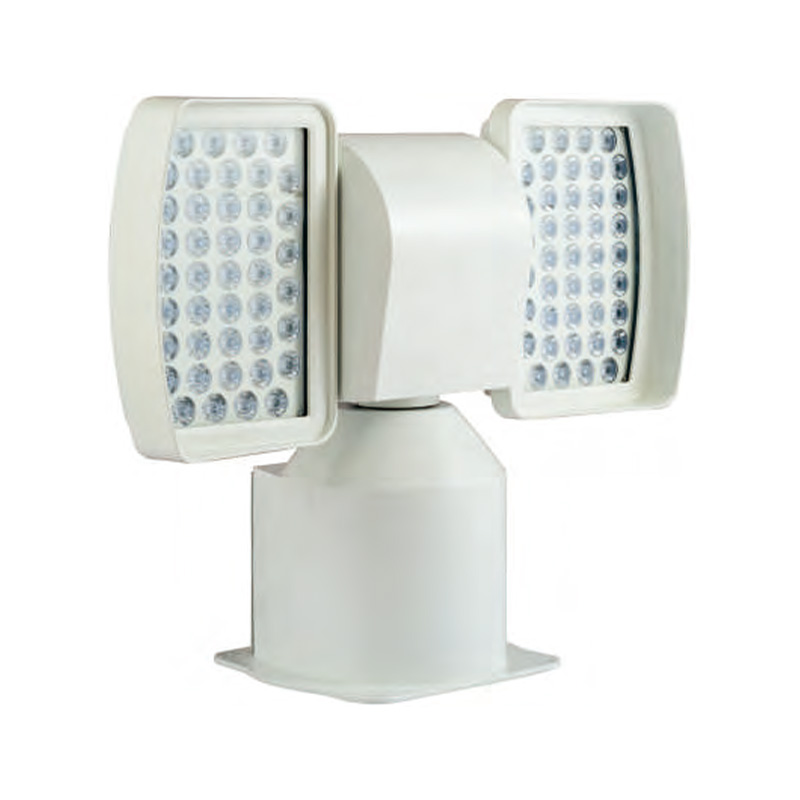
Remote-controlled searchlights use electric drives and control electronics. This supports steady, accurate aiming. Operators can change the beam position quickly. They can track targets, scan nearby areas, or assist rescue tasks. Some newer models also add features like auto positioning, brightness control, and links to onboard control systems.
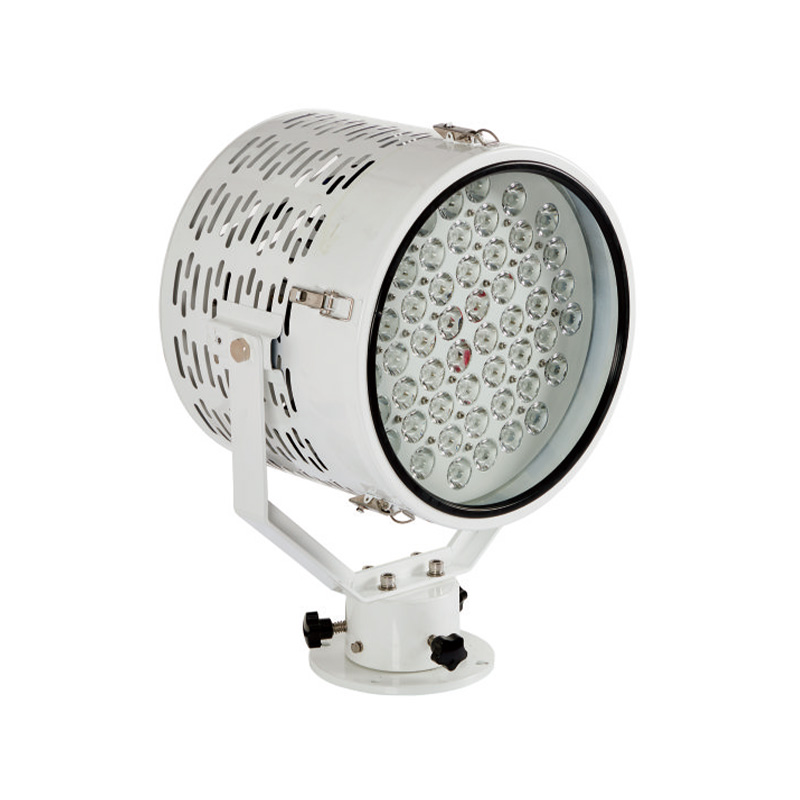
Manual searchlights depend on physical aiming. How well the beam lands depends on the person adjusting it. They can still provide dependable illumination, but they may fall short when the job demands frequent, exact beam changes.
4. Installation and Maintenance Requirements
Before you buy, consider how the unit will be installed and serviced.
Manual searchlights use a straightforward mechanical design. They have fewer parts, so setup is usually quicker. Inspection is also simpler. When something breaks, repair work can be easier too. These units do not rely as much on ship electrical systems. That matters when a vessel sails in places where outside technical help is not easy to reach.
Remote-controlled LED searchlights use more than the light head. They need motors, control parts, cabling, and electronic control units. Because of that, installation takes more time and effort. They also need routine upkeep to keep movement smooth and function steady. In a sea setting, corrosion and damp air can damage electronics. Vibration can also wear components down faster, so added protection is important.
5. Cost and Long-Term Investment
Cost is a key item for many buyers. Manual marine searchlights often cost less at the start. This is mainly because they do not need motor drives or advanced control systems.
Remote-controlled searchlights tend to cost more upfront. The price reflects extra tech and added functions. Still, the benefits can pay back over time. This can mean safer handling, easier use, and better efficiency. For professional work, that long run value can be noticeable.
If a vessel runs often at night, or if it must respond fast, a remote system may cut down on work by crew. It can also help day to day operation feel more efficient.
6. Power Supply and System Compatibility
The ship’s current electrical setup should guide your choice. It is not only about having power, but also about whether the system can handle the load.
Remote-controlled models need steady power. They use that power for motor movement and for control functions. They fit best on vessels with newer electrical layouts and automation tools.
Manual searchlights draw less power. They are often easier to use on smaller vessels. These ships may have basic wiring and limited control gear. The simpler layout also helps when tight integration is not required.
7. Future Upgrade and Automation Needs
Marine technology keeps changing, and more boats adopt automation. Many upgrades now aim for smart control and linked systems. Remote-controlled searchlights can fit better with that direction. They may work with navigation gear, monitoring setups, and other intelligent ship platforms.
Manual searchlights can still work well for basic needs. But they may not link well with new automated systems. Owners who plan upgrades later should check if their current lighting equipment can support future development.
Summary
- Remote-controlled searchlights provide superior convenience, accuracy, and safety, making them suitable for commercial vessels, offshore operations, and emergency applications.
- Manual searchlights offer simplicity, reliability, and affordability, making them a practical choice for smaller boats and basic lighting needs.
Final Thoughts
Both types have clear strengths. Manual searchlights are often a reliable and economical choice for small boats and simple applications. Remote-controlled searchlights can offer better safety, finer aiming, and smoother operation for professional marine use.
When operators look at operational conditions and future requirements, they can select the right marine searchlight. That choice should balance between performance, dependable use and cost efficiency.
