
Fixed vs Rotating Marine Searchlights: 7 Key Differences
Marine searchlights are lighting units used for boats and other sea work. They are placed on ships, offshore platforms, coast guard boats, and similar sites. Their goal is to improve visibility during nighttime navigation, search and rescue operations, and emergency situations. Different models of marine searchlights exist. Two typical options are fixed and rotating marine searchlights. Each one fits its own kind of use. Knowing the gap between them can help an operator select the suitable searchlight system that matches the vessel, the work site, and the level of visibility needed.
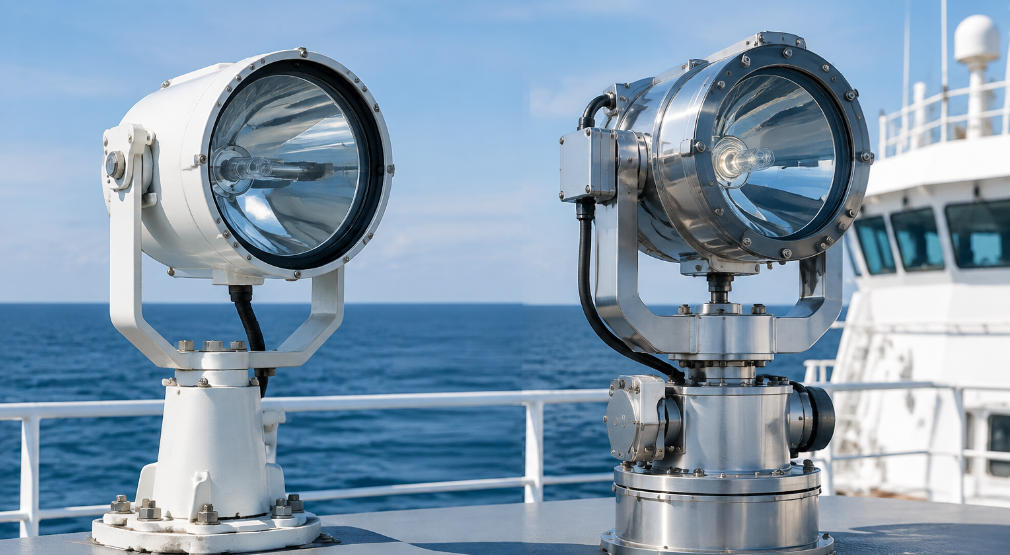
Table of Contents
Overview of Fixed Marine Searchlights
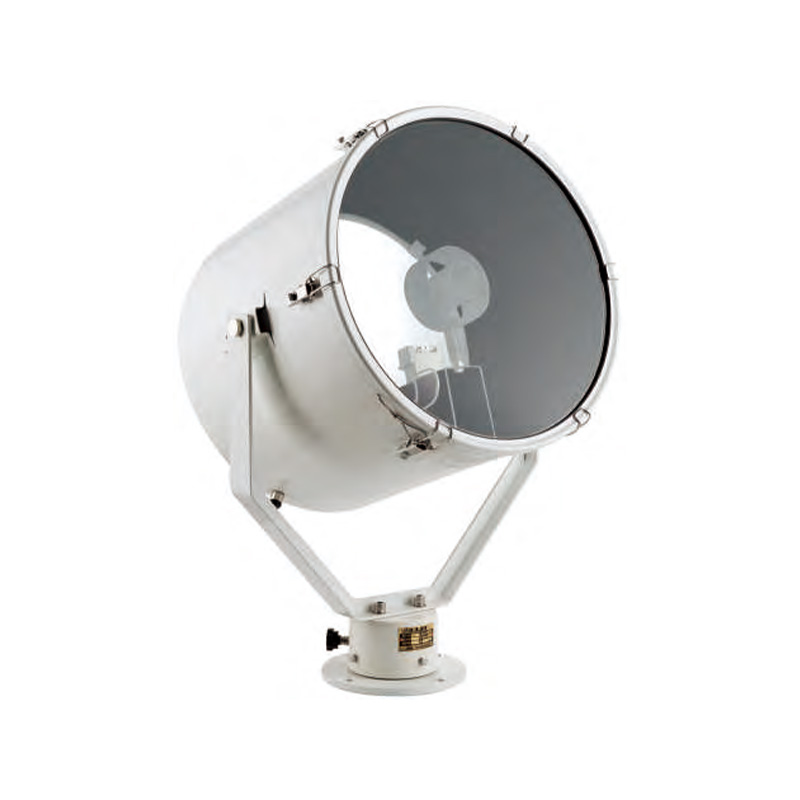
Fixed marine searchlights hold a beam in one direction. After mounting, the light does not shift on its own. Any change needs a person to adjust it by hand. You often see these on ship bridges, on deck areas, and on offshore structures. They fit when one area must stay lit for long periods.
A common upside is their simple function. Since parts do not move much, there is usually less upkeep. They also tend to last longer. The body stays steady, so they can keep working in harsh sea conditions. That includes wind, saltwater spray, and constant shaking.
Fixed marine searchlights are used for tasks like lighting loading zones. They can also help with checks of gear, support deck work, and give forward visibility for vessels that follow set routes.
Overview of Rotating Marine Searchlights
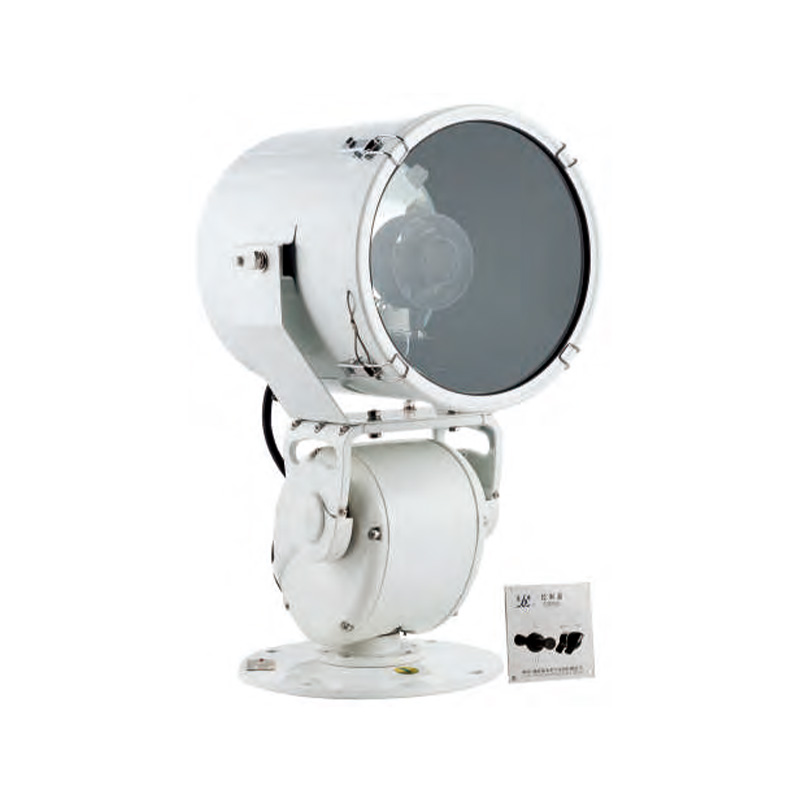
Rotating marine searchlights move the beam. They use a rotation unit, either mechanical or electric. The beam can sweep across the horizon or tilt up and down. In some setups, it can reach more than one direction. The operator can set the light area from a distance, or use onboard controls. This makes them a good fit when a wide search area matters.
You often find them on rescue craft, patrol boats, offshore support vessels, and bigger merchant ships. Because they scan a wider area, they can help find hazards and track ships that need help. They also support action during emergency events.
Many rotating models have remote control feature and LED parts. Some rotating systems add include automatic searchlights for better routine use and safer operation.
Key Differences Between Fixed and Rotating Marine Searchlights
1. Design and Operating Principle
The main difference between fixed and rotating marine searchlights comes from structure and motion. That is the core reason the performance looks different.
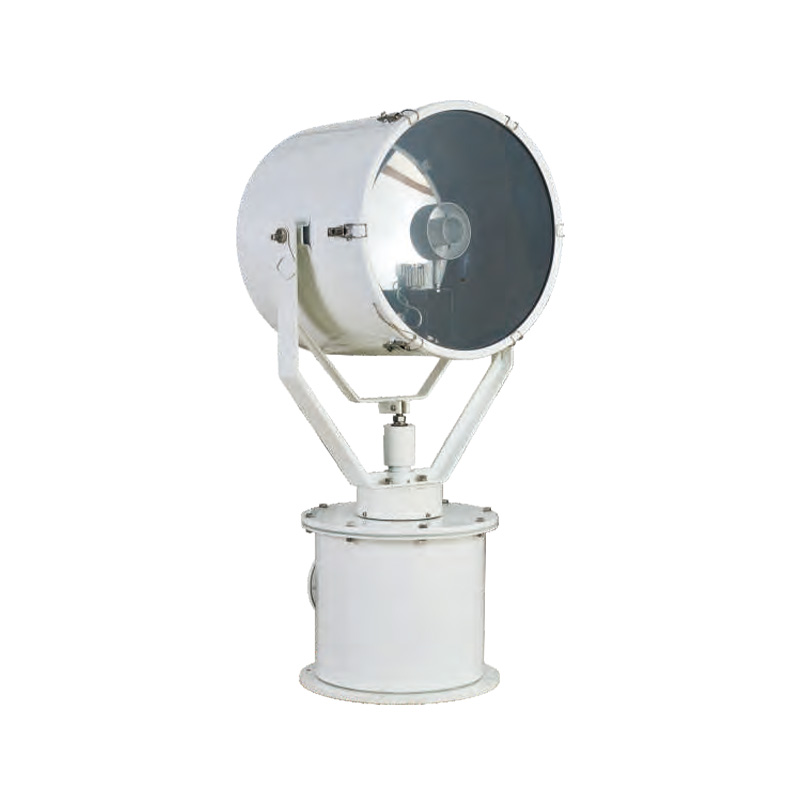
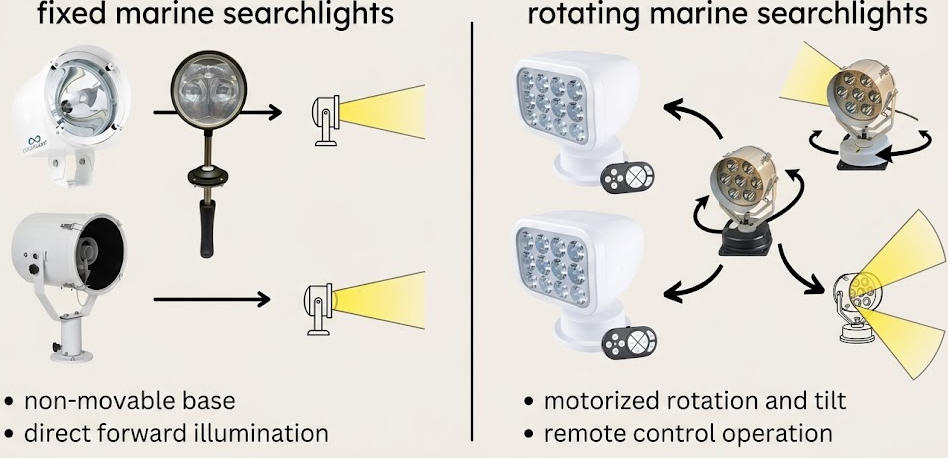
Fixed marine searchlights stay put once they are mounted. They aim toward one known area. The casing and the optics do not change position during use. This is meant for settings where the same spot must stay lit. Examples include lighting a deck panel, a cargo zone, or an offshore work area.
Rotating marine search lights use mechanical parts to move the lamp and reflector. The unit can swing left and right, tilt up and down, or move across more than one axis. With this setup, the crew can set the beam angle so the light lands where it is needed. They do not have to move the whole device to change what is lit. Because of that, rotating searchlights fit tasks that need wide coverage and quick scanning.
2. Beam Direction and Coverage Range
Beam control of the searchlights is where fixed and rotating options most clearly differ.
Fixed searchlights keep the beam aimed in one direction. During use, the light stays steady, so the illumination is stable and tight. This works well when the target area is known in advance and stays put. For instance, ships can keep a fixed light pointed toward the bow while traveling, or they can use it for steady lighting during regular work on board.
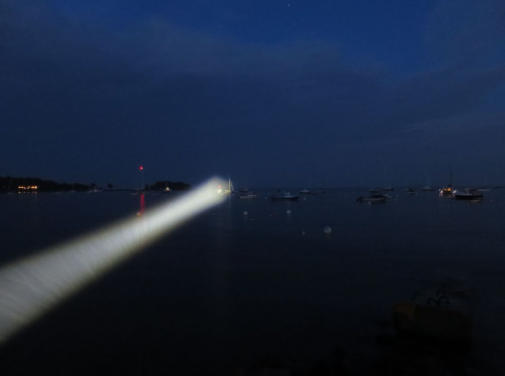
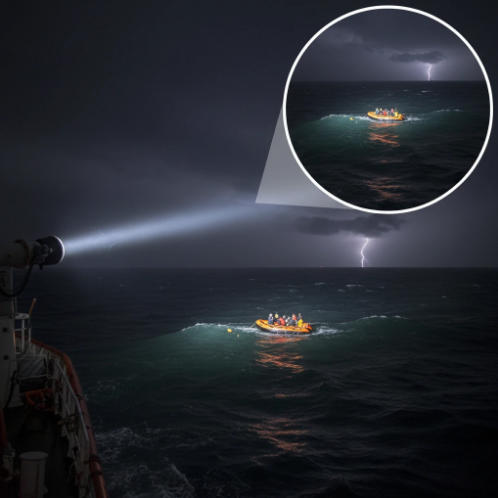
Rotating searchlights cover more ground. They can sweep the beam across different directions, which lets the crew scan open water and check for hazards. With the beam under control, operators can spot obstacles and find other boats or objects. This is a strong match for search and rescue work, coastal patrol duties, and urgent response tasks.
3. Control System
Control flexibility is another key factor that separates these two types of marine searchlights.
Fixed marine searchlights often use simpler controls. In many setups, the operator only turns the light on or off. During installation, the angle may be set by hand. With fewer control steps, fixed units are easier to run and usually need fewer extra parts.
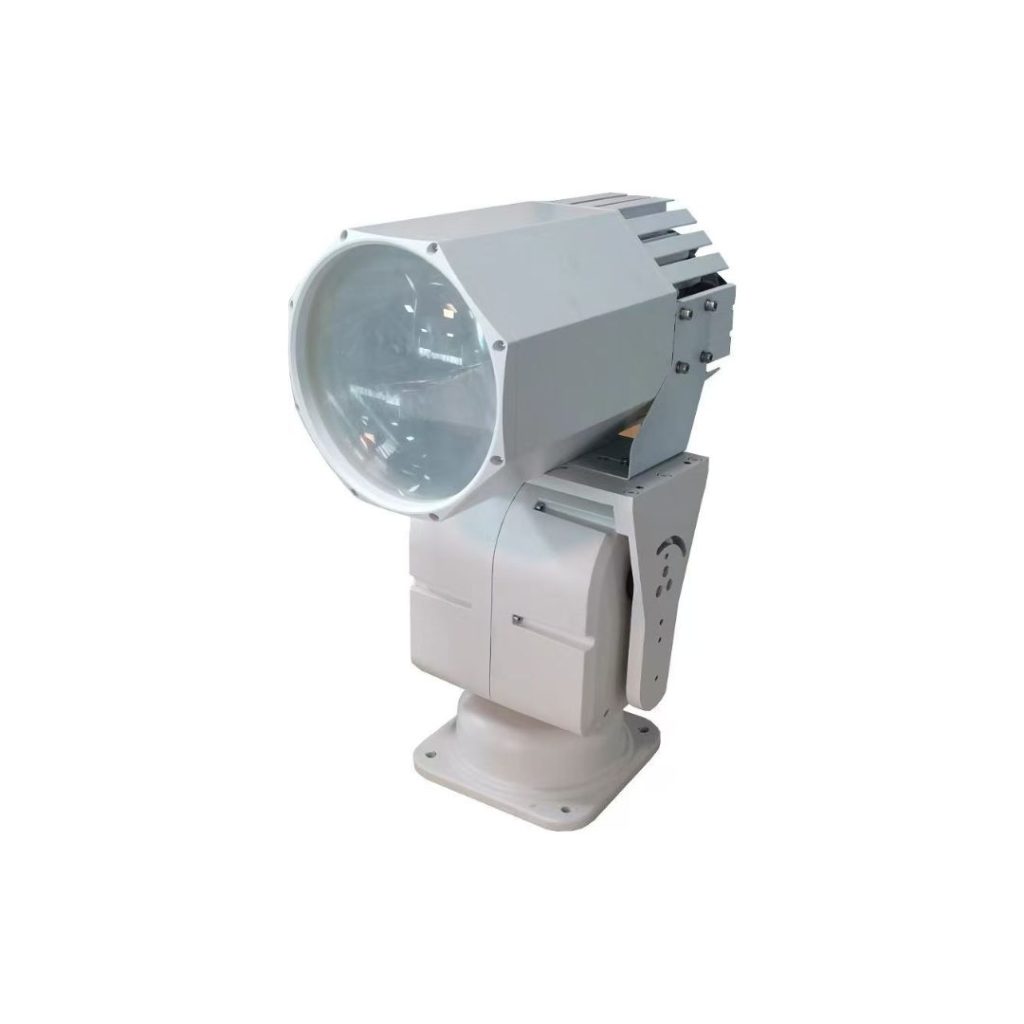
Rotating marine searchlights often come with more complex controls. These may include a remote-control searchlights, joystick-control searchlights and automatic LED searchlights. Some units can rotate on their own to match saved positions or route needs. These control options help reduce slow manual changes and let the crew react faster when conditions shift.
4. Application
Fixed and rotating marine searchlights are built for different jobs.
Fixed marine searchlights are used when you want steady, ongoing light. They are common on cargo ship decks for lighting and for work areas on offshore sites. They also show up at ports and terminals, on fishing vessels during routine tasks, and during checks of machinery and gear.
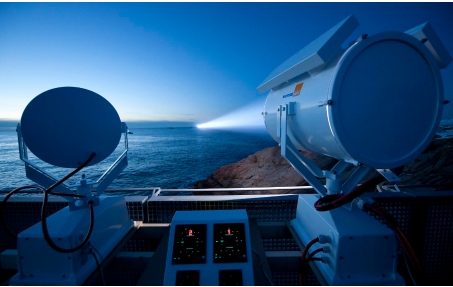
Rotating marine searchlights are used when the job needs active looking and room to adjust the light quickly. They are often seen on search and rescue craft, coast guard ships, and naval platforms. They can also be found on offshore support vessels and during emergency response operations.
In short, fixed models aim to keep dependable light on a set area. Rotating models are made to boost visibility across a broader operating zone.
5. Durability and Maintenance Requirements
Marine conditions put searchlights under pressure from salt spray, wet air, shaking forces, and bad storms. Because of that, both fixed and rotating models need strong parts and tight water protection. The goal is steady operation over time.
Fixed search lights usually need less work later on. They have fewer moving elements, so there is less to wear down or break. This basic layout lowers the chance of mechanical trouble and fits long runs in harsh areas.
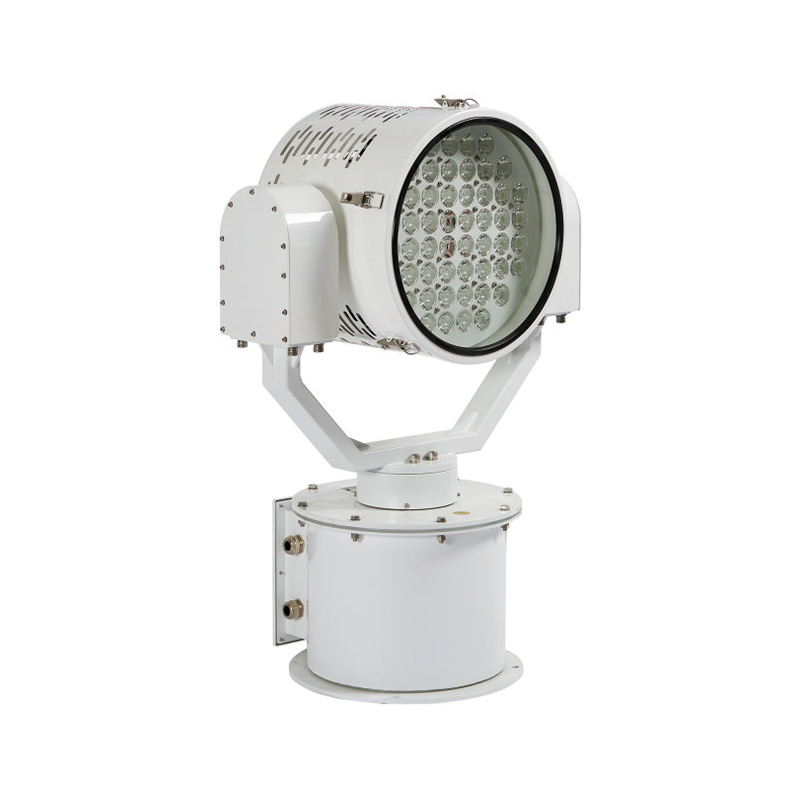
Rotating search lights tend to need more upkeep. Their extra parts include drive units, gear sets, and the system that turns the beam. Routine checks help keep motion steady and limit breakdowns tied to rust or rubbing wear. Even so, many modern rotating units use corrosion-safe parts and sealed drive designs, which can raise overall reliability.
6. Energy Efficiency and Lighting Performance
LED lighting has made both types better in power use and performance. LED searchlights can deliver strong brightness while drawing less power. They also tend to last longer than older light sources.
Fixed units often run more efficiently. Their beam stays aimed at one area, which helps cut wasted light. Rotating units may use a bit more power because the movement system needs energy. In return, they can cover wider areas and reduce the need to add several fixed lights.
Your pick should match the main priority. If you want lower energy spend, a stationary unit may fit better. If you want coverage flexibility, a rotating unit can help more.
7. Cost Comparison
Cost is another important difference between fixed and rotating marine searchlights.
Fixed marine search lights often cost less at the start. Their design is simpler, so purchase and installation are usually cheaper. With less maintenance, the running cost stays lower too. This makes them a good fit for vessels that only need illumination in one direction.
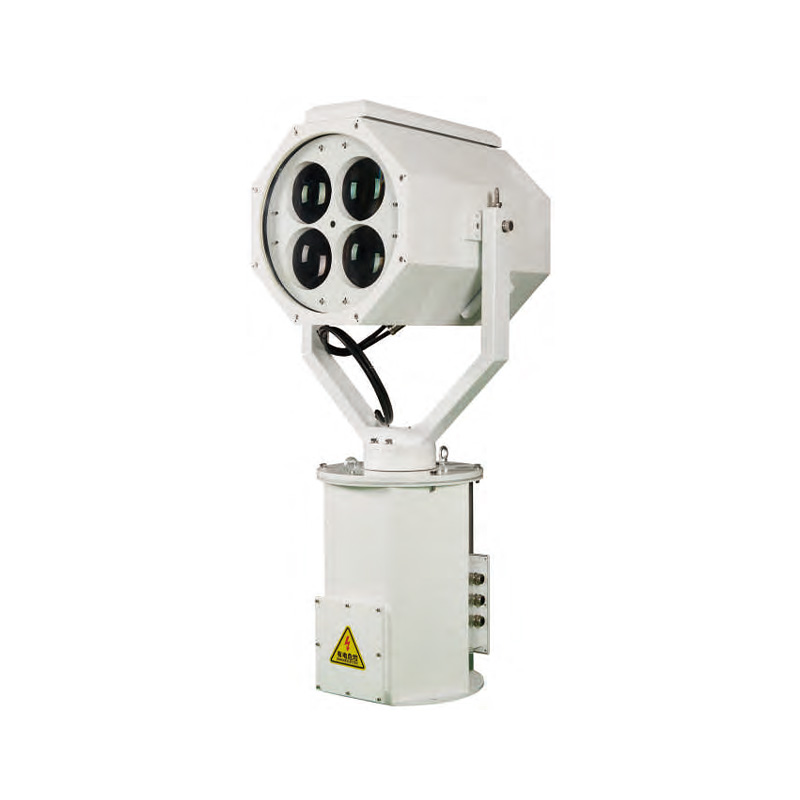
Rotating marine searchlights usually cost more at first. Advanced mechanical parts and control systems raise the initial price. Still, the wide-area light and the added support for safety work can make the higher cost easier to justify. This can matter most for ships used for rescue, patrol, or offshore tasks.
Summary Comparison Chart
| Comparison Aspect | Fixed Marine Searchlights | Rotating Marine Searchlights |
| Movement Capability | Installed in a fixed position and provides illumination in one specific direction | Equipped with rotation mechanisms that allow the light beam to move horizontally, vertically, or in multiple directions |
| Beam Control | Provides stable and focused lighting for a predetermined area | Allows flexible beam adjustment to illuminate different targets and locations |
| Coverage Area | Suitable for small or fixed working areas | Suitable for large-area scanning and wide visibility requirements |
| Lighting Flexibility | Limited flexibility because the beam direction remains unchanged | High flexibility because operators can adjust the beam angle according to changing conditions |
| Control System | Usually uses simple on/off controls or manual angle adjustment | Often equipped with remote control, joystick operation, or automatic positioning systems |
| Structure Design | Simple construction with fewer components and no moving parts | More complex design with motors, gears, and rotation systems |
| Maintenance Requirements | Requires less maintenance due to fewer mechanical components | Requires more regular maintenance in the searchlights to check motors, gears, and control systems |
| Reliability | Highly reliable for continuous fixed-area illumination | Reliable but depends on the durability of mechanical and electronic systems |
| Installation Cost | Generally lower due to simpler design and installation | Usually higher because of advanced movement and control features |
| Operating Cost | Lower maintenance and energy costs | Slightly higher operating costs due to additional moving components |
| Best Use Scenario | When continuous lighting of a specific area is required | When operators need to search, monitor, or illuminate changing locations |
| Energy Efficiency | Efficient because the light beam remains focused on one area | May consume more power due to rotation systems but provides wider operational coverage |
| Ideal Choice | Suitable for simple, stable, and cost-effective lighting requirements | Suitable for complex operations requiring flexibility and long-distance visibility |
How to Choose Between Fixed and Rotating Marine Searchlights
Selecting the right marine searchlight depends on the vessel’s operational requirements and working environment.
- A fixed searchlight works well when crews need dependable light for one set position. It also suits teams that want low service effort. For routine marine work and fixed-area coverage, this setup is often the simplest option.
- Rotating searchlights fit better when you need flexibility. They also work well when you must see far and react fast. Because the beam can turn, an operator can track changes in the area. This is useful in settings where safety matters.
Before you decide, think about several items. Vessel size matters. So does how large the working area is. Navigation needs also play a role. Weather can affect performance too. Budget is part of the decision as well.
Final Thoughts
Fixed and rotating marine searchlights are not the same. Fixed units provide illumination for specific areas and stay steady. They usually run with less upkeep and make lighting more predictable. Rotating units can offer flexible beam control and wider coverage for complex marine operations. By understanding the differences in design, performance, applications, and maintenance requirements, marine teams can pick the option that fits their work best. That choice can support safety, better visibility, and smoother operations on the water.
